Call our Professional Contractors!
(949) 859-9969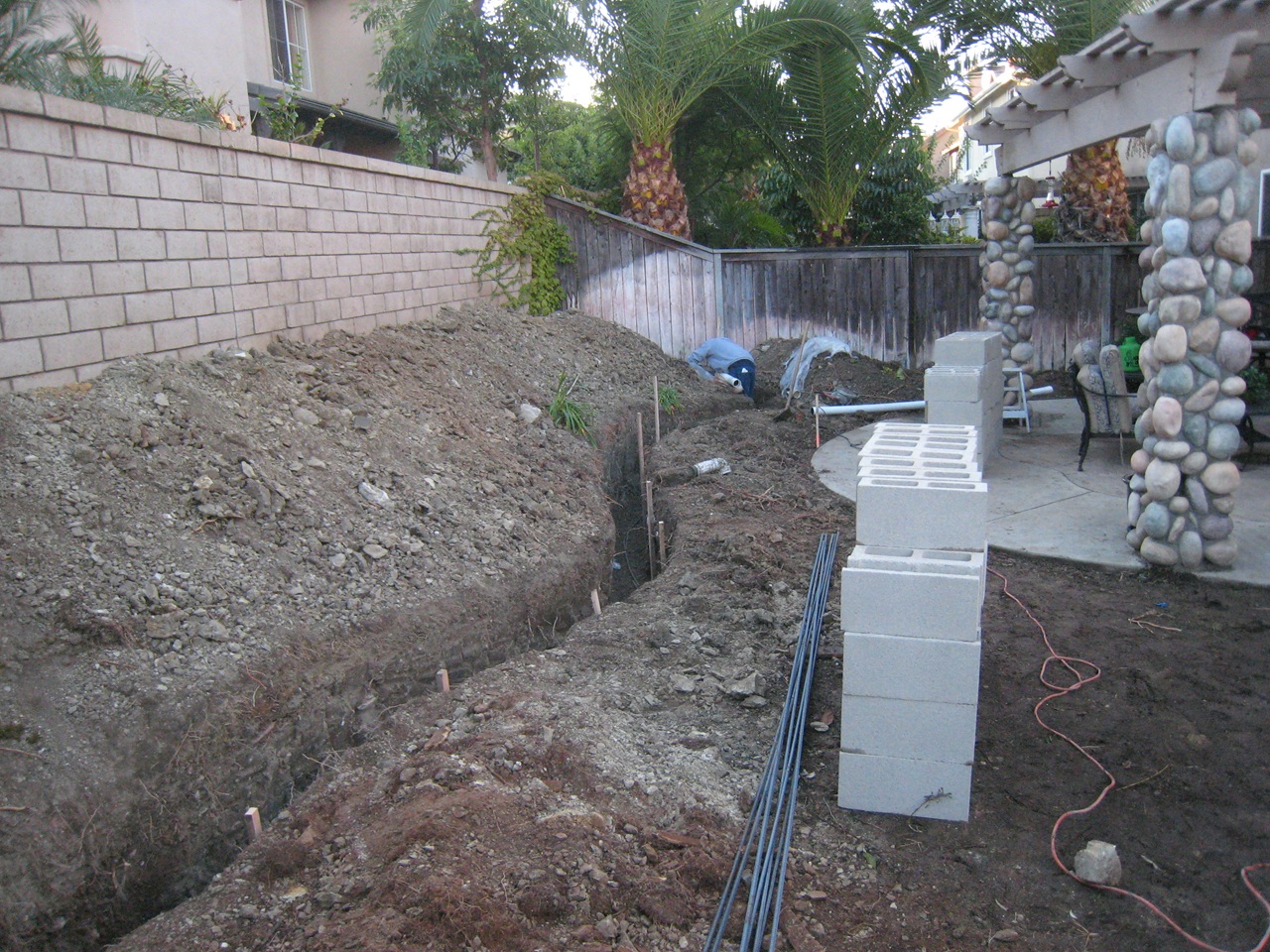
Hillside erosion control in Orange County requires strategic integration of vegetative solutions, structural walls, and drainage infrastructure to protect property investments. With median home values of $962,600, the region demands permanent stabilization systems. Effective hillside erosion control addresses slope severity, soil composition, drainage patterns, and aesthetic preferences while ensuring code compliance.
Orange County hillsides face erosion risks from seasonal rainfall, seismic activity, and native soil characteristics. Homeowners invest in erosion control to prevent property damage, increase usable space, and enhance curb appeal.
Hillside erosion control employs three primary approaches: structural solutions (50% of projects), vegetative solutions (30%), and hybrid systems (20%). Structural solutions use retaining walls, gabion walls, and geogrid reinforcement for steep slopes requiring immediate stabilization. Vegetative solutions utilize deep-rooted plants and ground covers for moderate slopes and environmentally conscious homeowners.
Hybrid approaches integrate structural foundations with vegetative upper layers for balanced functionality. Selection criteria include slope angle, soil stability, drainage requirements, budget, and maintenance preferences.
Plants stabilize slopes through extensive root systems that bind soil particles and reduce water runoff velocity. Deep-rooted species create anchoring systems extending 6-10 feet below ground while surface vegetation intercepts rainfall before erosion begins. Vegetative erosion control solutions represent 30% of projects favoring native species adapted to Orange County's Mediterranean climate.
Plant-based stabilization offers wildlife habitat, carbon sequestration, and reduced heat island effects. Ground covers establish within 6-12 months, while shrubs and trees require 2-3 years for maximum soil binding capacity.
Orange County projects utilize modular concrete blocks, natural stone, poured concrete, timber, and brick retaining walls for hillsides based on slope height, aesthetics, and budget. Structural erosion control represents 50% of projects with retaining walls addressing steep grades exceeding 30 degrees where vegetative methods prove insufficient. Major manufacturers include Belgard/Anchor Wall Systems, the largest North American hardscape manufacturer.
Keystone Retaining Wall Systems pioneered pinned modular block technology, providing proven performance. Allan Block specializes in hollow-core interlocking blocks with comprehensive technical documentation, while RediRock International leads gravity wall block manufacturing with large-format designs.
Proper drainage prevents hydrostatic pressure buildup behind retaining walls and reduces surface water velocity that accelerates soil displacement. Drainage failure is the primary cause of wall collapse from water accumulation and pressure exceeding design specifications.
Effective drainage systems include weep holes spaced 4-6 feet horizontally, gravel backfill layers, perforated drain pipes, and surface grading directing water away from foundations.
Orange County's seasonal rainfall creates concentrated flow requiring engineered solutions to prevent immediate erosion and long-term deterioration.
Effective hillside erosion control plants combine deep root structures, drought tolerance, low maintenance, and aesthetic appeal for Orange County's climate. Native species adapted to Mediterranean conditions establish faster and require less irrigation. Selection criteria include root depth, growth rate, fire resistance, deer resistance, and visual integration.
High-performing species include California lilac, toyon, manzanita, coast live oak, and California sagebrush. Ground covers like cape ivy, trailing rosemary, and creeping red fescue establish dense networks preventing raindrop impact erosion within 6-12 months.
Vegetative erosion control reduces installation costs versus structural walls while providing habitat creation and improved air quality. Plant-based systems absorb rainfall, slow runoff, and filter sediment before water reaches drainage infrastructure. Root networks create natural anchoring that strengthens over time, unlike hardscape requiring eventual replacement.
Maintenance includes initial irrigation during establishment, periodic mulch replenishment, and selective pruning. Professional landscapers select plants based on exposure, soil type, and irrigation availability, ensuring successful establishment.
Native California species dominate plant solutions OC for erosion control, including California buckwheat, white sage, black sage, purple sage, and lemonade berry. These species evolved in regional conditions requiring minimal irrigation after establishment while providing superior erosion control. Drought-tolerant selections reduce water consumption by 50-75% compared to traditional landscaping.
Ornamental grasses like deer grass and purple three-awn create dense root mats with annual trimming as primary maintenance. Succulent ground covers, including sedum species, establish rapidly in poor soils, providing immediate protection with virtually no irrigation.
Plant roots stabilize soil through mechanical anchoring, where fibrous networks bind particles, creating cohesive masses resistant to gravity and water forces. Deep taproots penetrate stable soil layers, acting as anchors, preventing surface slippage during rainfall or seismic activity. Fibrous root systems create shallow networks holding topsoil while absorbing water that otherwise saturates soil, reducing shear strength.
Root exudates bind soil particles, while decomposing roots create pore spaces, improving drainage and reducing saturation-related failures. Combined root architecture from multiple species creates layered stabilization, addressing both surface erosion and deeper stability.
Orange County retaining wall projects rely on five main materials, each suited to different budgets, slope heights, and design goals. The table below compares typical cost, lifespan, and market share for each option.
| Material | Market Share | Cost per Sq Ft | Lifespan |
| Concrete Block | 45% | $15-$35 | 50-100 years |
| Natural Stone | 20% | $25-$70+ | 50-100+ years |
| Poured Concrete | 15% | $25-$40 | 50-100 years |
| Timber | 8% | $15-$25 | 7-15 years |
| Brick | 7% | $20-$25 | 100+ years |
Natural stone delivers the strongest aesthetic integration of any material, popular in Newport Beach and Laguna Beach, though it requires skilled mason installation. Concrete blocks remain the most common choice across Orange County because they offer comparable durability with far more flexibility in texture, color, and pattern.
Brick offers the longest service life of the standard materials, while cap pricing for brick and concrete varies mainly with overhang size and finish detail.
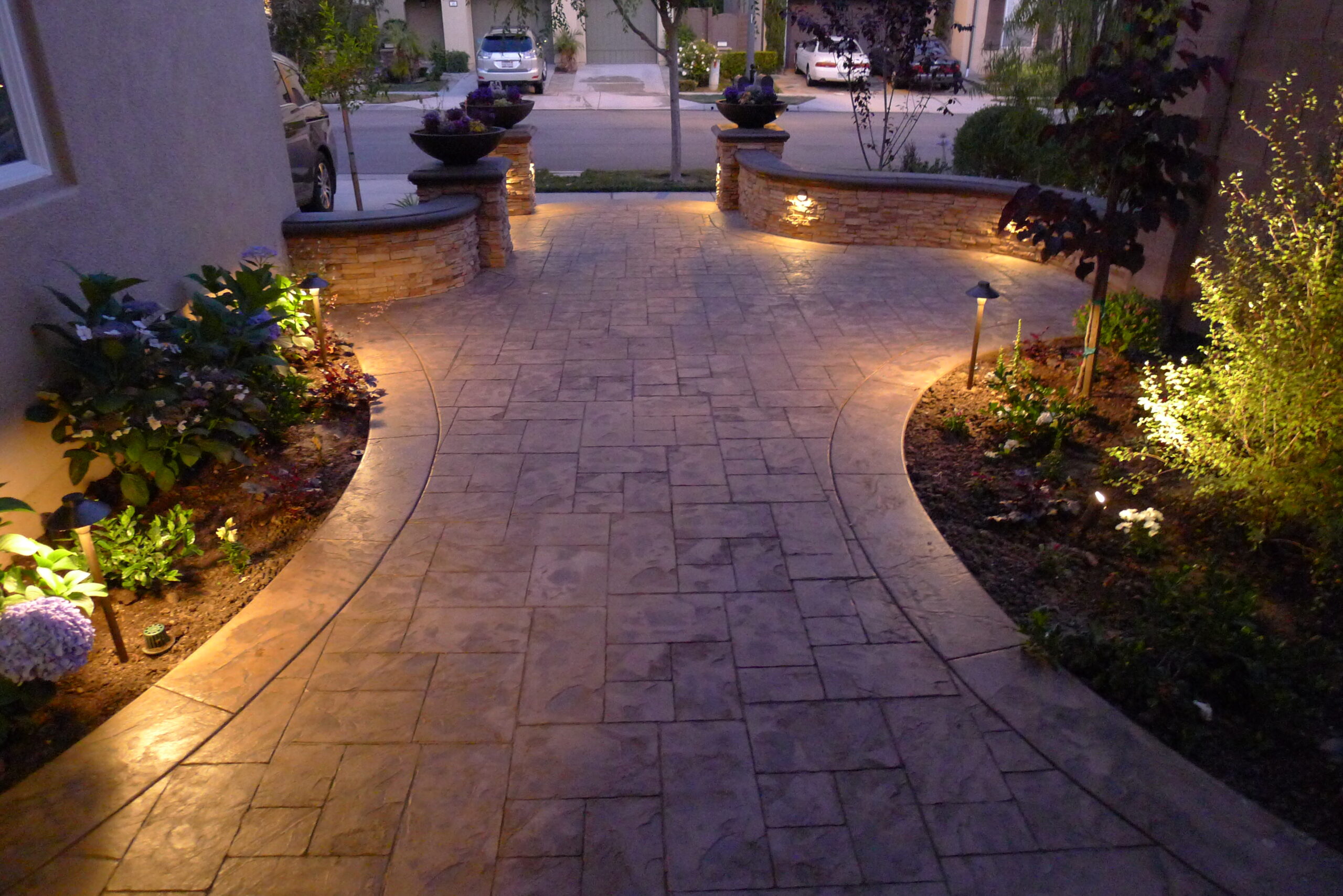
Sitting walls serve dual purposes of seating and landscape definition transforming hillsides into entertainment zones. Standard sitting walls measure 18-30 inches in height with 24 inches most common. Width requirements are 12-18 inches minimum with 15-16 inches optimal for comfort.
Curved sitting wall designs represent 45% of projects enhancing visual appeal through organic shapes. Straight designs account for 35% favoring cost-effectiveness and modern aesthetics.
Structural solutions include retaining walls, gabion walls, and geogrid reinforcement engineered for specific slope angles, soil conditions, and loading requirements. Hybrid approaches combine structural and vegetative elements representing 20% of projects. Sloped yard solutions address grade challenges through terracing, retaining walls, or drainage systems based on severity.
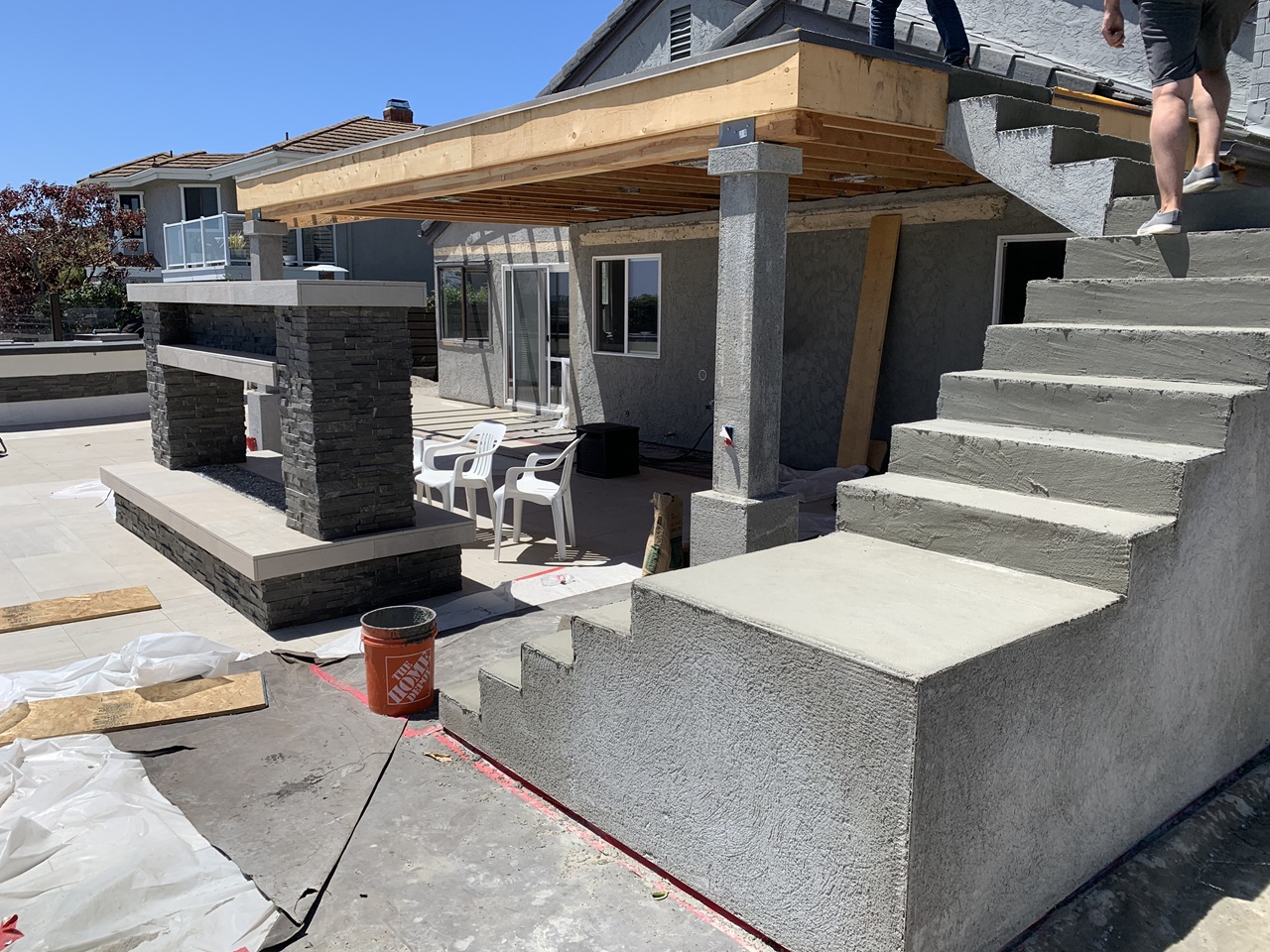
Permits typically require approval for walls over 4 feet ensuring structural integrity and code compliance. Slope stabilization prices vary from $20-$150+ per linear foot depending on wall height, materials, accessibility, and engineering complexity.
Drainage systems prevent hillside erosion by redirecting water flow, reducing soil saturation, and eliminating hydrostatic pressure behind structures. Effective systems integrate surface grading, subsurface collection pipes, weep holes, gravel backfill, and outlet points dispersing water safely. Drainage failure is the primary cause of wall collapse from water accumulation creating forces exceeding design specifications.
Orange County's seasonal rainfall concentrates water flow during winter requiring robust infrastructure preventing washouts and gradual saturation.
Effective drainage systems combine surface grading directing water away from foundations, perforated pipes collecting subsurface water, and gravel backfill facilitating flow toward collection points. Weep holes spaced 4-6 feet horizontally at wall base allow water escape preventing pressure buildup while filter fabric prevents soil migration into drainage aggregate.
Landscape drainage infrastructure requires comprehensive planning, ensuring proper integration with retaining walls and erosion control systems. Budget allocations for drainage typically represent 20-30% of total hillside stabilization costs, reflecting critical importance for long-term performance.
Drainage integration begins with excavation, including gravel backfill placement, perforated pipe installation, and weep hole spacing coordinated with wall height and expected water volume. Backfill materials include 3/4-inch crushed rock, creating drainage zones, while filter fabric separates rock from native soil, preventing clogging. Proper integration requires 12-18 inches minimum gravel depth behind walls extending from the foundation to within 6 inches of the finished grade.
Brick caps require careful drainage design to prevent mortar joint deterioration. Cap drainage includes proper overhang dimensions, sealant application, and surface grading directing water away from joints.
Drainage failure is the main cause of wall collapse from inadequate weep hole spacing, clogged perforated pipes, insufficient gravel backfill, or improper surface grading. Hydrostatic pressure buildup creates lateral forces exceeding wall design capacity, causing outward bowing, cracking, and structural failure. Soil saturation reduces shear strength, triggering landslides during prolonged rainfall.
Drainage solutions protecting homes address water management comprehensively, preventing erosion damage and gradual deterioration. Warning signs include wall movement, crack development, soil settlement behind walls, and standing water indicating system failure requiring immediate professional evaluation.
Consumer preferences for hillside erosion control reflect demographics, property values, and Orange County's regional character. Homeowner priorities balance functional needs with visual appeal, maintenance, and return on investment.
Market research indicates 75% of consumers believe landscaping increases home value, while 69% cite curb appeal as important when choosing properties.
Orange County's median owner-occupied home value of $962,600 stands approximately 2.9 times the US median, creating economic incentives for permanent improvements. Millennial homeowners demonstrate the highest outdoor space valuation, with 82% prioritizing lawn and outdoor areas versus 81% of Generation X and 77% of Baby Boomers. Younger demographics favor sustainability, technology integration, and low-maintenance solutions, while older generations prioritize craftsmanship, traditional aesthetics, and durability.
Suburban areas, including Irvine and Laguna Niguel, favor extensive hardscape projects with integrated outdoor living spaces utilizing mid-range materials. Urban areas like Santa Ana and Anaheim focus on space-efficient designs with premium finishes. Coastal communities, including Newport Beach and Laguna Beach, drive high-end material choices with a preference for natural stone.
Regional preferences reflect maintenance expectations, with coastal areas prioritizing weather-resistant materials withstanding salt exposure. Inland communities favor drought-tolerant plant selections and heat-resistant hardscape.
Millennials prioritize sustainability, eco-friendly materials, low-maintenance alternatives, and smart irrigation systems. Generation X seeks efficient, transparent solutions with email/text communication preferences. Baby Boomers prioritize high-quality service, professional craftsmanship, traditional designs, and demonstrate less price sensitivity.
Aesthetic fit with existing architecture drives most material selection decisions, and sustainability factors such as water conservation and native plants increasingly shape purchasing choices.
Orange County retaining wall costs vary based on materials, wall height, accessibility, and engineering requirements. Cost variations reflect labor premiums, permitting requirements, drainage infrastructure, and premium materials. The table below summarizes typical cost ranges and returns for hillside erosion control projects.
| Cost Factor | Typical Range |
| Retaining wall cost per square foot | $15-$57 |
| Slope stabilization cost per linear foot | $20-$150+ |
| Average retaining wall project cost | $3,500-$10,000 |
| Property value increase | 8-15% |
| Return on investment | 100-200% |
| Drainage share of total project budget | 20-30% |
These returns reflect functional improvements, enhanced curb appeal, increased usable space, and perceived quality signaling to prospective buyers.
Labor costs run 15% to 25% above national averages in Orange County, reflecting regional wage rates, contractor demand, and a higher cost of living, in addition to the material costs shown above.
Material cost varies with supplier relationships, project scale, and seasonal demand.
Concrete sitting walls cost $15-$60+ per square foot depending on height, design complexity, and finishes. Premium-segment contractors' markup is 40-60% above material costs, reflecting design services, project management, and warranty coverage. Mid-range segment contractors mark up 25-40% above material costs.
Project pricing includes materials, labor, equipment rental, permits, engineering if required, and drainage infrastructure essential for long-term performance. Retaining wall installations deliver measurable property value increases, justifying upfront investment through enhanced aesthetics and erosion protection.
Coastal communities tend to see the strongest returns, since erosion protection there carries added weight in resale value. Value increases reflect expanded usable outdoor space, enhanced curb appeal, erosion protection, and perceived maintenance quality.
Why retaining walls provide value extends beyond aesthetics to functional benefits, including slope stabilization, drainage improvement, and outdoor living space creation. Market research indicates landscaping improvements influence 94% of home sale decisions, with professionally installed erosion control demonstrating quality throughout the property.
Industry trends for 2026 emphasize sustainability, technology integration, authentic materials, and indoor-outdoor living spaces. Smart technologies, including automated irrigation, integrated lighting, and climate-adaptive designs, increase adoption among tech-savvy homeowners. Design trends favor defined outdoor rooms with natural materials, multi-functional spaces, and layered plantings.
Recommended practices include comprehensive drainage planning, professional engineering for walls exceeding 4 feet, proper material selection based on site conditions, and licensed contractor engagement ensuring code compliance.
Smart technologies include soil moisture sensors triggering irrigation only when needed, automated drainage pumps activating during heavy rainfall, and integrated lighting systems. Monitoring systems detect wall movement, soil settlement, or drainage failures, alerting homeowners before major damage occurs. Technology adoption remains concentrated among millennial and Generation X homeowners.
Installation requires professional integration, ensuring sensors and controllers withstand outdoor conditions while providing reliable performance. Smart systems reduce water consumption by 30-50% compared to traditional irrigation while maintaining plant health.
Segmental block market growth shows 15% CAGR, reflecting increasing preference for modular systems offering design flexibility. Multi-tiered sitting wall designs represent 20% of projects, creating a dramatic visual impact and functional seating zones. Design trends favor curved organic shapes, integrated lighting, natural stone caps, and connection to broader landscape themes.
Professional expertise ensures proper drainage integration, structural engineering, material selection, and installation techniques supporting decades-long performance. Expert landscaping execution prevents costly mistakes, including inadequate foundations, improper drainage, material incompatibility, and code violations. Contractors verify licensing, maintain insurance, and provide warranty protection.
Permits ensure compliance with local building codes requiring approval for walls over 4 feet to protect public safety. Professional installation delivers superior long-term value versus DIY approaches that frequently encounter drainage failures and structural problems.
Hillside erosion control in Orange County continues expanding, driven by property values, environmental awareness, and demand for functional outdoor living spaces. The national retaining wall market is projected to grow from $5.2 billion in 2024 to $8.7 billion by 2033, reflecting steady, long-term demand for professional installation services.
The broader US landscaping market, valued at $196.16 billion in 2026, is projected to reach $255.74 billion by 2031, underscoring sustained demand for erosion control expertise.
Orange County's unique combination of hillside topography, premium property values, and sophisticated homeowner expectations creates sustained demand for integrated erosion control solutions. Success requires balancing structural requirements, aesthetic preferences, environmental sustainability, and budget parameters through professional design and installation. Hybrid approaches combining vegetative and structural elements represent optimal solutions delivering immediate stabilization, long-term performance, and visual appeal.
Technology integration, sustainable materials, and smart irrigation systems increasingly influence project specifications as younger demographics enter the homeowner market. Professional contractors adapting to these trends while maintaining focus on drainage, structural integrity, and code compliance position themselves for continued success in Orange County's competitive landscape market.
Signature Landscape has protected Orange County properties since 1989 under California Contractor's License #583113, pairing engineered retaining walls and drainage with slope-stable planting. Every project starts with a 3D CAD rendering, so you see the finished slope before construction begins. Call (949) 859-9969 or request a free quote to get started.
Retaining walls typically run $15 to $57 per square foot, while full slope stabilization projects range from $20 to $150+ per linear foot. Vegetative solutions cost less upfront but take 6 months to 3 years to establish.
Fall, before winter rains begin, is the ideal window for plantings and structural work alike. Installing ahead of the rainy season lets roots establish and concrete cure before storm runoff tests the slope.
Most jurisdictions require a permit for any retaining wall over 4 feet tall, though HOA-governed communities may add their own review process.
Deep-rooted native plants slow erosion well on moderate slopes under roughly 30 degrees. Steeper grades typically need a retaining wall or geogrid reinforcement to hold soil until roots mature.
A properly engineered wall with correct drainage typically lasts 50 to 100 years or more, depending on the material. Concrete block and natural stone outperform timber, which usually needs replacement after 7 to 15 years.
Schedule A Consultation