Call our Professional Contractors!
(949) 859-9969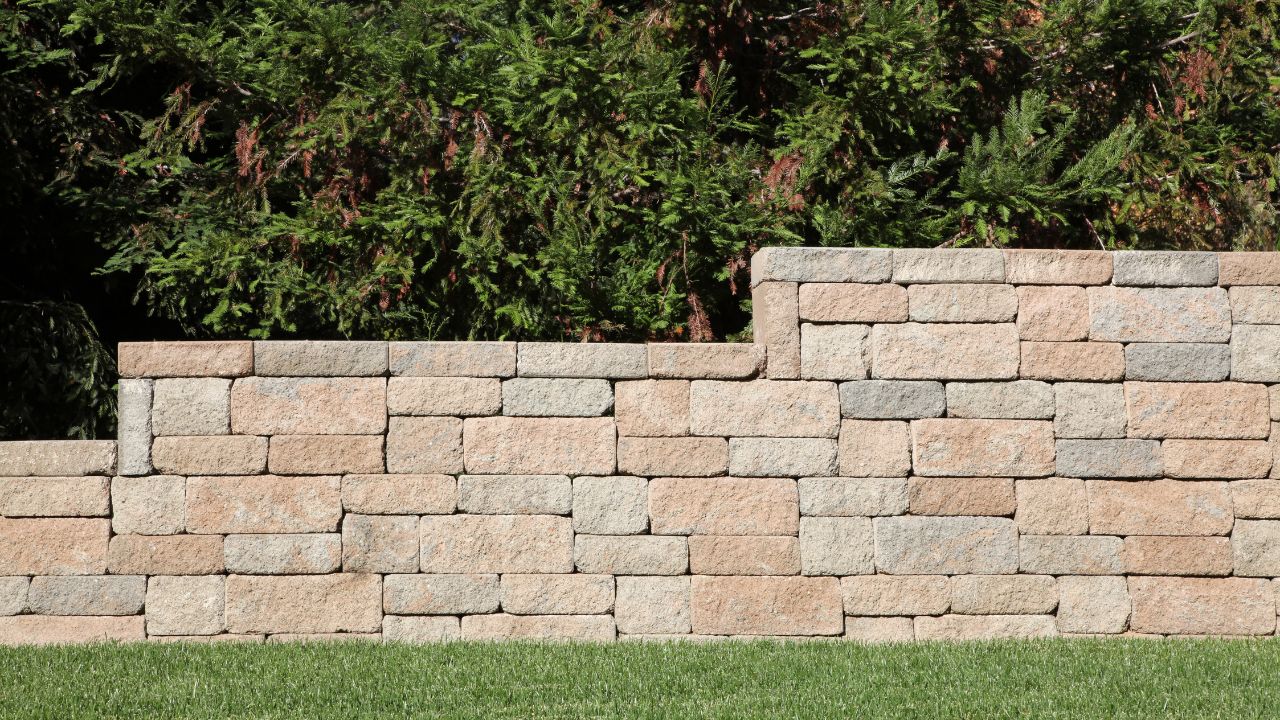
Key Takeaways:
Retaining walls do two jobs simultaneously: they hold back soil and define the visual character of your property. Choosing the wrong material in Orange County means structural failure, premature replacement, or a wall that looks out of place within a few years. This guide compares block, stone, concrete, and timber across cost, durability, seismic performance, and design so you can match the right material to your specific site before a shovel hits the ground.
Each material serves a distinct purpose and performs differently under OC's conditions. Understanding what you are choosing before comparing costs prevents the most common and expensive mistakes.
Segmental Retaining Wall systems — Allan Block, Versa-Lok, Belgard — use individual interlocking units installed without mortar. The modular design is why they dominate the OC retaining wall market: structural reliability, broad design flexibility, and cost-effectiveness in a single system. Blocks are available in a wide range of textures and colors and can credibly mimic natural stone at significantly lower cost. Properly installed and drained, block walls last 40–75 years with low ongoing maintenance.
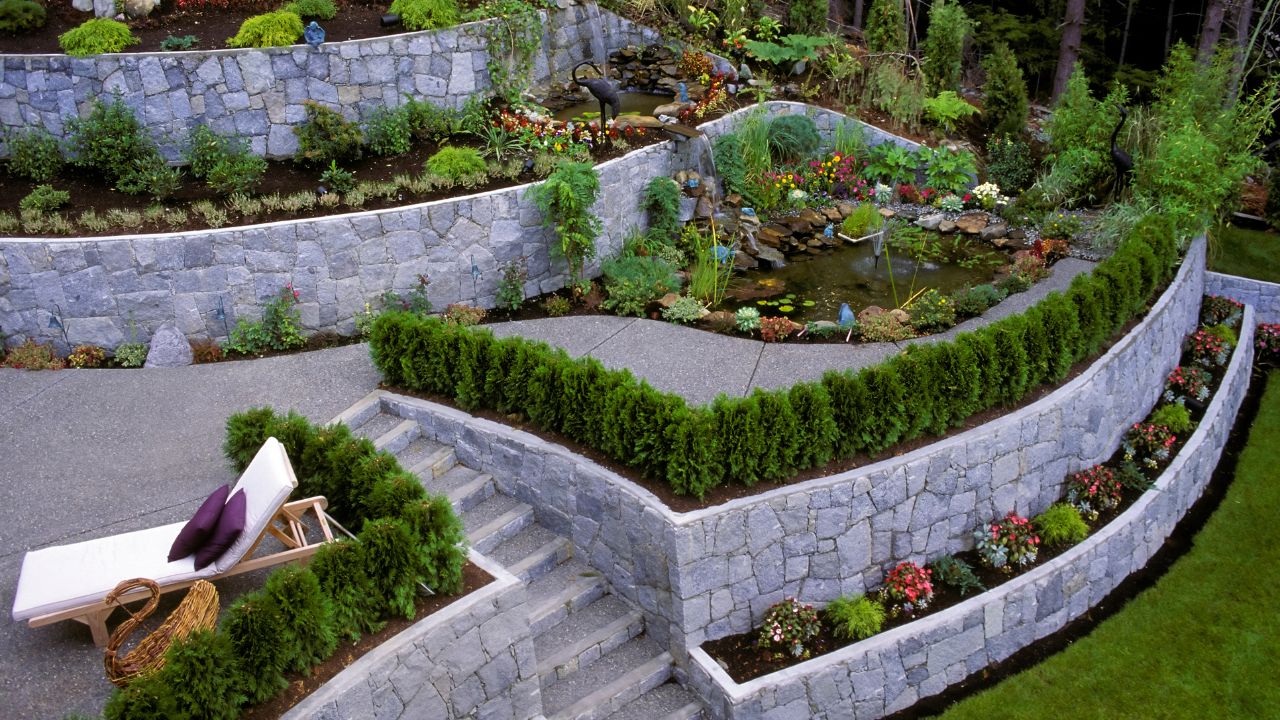
Dry-stack stone walls drain naturally through gaps between units and flex during seismic events without engineered pipe systems. Mortared stone walls are more rigid and appropriate for taller applications where extra structural strength is needed. Natural stone retaining walls last 75–100+ years, the longest documented lifespan of any standard retaining wall material, and deliver a timeless premium aesthetic that significantly enhances property value. No manufactured material replicates it.
Reinforced poured concrete is the strongest retaining wall option available, engineered to withstand very high lateral loads. It is also the most rigid. Without proper expansion joints and drainage, it is susceptible to cracking under seismic stress or hydrostatic pressure. With correct engineering it lasts 50–75 years. Its sleek, continuous surface is the defining material for contemporary and minimalist OC architecture. In Orange County, poured concrete walls almost always require building permits and engineered structural drawings, particularly for walls exceeding 4 feet in height.
Timber and railroad ties offer a rustic look at the lowest upfront cost. In OC, that is where the appeal ends. Intense heat, coastal moisture, UV exposure, and termite infestation combine to cause rapid rot, warping, and structural degradation. Timber walls last only 10–20 years in Southern California conditions, have poor seismic performance, and are universally discouraged by experienced OC contractors for any structural application. The only appropriate use is very low, decorative garden borders.
Performance varies sharply across strength, design, and installation complexity. These differences determine which materials are even eligible for a given site.
On a 1–10 durability scale: poured concrete scores 9.0, mortared natural stone 8.5, Allan Block SRW 8.0, dry-stack stone 7.5, CMU block 7.0, and timber 3.5. On a 1–5 seismic performance scale: Allan Block SRW scores 4.5, poured concrete 4.0, CMU and mortared stone 3.5, dry-stack stone 3.0, and timber 1.5. Modern SRW systems can be engineered with a site-specific seismic coefficient, a level of engineered resilience unavailable with timber or plain concrete block.
Natural stone delivers a premium organic aesthetic with genuine variation in color and texture that no manufactured product can duplicate. Poured concrete offers a clean, modern, customizable surface suited to contemporary OC homes. SRW blocks provide versatile manufactured looks across modern, traditional, and transitional design vocabularies and can mimic natural stone at lower cost. Timber's rustic aesthetic deteriorates within the first few years of installation in OC conditions, making it the weakest long-term design choice of the four.
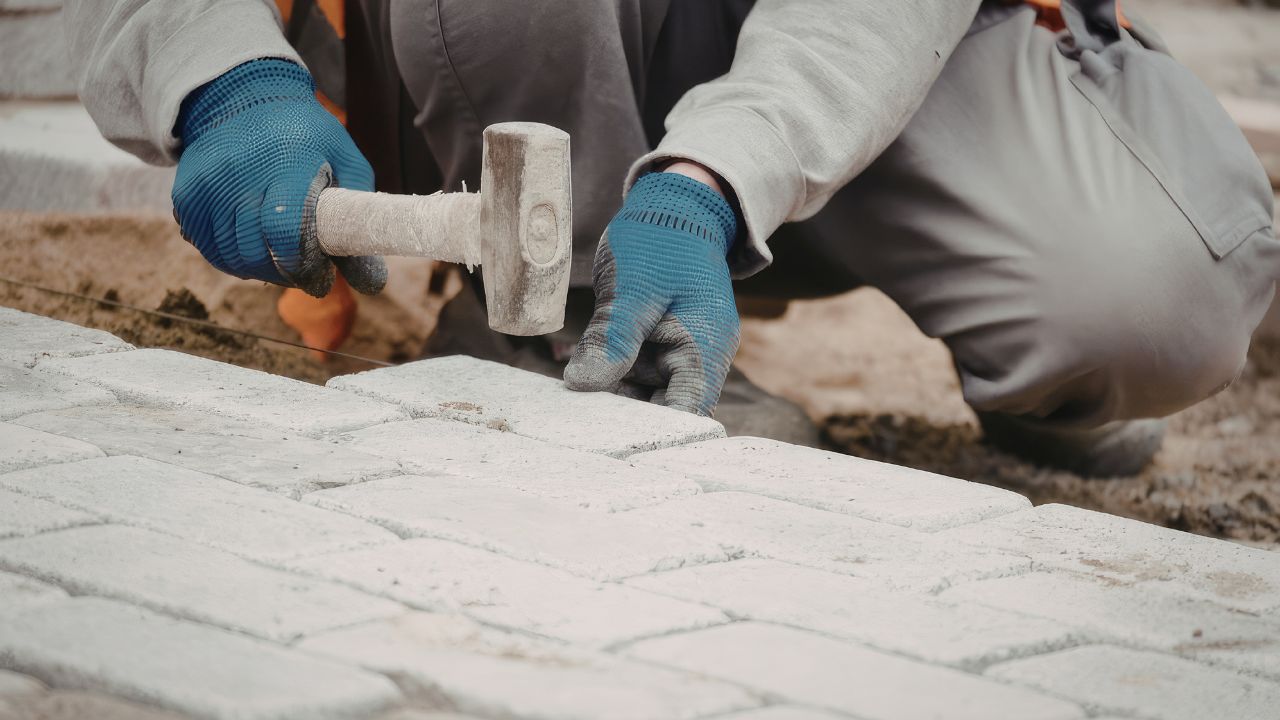
Poured concrete requires excavation, formwork, reinforcement, pouring, curing, and finishing — the most labor-intensive installation process. Natural stone requires skilled masonry; installation quality depends heavily on the individual craftsperson. SRW blocks install without mortar and deliver more consistent results faster. OC permits are required for walls exceeding 4 feet in height, walls with sloping backfill, and walls supporting a surcharge. Permit fees range from $76 to over $10,000 depending on project scope. HOA architectural review adds 30–60 days and must be factored into the schedule before any material is purchased. For properties in fire-prone areas, the 2025 OC fire-safe landscaping guide covers how retaining wall and slope design intersects with defensible space requirements.
Installed price is only one variable. Lifespan, maintenance cycles, and replacement frequency determine what each material actually costs over the ownership horizon.
In Orange County, where labor runs 15–25% above national averages: timber runs $15–$25/sq ft of face area, segmental block $20–$35/sq ft, natural stone $25–$40+/sq ft, and poured concrete $52–$57/sq ft, encompassing excavation, formwork, reinforcement, and finishing.
Natural stone lasts 75–100+ years. Poured concrete with proper engineering and drainage lasts 50–75 years. Segmental blocks with correct installation and drainage lasts 40–75 years. Timber lasts 10–20 years in Southern California — short enough that most OC homeowners will face a full replacement within their ownership period. A $52/sq ft poured concrete wall with a 75-year lifespan frequently costs less over the ownership horizon than a $15/sq ft timber wall requiring replacement in 15 years.
Poured concrete requires very low maintenance. For coastal OC properties, apply a penetrating sealer within the first year and maintain it annually to protect against salt air corrosion. Natural stone and SRW blocks are both low maintenance. Timber carries the highest recurring maintenance burden of the four materials, requiring ongoing rot treatment, termite management, and eventual full replacement. Many OC property walls older than 20 years are actively failing because they were built without modern geotechnical and seismic design principles. Professional structural assessment is warranted for any aging wall supporting a driveway, structure, or sloped backfill.
Drainage, seismic conditions, and wall height are the three variables that most directly determine structural safety. Getting these wrong is how walls fail.
Hydrostatic pressure buildup from inadequate drainage is the leading cause of retaining wall failure across all material types — more common than structural or material deficiency. SRW and CMU block walls require gravel backfill and a perforated pipe drainage system. Poured concrete requires an engineered drainage system; without it the wall fails regardless of structural strength. Dry-stack natural stone is the only material that provides natural drainage without an engineered pipe system. An Irvine project with a two-tier Allan Block system at 120 linear feet and 3.5 feet average height was specifically engineered with perforated pipe and gravel backfill to manage hydrostatic pressure on a sloped site.
Southern California is one of the most seismically active regions in the country. The California Geological Survey maintains seismic hazard zone maps identifying OC areas susceptible to liquefaction and earthquake-induced landslides; these maps should inform every retaining wall design. Rigid monolithic concrete structures crack during seismic events. Interlocking systems like SRW redistribute movement across unit connections. Modern SRW systems can be engineered with a site-specific seismic coefficient. The Irvine project selected Allan Block specifically for its engineered seismic performance near the Newport-Inglewood fault zone.
For walls under 6 feet, segmental retaining wall blocks are the dominant contractor recommendation — optimal balance of seismic performance, drainage compatibility, and cost-effectiveness. For walls over 6 feet or those supporting surcharges such as driveways or structures, poured concrete with professional structural engineering is the standard OC recommendation. A Newport Beach poured concrete wall at 45 linear feet and 5 feet in height required engineered structural drawings and a City building permit, totaling approximately $14,500. The wall was necessary because it needed to support a driveway surcharge — a load requirement that eliminates timber and most block options from consideration entirely.
The best material depends on what the wall needs to accomplish. These three scenarios cover the majority of OC homeowner decisions.
Timber at $15–$25/sq ft appears cheapest but requires full replacement within 10–20 years in OC. It is not a genuine budget choice for any structural wall. SRW block at $20–$35/sq ft with a 40–75 year lifespan is the strongest value proposition for structural walls under 6 feet. MWDOC Turf Replacement Program rebates of $2/sq ft of turf removed can directly offset project costs when the retaining wall project incorporates permeable hardscapes. The Irvine project homeowner received rebates for replacing approximately 800 sq ft of lawn with drought-tolerant plants and permeable decomposed granite, partially offsetting the total retaining wall cost.
OC properties with professionally designed outdoor spaces command offers 8–12% higher than comparable homes. General hardscaping returns 20–30% ROI; outdoor kitchens and fire features return 67–80%. Natural stone's 75–100+ year lifespan makes its higher installed cost highly justifiable on a total-cost-of-ownership basis, and no manufactured alternative replicates its organic variation, depth, or aging character. For properties where planting design complements the wall design, the OC seasonal planting guide helps coordinate wall projects with the right planting schedule.
Mortared natural stone (durability score 8.5, 75–100+ years, low maintenance) and poured concrete (score 9.0, 50–75 years, very low maintenance) are the two strongest performers across both durability and maintenance simultaneously. Drought-resistant landscaping combined with permeable hardscapes delivers 110–130% ROI in OC communities. Converting 1,000 sq ft of traditional lawn to xeriscaping with permeable hardscapes costs $5,000–$10,000 and can add $12,000–$15,000 in value in Newport Beach and Laguna Beach.
The right material follows from the right questions about your site, budget, and performance requirements — in that order.
Define the wall's structural requirements first. Wall height, slope gradient, soil type, and surcharge loads determine the viable material shortlist before aesthetics enters the conversation. Coastal properties within approximately one mile of the OC coast should prioritize salt-resistant materials. Natural stone and poured concrete perform best in coastal salt air. Timber performs poorly and is not appropriate. Evaluate total lifecycle cost rather than installed price alone. Review HOA CC&Rs and contact the city building department before purchasing materials, as these can eliminate certain options entirely.
Prioritize structural performance when the wall exceeds 6 feet, supports a driveway or structure, or sits in a seismic hazard zone. Poured concrete with professional engineering or a fully engineered SRW system are the only appropriate choices. Prioritize long-term value when the property is coastal, the design is architecturally prominent, or the owner has a long time horizon. Prioritize budget when the wall is under 6 feet and not supporting a surcharge — SRW block is the correct structural choice. Never specify timber for any OC structural retaining wall regardless of budget constraints. Always verify the CSLB license and insurance, request itemized estimates from at least three contractors, and confirm all warranty terms in writing.
Most retaining wall projects in OC require professional expertise to be executed correctly. The cases where professional engagement is not optional are more common than most homeowners expect.
The Newport Beach poured concrete wall required engineered structural drawings and a City building permit totaling approximately $14,500. A non-specialist cannot produce correct engineering for a wall supporting a driveway surcharge. The Irvine contractor also secured MWDOC rebates that offset project costs — a financial outcome that depends entirely on contractor knowledge of local program eligibility and timing. For coastal OC properties, professional contractors apply penetrating sealers to poured concrete within the first year and annually thereafter, a maintenance schedule critical to achieving the rated lifespan and routinely missed by non-specialist installers.
OC retaining walls older than 20 years are actively failing from the absence of modern geotechnical and seismic design principles. Professional structural assessment is essential for any aging wall supporting a driveway, structure, or sloped backfill. For walls over 6 feet or supporting significant surcharges, a licensed structural engineer and a properly engineered system are a regulatory requirement, not a preference. The Irvine Allan Block project required a City building permit; the contractor managed the permitting process and was selected specifically for SRW seismic expertise near the Newport-Inglewood fault zone.
Material selection is a structural, financial, and aesthetic decision made simultaneously. Timber fails the structural test in OC. Block, stone, and concrete each have a place, and the right one depends on your specific site conditions, height, load requirements, and design goals.
Signature Landscape has been making these decisions for Orange County homeowners for over 38 years, across more than 1,000 completed projects. If you are ready for a site-specific recommendation, request a free consultation today.
Schedule A Consultation