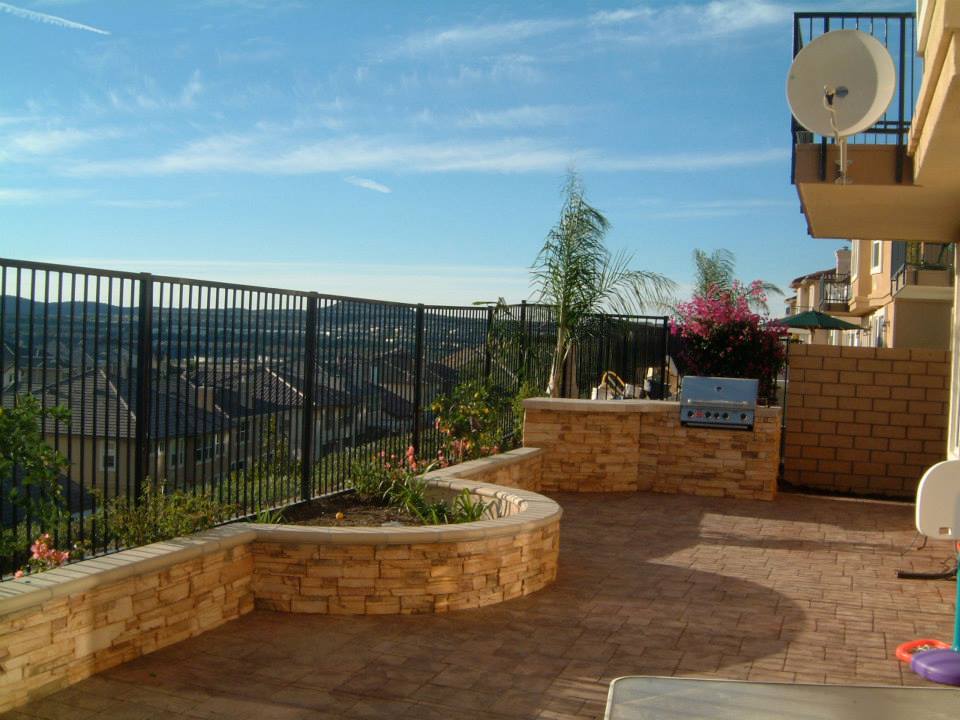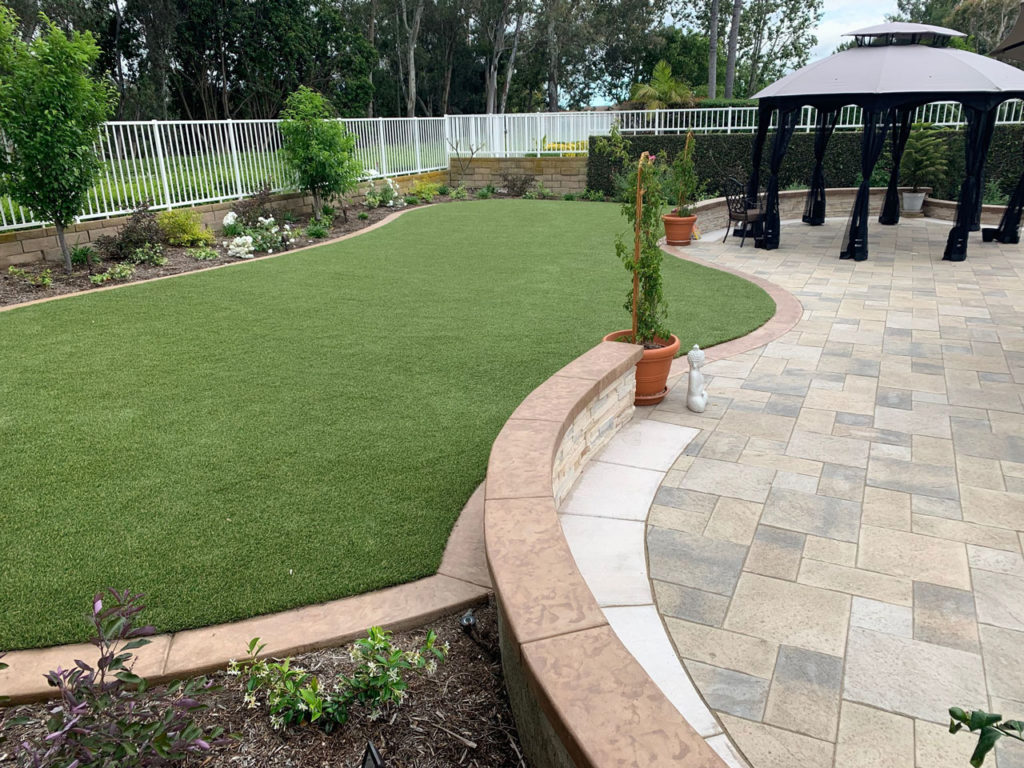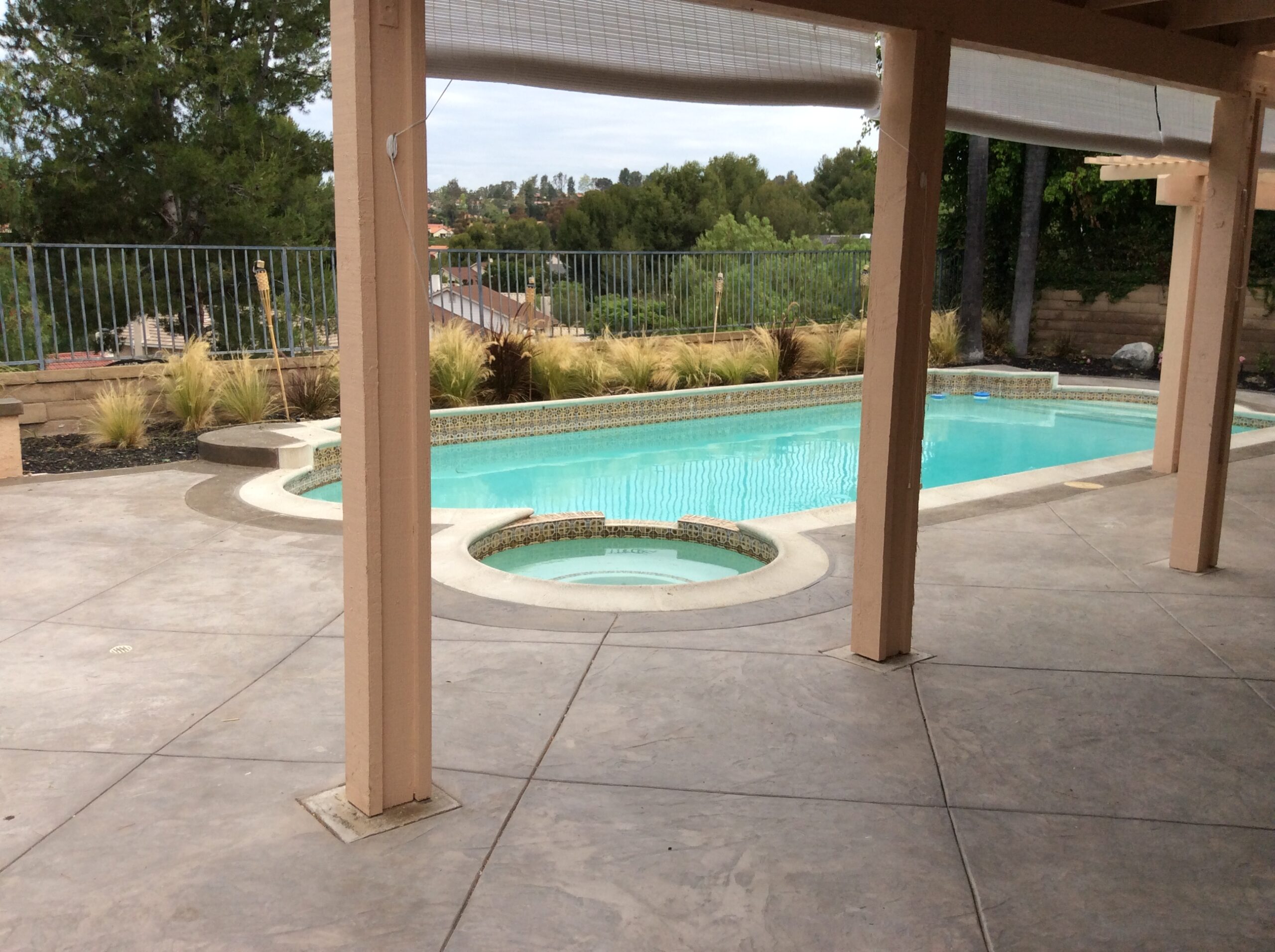
Call our Professional Contractors!
(949) 859-9969
Outdoor flooring affects how patios, pool decks, and walkways look, drain, handle heat exposure, and perform over time. Orange County homeowners frequently compare outdoor flooring options for their hardscaping projects because pavers, porcelain tile, concrete, and natural stone each solve different durability and design challenges.
We cover durability, maintenance requirements, repairability, cost, drainage and heat management, and design compatibility for pavers, porcelain tile, concrete outdoor floors, and natural stone patios. Understanding these differences supports more informed contractor conversations and material selection aligned with Southern California climate conditions.
Four primary outdoor flooring options dominate Southern California hardscape projects: concrete pavers, outdoor-rated porcelain tile, concrete outdoor floors, and natural stone. Each material category features distinct installation methods, performance characteristics, and maintenance requirements that influence long-term satisfaction.
Material selection impacts visual continuity, repair flexibility, drainage capacity, and surface temperature management. Comparing these options requires evaluating how each material responds to site-specific conditions, including substrate quality, slope, sun exposure, and intended use.
Concrete pavers are modular hardscape units where individual pieces can be replaced when damaged without affecting surrounding surfaces. Pavers are used for driveways, walkways, front yards, sidewalks, patios, and pool hardscape applications throughout Orange County.
The modular format allows pattern flexibility and isolated repairs. Joint quality, base preparation, and polymeric sand selection directly influence paver system performance and longevity. Our pavers 101 guide covers these fundamentals in more depth.
Porcelain tile and pavers are hard, dense surfaces when outdoor-rated and installed over properly engineered substrate systems. Porcelain is often selected when a sleek indoor-outdoor visual connection is desired across threshold transitions.
Outdoor-rated product selection and professional installation are essential for porcelain performance in exposed conditions. Porcelain manufacturers typically market stain resistance and low water absorption as primary benefits for exterior applications.
Concrete outdoor floors consist of monolithic slab installations or decorative stamped surfaces offering a low-joint aesthetic. Stamped concrete is used for patios, pool decks, and exterior grounds where continuous surface appearance is prioritized.
A 28-day concrete compressive strength of 4,000 psi is ideal for most climates according to industry standards. An air content of 5% to 10% improves concrete workability and durability, while water-cement ratios below 0.50 enhance long-term performance.
Natural stone patios vary widely by stone type, geological origin, and surface finish applied during fabrication. The Natural Stone Institute groups natural stone into sedimentary, metamorphic, and igneous classifications that determine care requirements.
Natural stones can be calcareous or siliceous, affecting chemical reactivity and cleaning product compatibility. Natural stone delivers unique color variation and organic textures unavailable in manufactured materials.
The table below summarizes how the four materials compare on the factors homeowners weigh most.
| Material | Durability | Repairability | Heat Underfoot |
| Concrete Pavers | High, with proper base and joints | Individual units replaceable | Cooler with light colors |
| Porcelain Tile | High when outdoor-rated and installed correctly | Full tile replacement needed | Varies by color and finish |
| Concrete Outdoor Floors | Moderate; cracks more visible over time | Patch repairs may not blend fully | Depends on color and sealer |
| Natural Stone | Varies widely by stone type and finish | Professional repolishing for deep damage | Cooler with honed, light finishes |
Material durability depends on base and substrate preparation, drainage engineering, traffic volume, sun and wet exposure patterns, and ongoing maintenance execution. Surface material selection represents only one component of a comprehensive durability comparison that must account for installation quality and site conditions.
Durability failures often originate from improper base compaction, inadequate drainage, or substrate movement rather than surface material defects. Evaluating durability requires examining the complete hardscape system, not isolated material properties. Our paver stone systems page outlines base and joint specifications in more detail.
Paver joint quality and base construction standards matter significantly for long-term performance and stability. Permeability depends on the complete paver system, including base materials and joint specifications, not the term "paver" alone.
Properly installed paver systems distribute loads across multiple units rather than creating single-point stress concentrations. Joint sand maintenance and periodic releveling extend functional lifespan when base integrity remains intact.
Porcelain tile edge chipping, slip resistance ratings, substrate movement tolerance, and installer experience influence real-world durability outcomes. Product rating verification, slip resistance testing, substrate movement analysis, and installer credential confirmation must precede porcelain selection for exposed outdoor applications.
Thermal expansion coefficients and freeze-thaw resistance vary across porcelain product lines. Homeowners should request manufacturer documentation confirming outdoor suitability and installation requirements specific to Southern California climate exposure.
Concrete cracks are more visible than joint lines in modular systems, and repair patches may not blend perfectly with surrounding surfaces. Monolithic concrete can crack due to thermal movement or substrate settlement; pavers, stone, and porcelain can also fail if base or substrate preparation is inadequate.
Sealers and proactive crack management may be needed for decorative concrete finishes exposed to heavy traffic or extreme weather. Regular sealer reapplication protects against staining and surface degradation in high-use areas.
Natural stone requires stone-specific care protocols and careful selection matched to exposure conditions. Not all natural stones perform equally outdoors due to variations in porosity, hardness, chemical composition, and freeze-thaw resistance.
Stone type selection, finish appropriateness, and geological classification determine natural stone or concrete pavers’ longevity in Southern California applications. Proper sealing and maintenance schedules prevent premature weathering and staining.
Maintenance requirements and repair complexity differ significantly across outdoor flooring materials. Understanding ongoing care obligations helps homeowners evaluate total ownership costs beyond initial installation expenses.
Repair accessibility varies from replacing individual modular units to patching monolithic surfaces. Material-specific cleaning products and seasonal maintenance protocols affect long-term appearance retention.
Pavers can require joint sand or polymeric sand maintenance, occasional leveling or unit replacement, and weed or joint integrity attention, but isolated repair capability represents a major functional advantage. Sand-filled joints allow water, driveway oils, and salts to soak downward rather than wash across surfaces according to standard installation guidelines.
Joint sand replenishment prevents unit shifting and maintains surface stability. Paver stone installation quality directly influences maintenance frequency and repair ease over time.
Outdoor porcelain tile requires routine cleaning with pH-neutral products and periodic grout inspection for cracking or deterioration. Surface scratching remains minimal compared to softer natural stones when properly rated products are selected.
Grout joint maintenance prevents moisture infiltration and substrate damage. Travertine vs porcelain vs concrete pavers comparisons reveal porcelain's lower absorption rates reduce staining risk in pool deck applications.
Stamped concrete uses premium penetrating sealers for easier cleaning and stain resistance maintenance. Concrete is generally simpler to clean between surfaces compared to pavers because continuous slabs lack numerous joint lines.
Stamped and decorative concrete can be easier to sweep and clean because no unit joints interrupt surface continuity. Sealer reapplication every two to five years maintains appearance and protects against UV degradation.
Proper stone care starts with understanding the stone's geological classification and chemical composition because these factors determine compatible cleaning products. Slight surface scratches on natural stone may be buffed using dry 0000 steel wool for minor cosmetic restoration.
Deeper scratches and nicks on natural stone should be repaired and repolished by professionals with stone-specific restoration equipment. The complete Orange County hardscape maintenance guide addresses stone-specific sealing schedules and cleaning protocols.
Surface temperature, water drainage capacity, and slip resistance affect outdoor flooring comfort and safety. Southern California sun exposure creates surface heat differentials that influence barefoot comfort around pools and patios.
Drainage performance prevents standing water and reduces slip hazards. Material selection must account for climate-specific heat retention and water management requirements.
Permeable pavements can reduce runoff volume, filter pollutants, and improve safety through enhanced water drainage performance. Joint-based drainage allows surface water to percolate through sand-filled gaps rather than creating sheet flow across impervious surfaces.
Light-colored pavers reflect more solar radiation than dark surfaces. Heat-resistant pavers for Orange County pool decks compare surface temperature performance across color and material variations.
Outdoor porcelain products require slip resistance ratings appropriate for wet conditions and barefoot traffic. Textured finishes improve traction compared to polished surfaces in pool-adjacent installations.
Porcelain surface temperatures vary by color and finish reflectivity. Product specifications should include dynamic coefficient of friction testing results for wet surface conditions. Our pool design services account for these surface safety factors during planning.
Conventional paving materials such as asphalt reached up to 152°F at midday in Arizona pilot studies documented by the EPA. Cool pavement surfaces were 10°F to 16°F cooler than conventional paving materials in the same testing conditions.
Pavement can transfer heat to surrounding air and stormwater runoff systems. Decorative concrete finishes and color selection influence solar reflectance and surface temperature management.
Natural stone drainage depends on joint width, grout permeability, and base system design rather than stone material alone. Lighter stone colors and honed finishes typically remain cooler than polished dark surfaces under direct sun exposure.
Stone thermal mass affects heat retention after sunset. Proper grading and drainage channels prevent water pooling on natural stone patio surfaces.
Initial installation costs vary significantly across outdoor flooring materials, but long-term value includes maintenance expenses and repair accessibility. Budget planning should account for both upfront investment and lifecycle ownership costs.
Material longevity and repair complexity influence total cost of ownership. Comparing the paver vs. porcelain tile decision requires evaluating replacement accessibility and damage repair costs over expected service life.
Concrete pavers may cost more than stamped or colored concrete upfront but can reduce long-term expenses because individual damaged pavers are frequently less expensive to repair or replace. Concrete pavers can range as high as $20 per square foot depending on style, color, and installation complexity.
Joint maintenance represents an ongoing cost consideration for paver systems. Patio material comparisons for Orange County compare initial investment against long-term performance expectations.
Outdoor porcelain tile installation costs reflect material pricing, substrate preparation requirements, and specialized installation expertise. Premium porcelain products with enhanced slip resistance and impact ratings command higher prices than standard interior-grade tiles.
Installation labor costs increase when substrate leveling and waterproofing systems are required. Material waste factors and cutting complexity influence final project costs for porcelain installations.
Plain concrete patios cost $5 to $8 per square foot as of 2026 industry estimates. Simple decorative concrete patios range from $8 to $11 per square foot, while custom concrete patios cost $11 to $18 per square foot.
Elaborate concrete patios exceed $18 per square foot depending on design complexity. Basic stamped concrete ranges from $10 to $14 per square foot according to current market pricing.
Natural stone represents a premium material investment with potential property value enhancement. Stone longevity justifies higher upfront costs when properly maintained and matched to climate conditions.
Replacement stone availability varies by quarry and geological source. Exclusive paver designs that increased Newport Beach home values demonstrate hardscape investment returns in comparable market segments.
Estimated installed cost ranges for Orange County projects, based on current market pricing and material scope, are outlined below.
| Material | Typical Cost Range | Cost Driver |
| Concrete Pavers | Up to roughly $20 per sq ft | Style, color, and pattern complexity |
| Concrete Outdoor Floors | $5 to $18+ per sq ft | Plain slab versus custom stamped design |
| Porcelain Tile | Typically priced above standard pavers | Substrate prep and product grade |
| Natural Stone | Premium investment; highest of the four materials | Stone type, quarry source, and finish |
Outdoor flooring applications include patios, pool-adjacent spaces, walkways, courtyards, and outdoor kitchens requiring different aesthetic and functional priorities. Material selection should align with architectural style, indoor finishes, and landscape design themes. Signature Landscape's patio and deck builders factor these priorities into every material recommendation.
Visual continuity between indoor and outdoor spaces influences material selection. Design flexibility varies across modular, monolithic, and natural material options.
Pavers offer repairability and drainage-friendly modular installation options, but joints require ongoing attention and maintenance. Pattern variety includes herringbone, basket weave, running bond, and circular designs that accommodate curved layouts.
Color blending and multi-unit patterns create visual depth. Modular sizing allows customization around existing landscape features and architectural elements.
Porcelain tile supports clean contemporary aesthetics with large-format options and consistent coloration. Minimal grout joints create seamless visual flow between interior and exterior living spaces.
Manufactured consistency eliminates natural variation for a uniform appearance. Porcelain replicates natural stone and wood textures while maintaining dimensional stability.
Concrete outdoor floors are often cost-efficient and customizable across color, texture, and pattern options. Monolithic concrete creates a low-joint aesthetic, but cracks are more visible, and repairs may not blend perfectly with surrounding areas.
Stamped patterns replicate stone, brick, and tile appearances. Color hardeners and integral pigments expand decorative possibilities beyond standard gray finishes.
Natural stone creates organic outdoor aesthetics with inherent color variation and geological texture. Each stone slab features unique veining and mineral patterns unavailable in manufactured products.
Stone finish options include honed, flamed, brushed, and tumbled surfaces. Regional stone varieties connect outdoor spaces to local landscape character and architectural traditions.
Pre-installation questions help homeowners verify contractor qualifications and material suitability. Understanding installation requirements and performance expectations prevents costly mismatches between material capabilities and site conditions.
Decision factors include budget constraints, maintenance tolerance, drainage requirements, and aesthetic priorities. Comprehensive evaluation reduces project risk and supports long-term satisfaction.
Site preparation, base and substrate engineering, slope requirements, and installation quality can matter as much as surface material selection. Homeowners should request detailed base specifications including compaction standards, drainage provisions, and substrate stabilization methods.
Edge restraint systems prevent lateral movement in modular installations. Proper grading ensures water flows away from structures and prevents pooling.
Homeowners need to ask contractors and manufacturers for outdoor rating confirmation, slip-resistance data, and installation requirement documentation for porcelain products. Contractor licensing, insurance coverage, and project portfolio review validate qualifications.
Written warranties should specify coverage terms and exclusions. Material certifications confirm compliance with outdoor performance standards.
Pain points include underused outdoor areas, uncertainty over project scope, concerns about risk and complexity, drainage problems, maintenance burden, cost overruns, and timeline delays. Clarifying maintenance tolerance and repair accessibility preferences helps match materials to lifestyle expectations.
Traffic intensity and barefoot contact influence material selection. Budget allocation should account for base work, drainage improvements, and future maintenance requirements.
Selecting outdoor flooring for Orange County patios, pool decks, and walkways requires balancing durability comparison factors, maintenance realities, cost considerations, and design compatibility. Each material offers distinct advantages when properly matched to site conditions, installation quality, and homeowner priorities.
Signature Landscape has served Orange County since 1989, delivering hardscaping, concrete installations, outdoor kitchens, pool design, and comprehensive landscape solutions. Expert material selection and installation quality determine outdoor flooring performance more than material type alone.
Every outdoor flooring project comes down to matching material, installation quality, and site conditions to your specific space. Signature Landscape has served Orange County since 1989, guiding homeowners through paver, porcelain, concrete, and natural stone selection for patios, pool decks, driveways, and walkways across the region.
Contact Signature Landscape at (949) 859-9969 or request a free quote to discuss the right flooring material for your property, backed by a California-licensed contractor (License #583113) with decades of local hardscape experience.
Durability depends more on base preparation, drainage, and installation quality than on the material alone. Concrete pavers offer modular repairability, outdoor-rated porcelain resists staining when properly specified, and natural stone performance varies by type and finish. A material matched to your site conditions and installed on a properly engineered base will outperform a premium material installed poorly.
Concrete pavers can run up to roughly $20 per square foot depending on style and pattern. Plain concrete patios typically range from $5 to $8 per square foot, while custom stamped concrete can exceed $18 per square foot. Porcelain tile and natural stone generally cost more than standard pavers because of substrate preparation and material sourcing.
Pool deck safety depends on slip resistance ratings, surface heat, and drainage. Textured porcelain and light-colored pavers improve traction and stay cooler underfoot than dark, polished surfaces. Homeowners should request slip-resistance and heat-performance data for any material being considered for a pool deck installation.
Sealer needs vary by material and traffic exposure. Stamped and decorative concrete typically need resealing every two to five years to protect against staining and UV degradation. Natural stone requires sealing based on its geological classification and porosity, while pavers rely more on joint sand maintenance than surface sealing.
Homeowners should confirm active contractor licensing and insurance, request a portfolio of completed local projects, and ask for written base preparation and drainage specifications. For porcelain, request manufacturer documentation confirming outdoor suitability and slip resistance. A detailed written proposal with material specifications is a strong sign of a qualified contractor.
Schedule A Consultation