Call our Professional Contractors!
(949) 859-9969
Orange County homeowners increasingly weigh the financial implications of landscaping choices against water scarcity and rising utility costs. Traditional landscapes require consistent water, fertilizer, and labor investments, while drought-tolerant designs demand higher upfront costs but deliver substantial long-term savings. Understanding the complete financial picture over a decade helps property owners make strategic decisions that balance immediate budgets with future returns.
The decision extends beyond aesthetics to encompass environmental responsibility, property value enhancement, and compliance with California's water regulations. With Orange County's median property value at $962,600 and household income at $116,289, homeowners have a significant financial incentive to maximize outdoor investment returns. Drought-tolerant landscaping offers measurable OC cost savings through reduced water consumption, minimal maintenance requirements, and enhanced property appeal in a market that increasingly values sustainability.
Drought-tolerant landscaping utilizes native plants, gravel, and mulch designed to thrive with minimal irrigation. Traditional landscaping relies on turf grass, ornamental plants, and regular watering to maintain appearance throughout the year.
Traditional landscaping imposes high ongoing costs for water, fertilizer, and mowing services that accumulate significantly over time. Drought-tolerant landscaping requires a higher upfront installation investment but eliminates most maintenance expenses through plant selection and design.
Traditional landscape water usage typically ranges from $800 to $1,200 annually in Orange County's semi-arid climate. Water-efficient gardens reduce this burden by 50% to 70%, translating to $300-$800 in yearly savings.
Xeriscaping represents drought-tolerant landscaping using native plants adapted to California's Mediterranean climate and reduced precipitation patterns. Native plant schemes maintain structural integrity and aesthetic appeal for 20 to 30 years with minimal intervention.
Weather-responsive irrigation systems incorporate smart technology that adjusts watering schedules based on real-time meteorological data. Battery-powered lawn equipment adoption among homeowners reflects broader sustainability trends, with 64% of respondents owning cordless electric tools.
Stamped concrete surfaces require resealing every 2 to 3 years to prevent moisture penetration and surface degradation. Interlocking pavers demand periodic weed control measures and joint sand replenishment to maintain structural stability and appearance.
Natural stone installations need periodic sealing applications to prevent staining from organic matter and environmental exposure. These maintenance intervals vary based on material porosity, climate exposure, and usage intensity across different outdoor zones.
Cost and sustainability considerations directly influence property values, utility expenses, and environmental impact in Orange County's competitive real estate market. Professional landscaping increases property values by 8% to 12%, making outdoor investments financially strategic beyond aesthetic preferences.
Investment in affordable modern landscaping solutions in Orange County continues to accelerate, with 36% of respondents planning increased spending in 2024. Another 47% maintained previous spending levels, demonstrating consistent market demand for outdoor improvements.
Property owners recognize curb appeal's financial impact, with 98% agreeing that well-maintained landscaping increases property value substantially. Homeowners aged 45 to 64 represent the highest investment demographic, often leveraging accumulated home equity for premium renovations. Outdoor living rooms and kitchens drive hardscaping demand as homeowners extend interior living spaces into functional exterior zones.
Orange County's population of 3.17 million creates substantial demand for residential landscaping services across diverse communities. The median household income of $116,289 supports discretionary spending on premium outdoor features and sustainable installations.
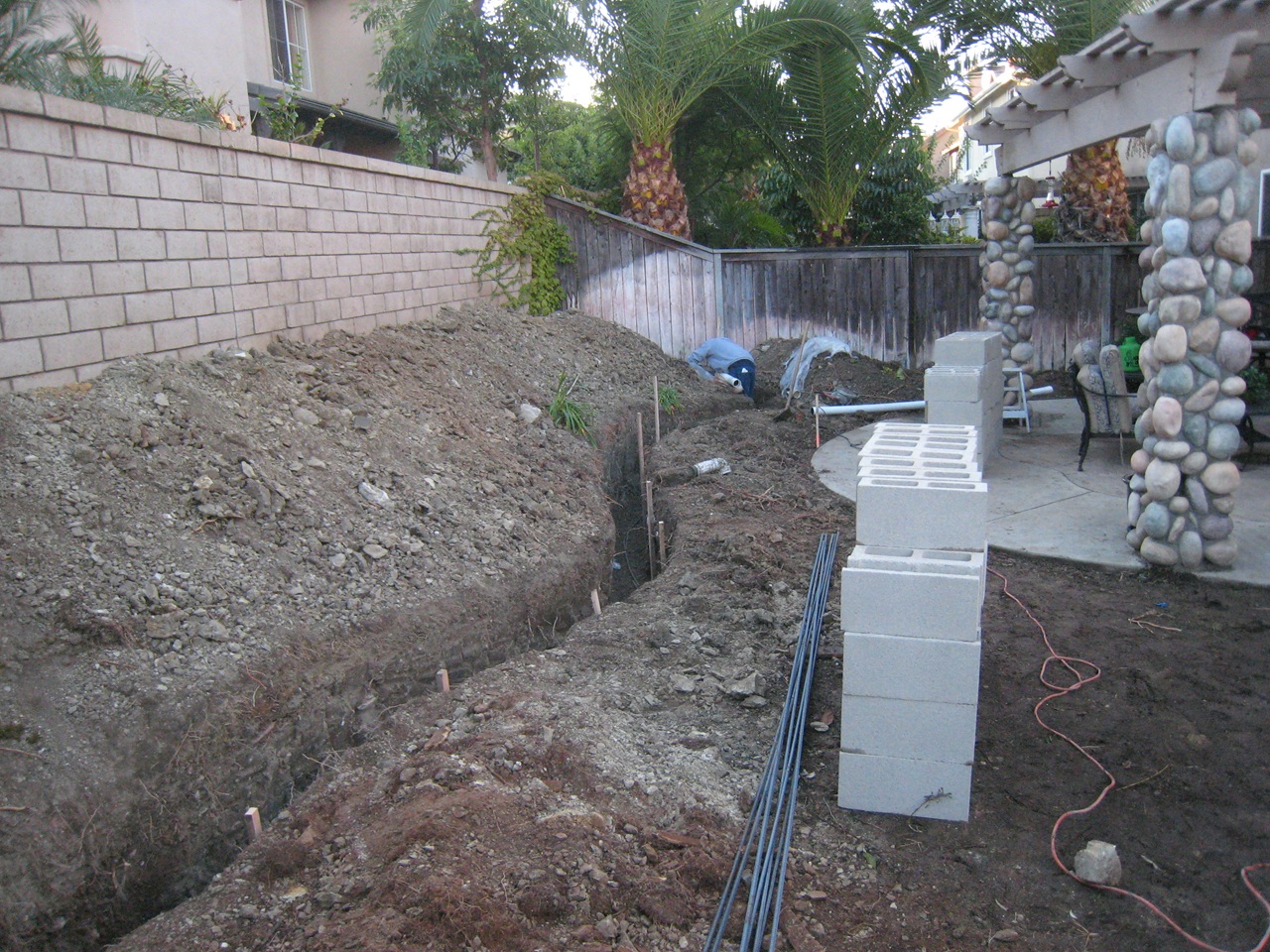
The median property value of $962,600 incentivizes landscaping investments that maximize resale returns and buyer appeal. WELO, the Water Efficient Landscape Ordinance, mandates water conservation standards for new construction and major renovations. Retaining walls exceeding 3 feet require engineering assessments and permits in Orange County jurisdictions to ensure structural safety.
Consumer sentiment remains complex, with 69% believing natural grass benefits the environment despite water consumption realities. However, 54% express desire to learn more about landscapes' actual climate impact, suggesting growing environmental awareness.
Battery-powered equipment ownership reaches 64% of respondents, reflecting sustainability adoption beyond irrigation systems. Additionally, 33% prefer hiring maintenance companies utilizing battery-powered tools, indicating environmental values influence contractor selection decisions.
Initial installation costs differ significantly between drought-tolerant and traditional approaches, though long-term financial calculations favor water-efficient designs. Understanding both upfront investments and cumulative expenses over time reveals the true cost differential between these landscape strategies.
Average drought-tolerant landscaping redesign projects cost approximately $15,000 for comprehensive property transformations, including plant removal and irrigation modifications. Converting 1,000 square feet of lawn to xeriscaping typically ranges from $5,000 to $10,000, depending on material selection.
Traditional landscaping installation costs vary widely based on turf quality, irrigation complexity, and plant diversity. Initial expenses appear lower than those of drought-tolerant alternatives, but this advantage diminishes rapidly when calculating decade-long maintenance requirements.
Traditional landscaping water costs range from $800 to $1,200 annually based on property size and irrigation efficiency. Annual water bill savings from drought-tolerant landscaping reach $300 to $800, representing substantial cumulative savings over ownership periods.
Annual combined water and maintenance savings total approximately $2,500 when comparing fully maintained traditional landscapes against drought-tolerant alternatives. This figure accounts for reduced mowing, fertilization, pest control, and irrigation system repairs that accumulate over time.
HELOC typical interest rates hover around 8.0% variable, offering flexible borrowing against home equity for phased installations. Home equity loan rates range from 7.99% to 8.13% fixed, providing predictable monthly payments for larger projects.
Personal loan rates span 6.74% to 20.94% depending on creditworthiness, with unsecured lending offering faster approval than equity-based products. Credit cards with 0% introductory rates for 12 to 18 months suit smaller projects under $15,000 when homeowners can repay balances before promotional periods expire. Home equity loans offer repayment terms extending up to 30 years, distributing costs across extended periods for substantial renovations.
Material selection impacts both immediate project budgets and long-term maintenance obligations across diverse Orange County modern landscaping, sustainable and stylish solutions. Hardscape durability, aesthetic compatibility, and installation complexity vary significantly among concrete, paver, stone, and porcelain options available to homeowners.
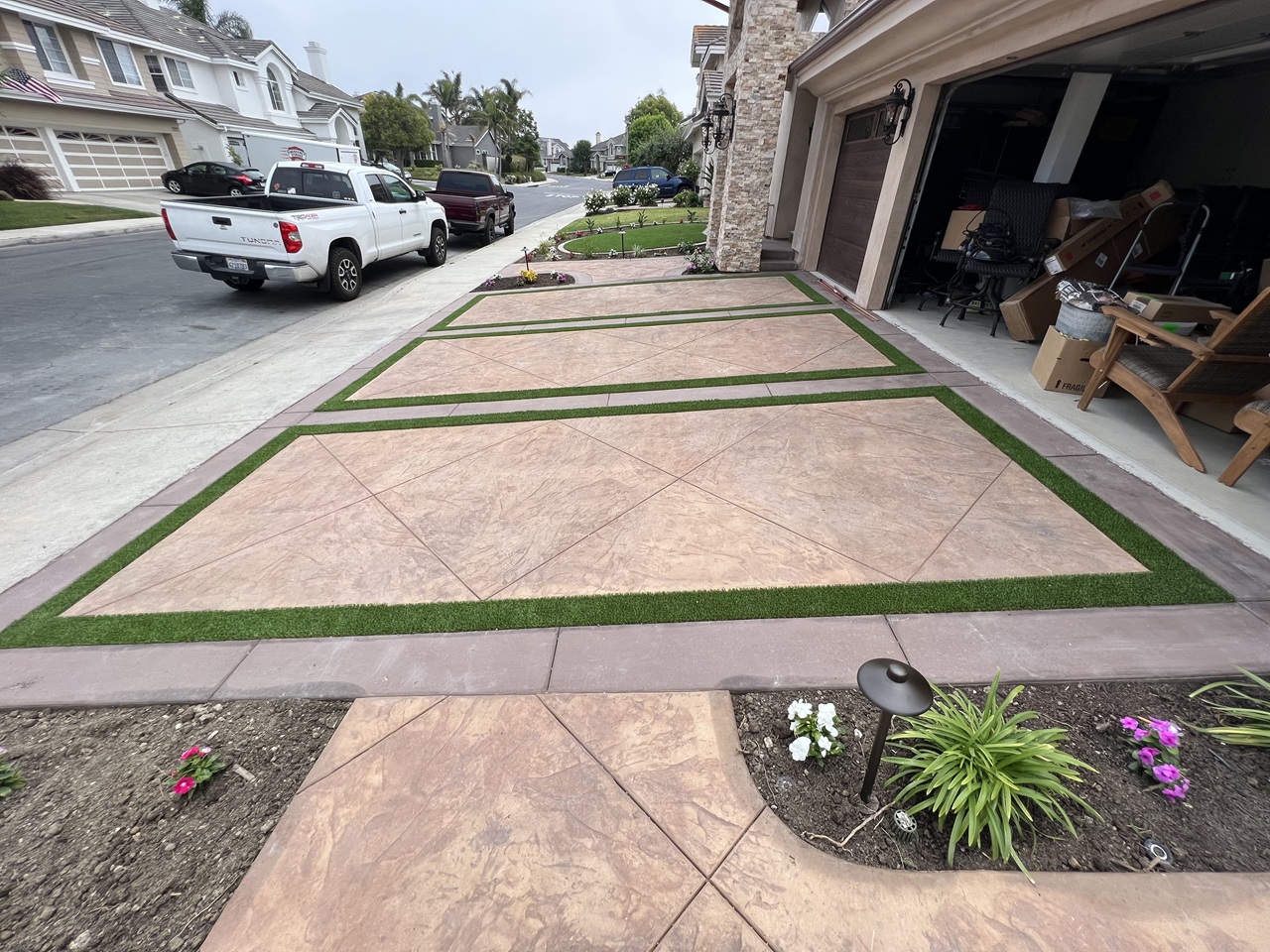
Stamped concrete basic price ranges from $8 to $12 per square foot for standard patterns and colors. Interlocking pavers cost $15 to $18 per square foot, reflecting higher material and labor requirements for proper installation.
Natural stone ranges from $15 to $35 per square foot, depending on stone type and cutting specifications. Porcelain pavers command $28 to $45 per square foot, representing the premium tier with superior moisture resistance. Interlocking pavers last 20 to 30 years, offering excellent durability relative to their moderate price point.
| Material | Cost per Sq Ft | Typical Lifespan | Maintenance Notes |
| Stamped Concrete | $8 to $12 | 15 to 20 years | Reseal every 2 to 3 years to prevent moisture damage |
| Interlocking Pavers | $15 to $18 | 20 to 30 years | Periodic weed control and joint sand refill |
| Natural Stone | $15 to $35 | 25 to 30+ years | Periodic sealing to prevent staining |
| Porcelain Pavers | $28 to $45 | 25 to 30+ years | Minimal moisture absorption, low upkeep |
Stamped concrete consists of poured concrete stamped with patterns mimicking stone, brick, or wood textures. Interlocking pavers comprise individual manufactured concrete units laid over compacted sand and gravel bases for structural flexibility.
Flagstone and granite represent quarried stone cut into functional shapes for patios, walkways, and outdoor living areas. Porcelain pavers utilize high-density fired clay tiles engineered specifically for outdoor applications with minimal moisture absorption. Retaining walls function as structural barriers designed to hold back soil, creating usable flat terraces on sloped properties.
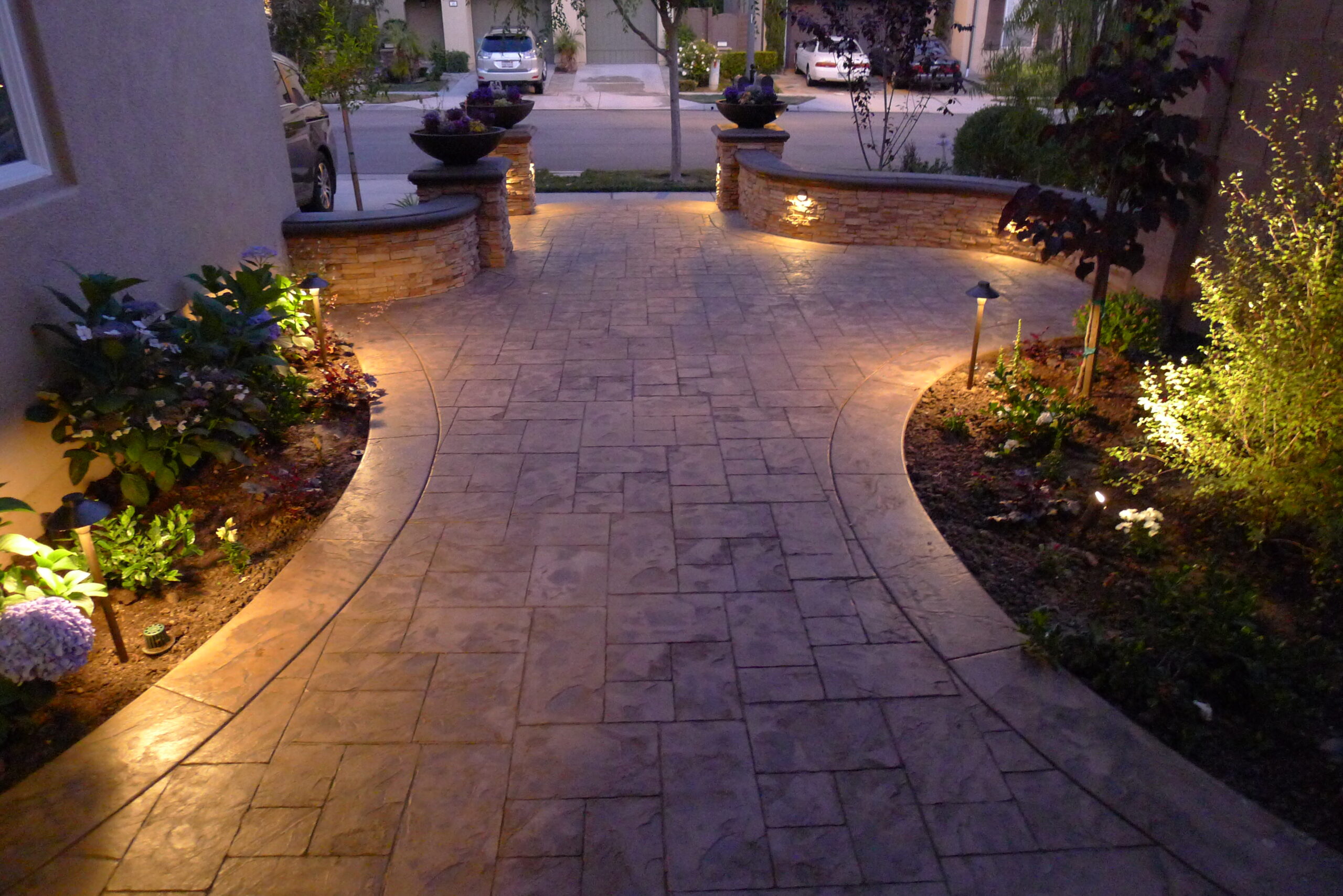
Permeable pavers allow rainwater infiltration, recharging local aquifers rather than contributing to stormwater runoff and drainage system strain. This feature becomes increasingly valuable in water-smart landscaping in Orange County drought rebate programs that incentivize sustainable installations.
Converting traditional turf areas to permeable pavers delivers exceptional value in high-property-value coastal communities. This strategy reduces irrigation requirements while addressing environmental regulations and enhancing property appeal among sustainability-conscious buyers.
Decade-long projections reveal substantial financial advantages for drought-tolerant landscaping despite higher initial investments in Orange County's climate. Cumulative savings from reduced water consumption, eliminated maintenance contracts, and utility rebates create compelling economic justification beyond environmental benefits.
Drought-tolerant landscaping reduces outdoor water consumption by 50% to 70% compared to traditional turf-based designs. This reduction translates directly to utility bill decreases ranging from $300 to $800 annually, depending on property size.
Over 10 years, water savings alone total $3,000 to $8,000 before accounting for inevitable rate increases. Combined with maintenance cost elimination, total decade savings easily surpass $25,000 for comprehensive drought-tolerant installations.
MWDOC Turf Replacement Program offers rebates reaching $2 per square foot for converting traditional lawns to water-efficient alternatives. A 1,000-square-foot conversion generates $2,000 in immediate rebate funds, substantially offsetting initial installation costs.
These rebates effectively reduce break-even timelines by approximately one year for typical residential projects. Additional municipal and state incentive programs periodically supplement water district offerings, further improving drought-tolerant landscaping's financial attractiveness.
Break-even points arrive in six years for $15,000 redesign projects when annual combined savings reach $2,500. This calculation accounts for water reduction, maintenance elimination, and equipment replacement costs avoided over time.
Following break-even, homeowners enjoy 14 to 24 years of financial returns before major plant replacement becomes necessary. This extended benefit period significantly exceeds typical home ownership durations, ensuring current owners realize substantial net savings.
| Category | Drought-Tolerant Landscaping | Traditional Landscaping |
| Typical Redesign Cost | $10,000 to $15,000 | Lower upfront cost, varies by turf and irrigation choice |
| Annual Water Cost | $300 to $800 | $800 to $1,200 |
| Annual Maintenance | Minimal, folded into $2,500 combined yearly savings | Ongoing mowing, fertilizing, and pest control |
| Break-Even Point | About 6 years on a $15,000 redesign | Not applicable |
| 10-Year Water Savings | $3,000 to $8,000 | Baseline cost, no reduction |
| Total 10-Year Savings | $25,000 or more combined | Baseline cost, no reduction |
| Property Value ROI | 110% to 130% with permeable hardscapes | 100% for standard landscape upgrades |
Property value appreciation represents the most significant long-term return on strategic landscaping investments in Orange County's competitive market. Beyond immediate utility savings and reduced maintenance burdens, professionally designed outdoor spaces deliver measurable resale premiums that exceed original project costs.
Professional landscaping increases property values by 8% to 12% in Orange County's premium residential markets. Xeriscaping conversions add $12,000 to $15,000 to property values in Newport Beach and Laguna Beach specifically.
Standard landscape upkeep returns 104% at resale, according to National Association of Realtors data. Overall landscape upgrades return 100% on investment, while drought-resistant landscaping with permeable hardscapes delivers 110-130% ROI. This premium return reflects buyer preferences for low-maintenance, environmentally responsible outdoor spaces in California's evolving regulatory environment.
Global landscaping services market valuation reached $330.58 billion in 2024, reflecting worldwide demand for professional outdoor design. Projections indicate market expansion to $484.79 billion by 2030, demonstrating sustained industry growth.
Cold plunges and outdoor saunas emerge as wellness features in luxury outdoor spaces, appealing to health-conscious buyers. Additionally, 97% of Realtors believe curb appeal crucially attracts buyers, while automated irrigation systems offer 83% ROI at resale.
Real estate professionals emphasize exterior presentation, with 92% of Realtors recommending sellers improve curb appeal before listing. This advice reflects market data showing first impressions significantly influence buyer perceptions and offer amounts.
Newport Beach and Laguna Beach represent premium markets where designing a drought-tolerant yard with ornamental grasses delivers exceptional returns. Coastal properties particularly benefit from drought-tolerant strategies that address water restrictions while maintaining sophisticated aesthetic standards.
Strategic financing selection determines actual project costs when interest charges compound over repayment periods exceeding immediate cash availability. Understanding loan product structures, qualification requirements, and true cost calculations enables homeowners to minimize financing expenses while accessing necessary capital.
Credit cards with 0% introductory periods work well for projects under $15,000 when homeowners can eliminate balances before promotional rates expire. This approach avoids interest charges entirely, making smaller drought-tolerant conversions essentially interest-free when properly managed.
Larger comprehensive redesigns benefit from home equity loans providing fixed rates and extended terms up to 30 years. Personal loans suit mid-sized projects requiring fast funding without equity requirements, despite higher interest rates than secured products.
HELOC products offer flexible borrowing with lower rates than personal loans but utilize homes as collateral with variable rates. This structure suits phased projects where exact costs remain uncertain during initial planning stages.
Home equity loans provide fixed monthly payments and long repayment terms but impose closing costs and require sufficient equity. Personal loans remain unsecured with fast approval processes but carry higher interest rates and shorter repayment terms. HELOC agreements use homes as collateral, creating foreclosure risk if borrowers default on payment obligations. Home equity loans similarly require sufficient equity accumulation, typically a minimum of 15-20% after loan funding.
Contractor financing offers easy application processes at project sales points, streamlining approval without separate lender interactions. However, rates frequently exceed those of traditional lending products, and hidden fees occasionally inflate true borrowing costs.
Homeowners should compare contractor financing terms against bank and credit union offerings before accepting convenience-based arrangements. Professional landscape experts save you time and money through project efficiency, but financing decisions require independent evaluation of multiple competitive options.
| Financing Option | Typical Rate | Works Well For |
| 0% Intro Credit Card | 0% for 12 to 18 months | Projects under $15,000 paid off before the promo period ends |
| Personal Loan | 6.74% to 20.94% | Mid-size projects that need fast funding without home equity |
| HELOC | About 8.0% variable | Phased projects where the full scope is not yet set |
| Home Equity Loan | 7.99% to 8.13% fixed | Larger redesigns that need predictable payments over up to 30 years |
| Contractor Financing | Varies, often higher than bank rates | Homeowners who want one-step approval at the point of sale |
Financial analysis clearly favors drought-tolerant landscaping for Orange County homeowners evaluating 10-year ownership horizons and property value considerations. Initial installation premiums of $10,000 to $15,000 generate cumulative savings exceeding $25,000 through reduced water consumption, eliminated maintenance contracts, and utility rebate programs. Break-even points arrive within six years, providing over a decade of net positive returns before plant replacement becomes necessary.
Traditional landscaping's lower upfront costs prove deceptive when calculating decade-long water bills, fertilization expenses, and equipment replacement requirements. Properties in premium coastal markets, including Newport Beach and Laguna Beach, realize particular value from drought-tolerant installations that address environmental regulations while maintaining sophisticated aesthetic standards. Planning your landscape for year-round beauty in Orange County requires understanding how native plants maintain visual interest across seasons without intensive maintenance interventions.
Material selection significantly influences both immediate budgets and long-term satisfaction with outdoor spaces across diverse climate zones. Comparing pavers, flagstone, concrete, and tile reveals durability differences that affect replacement timelines and lifecycle costs beyond initial square-foot pricing. Permeable hardscapes complement drought-tolerant planting by reducing irrigation runoff while recharging local aquifers, addressing environmental concerns that increasingly influence property valuations.
Signature Landscape has designed and built outdoor spaces across Orange County since 1989, completing more than 1,000 projects backed by 150 or more five-star reviews. Our team holds California Contractor's License #583113 and uses 3D CAD visualization so you can see your drought-tolerant redesign before any work begins.
Whether you are converting a traditional lawn to xeriscaping or planning a full hardscape and planting overhaul, we can walk you through material choices, rebate programs, and financing options that fit your budget. Call us at (949) 859-9969 or request a free quote to start your Orange County drought-tolerant landscaping project.
Converting 1,000 square feet of turf to xeriscaping typically runs $5,000 to $10,000, while a comprehensive property-wide redesign averages around $15,000. The MWDOC Turf Replacement Program offers rebates of up to $2 per square foot, which can offset a meaningful share of the upfront cost. Final pricing depends on plant selection, irrigation changes, and how much hardscape work the project includes.
For most Orange County homeowners, yes. A $15,000 drought-tolerant redesign reaches break-even in about six years through combined water and maintenance savings of roughly $2,500 annually, then keeps generating savings for another 14 to 24 years before major plant replacement is needed. Add in a property value return of 110% to 130% when paired with permeable hardscapes, and the investment outperforms most traditional landscape upgrades.
Native and drought-adapted plant schemes generally hold their structure and appearance for 20 to 30 years with minimal intervention. Hardscape materials paired with the planting, such as interlocking pavers or natural stone, last 20 to 30 years as well when properly sealed and maintained. Actual longevity depends on plant species, soil conditions, and how consistently the irrigation system is adjusted for the landscape's water needs.
Yes. Smaller conversions under $15,000 often fit within a 0% introductory credit card offer if the balance is paid off within 12 to 18 months. Larger redesigns typically use a HELOC, a fixed-rate home equity loan with terms up to 30 years, or a personal loan for faster approval without home equity. Comparing rates across banks, credit unions, and contractor financing before signing helps homeowners avoid unnecessary interest costs.
Yes. Xeriscaping conversions add an estimated $12,000 to $15,000 in property value in Newport Beach and Laguna Beach specifically, on top of the broader 8% to 12% value increase professional landscaping delivers across Orange County. Coastal buyers increasingly favor low-water, low-maintenance outdoor spaces that still meet HOA architectural standards, which supports stronger resale demand in these premium markets.
Schedule A Consultation