Call our Professional Contractors!
(949) 859-9969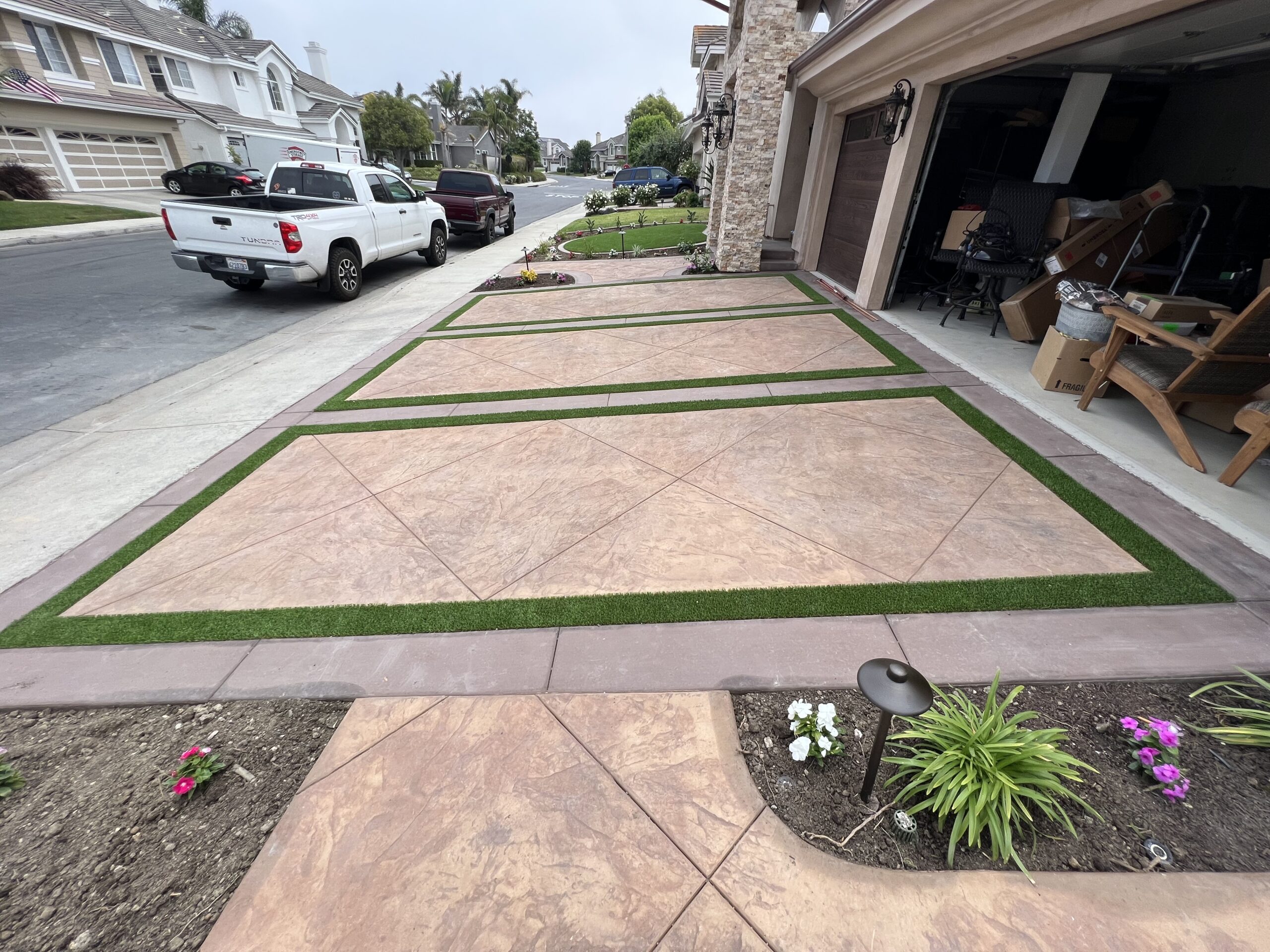
Orange County homeowners face unique opportunities when investing in exterior improvements because the county's high property values and lifestyle expectations make outdoor spaces critical to both daily living and resale performance. With approximately 1.16 million housing units, a median owner-occupied home value of $962,600, and a median household income of $116,289, the market supports high-value hardscaping projects that deliver measurable returns through enhanced livability and buyer appeal. Three categories dominate: paver patios that expand entertainment capacity, paver driveways that strengthen curb appeal while managing drainage, and retaining walls that solve grade challenges while adding usable space on sloped lots.
National cost recovery data support Orange County's focus on these features. An 18-by-16-foot concrete paver patio shows 95% cost recovery on a $10,500 project cost, while a comprehensive landscape upgrade, including natural-flagstone walkways and stone planters, achieves 100% cost recovery at $9,000. Local conditions amplify these benchmarks because Orange County's hillside terrain, runoff concerns, and premium home values shift projects toward professionally installed, engineered solutions that command higher budgets but deliver stronger long-term performance and resale confidence.
Hardscape projects cluster around three categories addressing both lifestyle enhancement and practical site challenges. Patios and outdoor living spaces lead application segments, with nearly 45% of homeowners adding outdoor structures choosing a patio or terrace as their primary focus.
Paver driveways rank highly for curb appeal and long-term durability, offering superior drainage management compared to poured concrete. Retaining walls are critical for hillside and sloped properties, where proper engineering and drainage design prevent structural failure while creating terraced outdoor zones.
Patios directly expand usable square footage beyond interior walls. An 18-by-16-foot concrete paver patio provides approximately 288 square feet of entertainment space with costs ranging from $8,500 to $27,000, depending on finish level, drainage complexity, and integrated features such as seating walls or lighting.
Nearly 45% of homeowners adding or updating outdoor structures chose a patio or terrace, making patios the most popular hardscape category. National survey data shows 55% of landscape professionals reported increased demand for new patios, reinforcing the category's strength in homeowner intent and professional installation volume.
Paver driveways distinguish themselves through modular repairability and superior drainage performance on sloped sites common throughout Orange County. Permeable interlocking concrete pavers manage runoff more effectively than solid surfaces, a critical advantage in areas prone to pooling or erosion.
Concrete driveways may require resurfacing every 5 to 10 years, whereas damaged pavers can be replaced individually. A typical two-car paver driveway ranges from $15,000 to $34,000, with costs varying based on site preparation, base depth, and driveway transformations involving pattern complexity or premium paver selections.
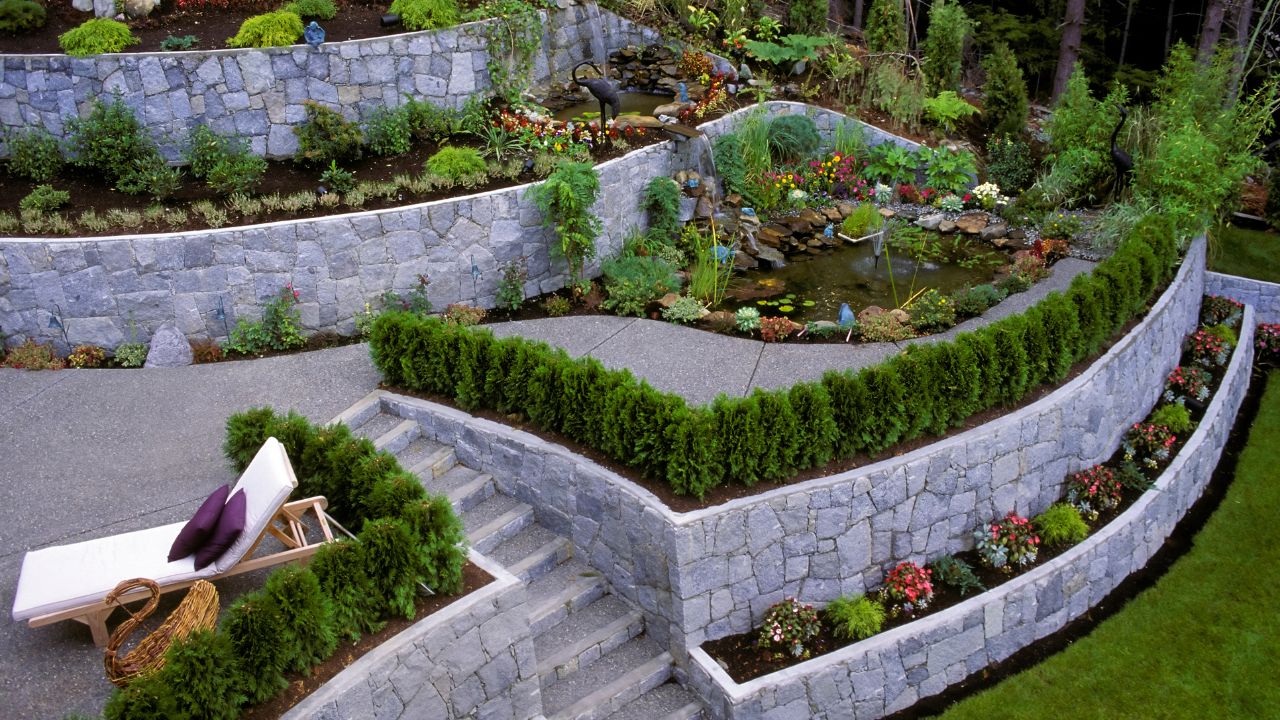
Retaining wall systems range from decorative segmental block assemblies to fully engineered poured concrete structures depending on wall height, lateral load, and site geometry. Segmental retaining wall block systems are recommended for walls under 6 feet because they balance cost, seismic performance, and drainage compatibility without extensive formwork.
Material costs vary significantly: timber walls cost $15 to $25 per square foot, segmental block systems $20 to $35 per square foot, natural stone installations $25 to $40+ per square foot, and poured concrete structures $52 to $57 per square foot locally. Drainage failure is the leading cause of wall failure, making proper backfill, weep systems, and aggregate placement more important than material selection in determining long-term performance on Orange County's hillside properties.
These three categories lead demand because they address the county's most common property challenges while delivering measurable improvements in both daily function and resale value. Patios extend living space into outdoor areas, supporting entertaining and family use in a climate permitting year-round outdoor activity.
Paver driveways strengthen curb appeal while solving drainage and repairability concerns that matter more on sloped lots. Retaining walls are critical infrastructure for hillside neighborhoods, where grade stabilization and terraced outdoor zones require engineered solutions that generic landscaping cannot provide.
Patios deliver functional square footage without the permitting complexity or structural demands of interior additions. Fifty-five percent of landscape professionals reported increased demand for new patios, indicating sustained homeowner interest in outdoor living upgrades that expand entertainment capacity.
Survey data shows 33% of homeowners upgrade outdoor areas specifically to extend living space, rising to 41% for Gen X and 38% for Millennials. Patios satisfy this motivation by creating dedicated zones for dining, lounging, and socializing that function as extensions of interior rooms while maintaining direct access to kitchens and living areas.
Paver driveways offer superior curb appeal through design flexibility, color selection, and pattern variation that poured concrete cannot match. Forty-six percent of outdoor projects occur in the front of the home, making driveways a high-visibility investment that influences buyer perception during showings.
Durability advantages include individual unit replacement after settling or damage, better drainage performance on sloped sites, and resistance to cracking that plagues poured concrete in seismically active regions. These functional benefits combine with visual impact to make paver installations a defensible premium over lower-cost concrete alternatives, particularly in communities where home values exceed $1 million.
Retaining walls stabilize grade transitions and prevent erosion on sloped lots common throughout Orange County's coastal and inland hill communities. These structures create level outdoor zones where patios, lawns, and planting areas would otherwise be impossible due to steep slopes or unstable soil conditions.
Engineered retaining walls also manage water movement and prevent downslope migration of backfill material, protecting both the wall and adjacent structures from drainage-related damage. Orange County permit requirements reflect these risks, with walls exceeding common exempt conditions requiring plans, engineering stamps, and permitting before construction to ensure structural adequacy and property value protection.
Generational differences significantly influence hardscape project selection, budget allocation, and feature prioritization. Millennials pursue the most aggressive outdoor upgrades, while Gen X balances practicality with family-oriented functionality.
Baby Boomers prioritize lower-maintenance solutions and safety-focused improvements over elaborate entertaining builds. These demographic patterns reveal which features resonate most strongly with each buyer cohort, allowing homeowners to align project decisions with generational expectations when preparing homes for sale.
Millennials pursue major structural outdoor improvements at the highest rate, with 65% undertaking projects such as patios, retaining walls, or pergolas. Thirty-eight percent of Millennials upgrade specifically to extend living space, reflecting a preference for outdoor rooms that function as extensions of interior areas.
Millennials add fire features at significantly higher rates than older cohorts, with 37% incorporating fire pits or fireplaces compared to 23% of Gen X and 17% of Baby Boomers. This generational preference reflects Millennials' focus on outdoor entertaining and social gathering spaces supporting evening use beyond daylight hours.
Gen X homeowners pursue major structural outdoor improvements at a 61% rate, nearly matching Millennials, but with a stronger emphasis on practical family use over social entertaining. Forty-one percent of Gen X homeowners upgrade outdoor areas to extend living space, the highest share among all generations surveyed.
This emphasis aligns with Gen X's life stage, where growing families require flexible outdoor zones for both supervised children's play and adult relaxation. Gen X hardscape projects therefore, emphasize durability, low maintenance, and multi-functional design over highly specialized entertaining features.
Baby Boomers remain active in the hardscape market but show lower participation in major structural projects. Fifty-four percent pursue major structural outdoor improvements, while 28% upgrade specifically to extend living space.
Boomer preferences skew toward low-maintenance solutions, accessible pathways, and stable surfaces that reduce trip hazards and simplify long-term care. Fire features appeal to only 17% of Boomers, suggesting this generation values functional comfort over dramatic entertaining elements when allocating outdoor renovation budgets.
Orange County's geography creates distinct regional patterns shaping hardscape priorities based on settlement density, terrain, and lot characteristics. Coastal and urban infill areas prioritize space efficiency and permeable drainage, while suburban master-planned communities emphasize curb appeal and entertaining features.
Hillside and rural fringe properties require engineered solutions for grade stabilization, long driveway access, and runoff management. These regional differences influence both project budgets and feature selection beyond aesthetic preferences.
Urban and dense infill properties in coastal Orange County favor courtyard patios, permeable pavers, and low-profile retaining walls that maximize usable space within compact lots. These designs emphasize privacy screening, efficient drainage, and low-maintenance plantings because limited lot sizes prevent expansive outdoor entertaining zones.
Permeable interlocking concrete pavers perform particularly well in dense settings because they manage runoff without requiring extensive drainage infrastructure. Space efficiency and drainage compliance drive design choices more than aesthetic variety in these constrained environments.
Suburban master-planned communities prioritize paver driveways, patios, seat walls, and outdoor kitchens that support curb appeal and backyard entertaining. These neighborhoods often feature HOA architectural guidelines encouraging cohesive streetscape appearance, making high-quality outdoor living upgrades a competitive necessity.
Family-oriented features such as fire pits, built-in seating, and lighting systems appeal strongly to Gen X and Millennial buyers in these communities. Suburban lots typically provide sufficient space for elaborate hardscape assemblies without the grade challenges complicating hillside construction.
Rural and hillside lots require engineered retaining walls, reinforced drainage systems, and structurally adequate driveway bases to manage steep slopes and unstable soils. These properties often feature significant elevation changes, demanding professional design and permitting.
Long driveways on hillside sites must accommodate gradient, turning radius, and erosion control simultaneously, making paver systems attractive for their superior drainage and repairability. Engineering, access durability, and grade control dominate hardscape decision-making on these properties more than aesthetic preference.
ROI assessment begins with national cost recovery benchmarks and adjusts for Orange County's above-average home values and buyer expectations. The National Association of Realtors provides authoritative ROI data, showing 95% cost recovery on paver patios and 100% recovery on landscape upgrades.
Local market conditions amplify these figures because Orange County's median owner-occupied home value of $962,600 creates buyer cohorts that prioritize outdoor quality more than lower-priced markets. Homeowners should evaluate projects based on cost recovery, durability, maintenance burden, and alignment with buyer priorities in their specific neighborhood and price tier.
A new paver patio shows 95% cost recovery on a $10,500 project cost, making it one of the highest-returning outdoor investments measured by the National Association of Realtors. A comprehensive landscape upgrade demonstrates 100% cost recovery at $9,000, including natural-flagstone walkways, stone planters, plantings, and mulch.
Forty percent of homeowners were planning a hardscape project in recent national surveys, up from 25% in 2016, indicating sustained growth in homeowner intent. Sixty-one percent of landscape professionals reported increased demand for landscape upgrades, reinforcing commercial viability and consumer confidence in these project categories.
Seventy-one percent of buyers consider aesthetics in product purchase decisions, while an identical 71% prioritize durability. Sixty-nine percent consider comfort in purchase decisions, indicating buyers evaluate outdoor projects holistically rather than focusing on cost alone.
These priorities suggest successful hardscape projects must balance visual appeal with long-term performance and daily usability. Orange County's premium home values and climate support year-round outdoor use, making comfort and livability critical factors influencing buyer willingness to pay for quality installations.
Forty-six percent of outdoor projects occur in the front of the home, driven primarily by curb appeal and resale preparation rather than personal enjoyment. Seventy-five percent of consumers believe landscaping increases home value, while 69% say curb appeal is important when deciding which home to purchase.
These figures explain why front-yard investments such as decorative walkways and paver driveways often receive higher budgets than their backyard entertaining value would suggest. Front hardscape functions as a marketing asset, influencing buyer perception before they enter the home, justifying premium materials and professional installation to maximize Orange County home value during resale preparation.
Cost drivers vary significantly across hardscape categories, but common factors include material selection, site preparation, labor rates, drainage infrastructure, and permitting requirements. Orange County labor costs run approximately 15% to 25% above national averages, making local contractor quotes typically higher than online calculators suggest.
Site-specific variables such as access constraints, demolition needs, soil conditions, and grade complexity can add thousands of dollars to baseline estimates. Homeowners should budget for these variables rather than relying on generic square-foot multipliers that ignore local conditions.
Orange County permit exemptions are limited for retaining walls, with most functional structures requiring engineering plans, structural calculations, and building department approval before construction. Walls exceeding common exempt conditions—typically 3 feet in height or located near property lines—require professional design and permitting, adding $1,500 to $5,000+ to project costs.
Material selection significantly impacts pricing, with timber walls running $15 to $25 per square foot, segmental block systems $20 to $35 per square foot, natural stone installations $25 to $40+ per square foot, and poured concrete structures $52 to $57 per square foot. Orange County labor costs add 15% to 25% above national averages, making local quotes substantially higher than generic online estimates.
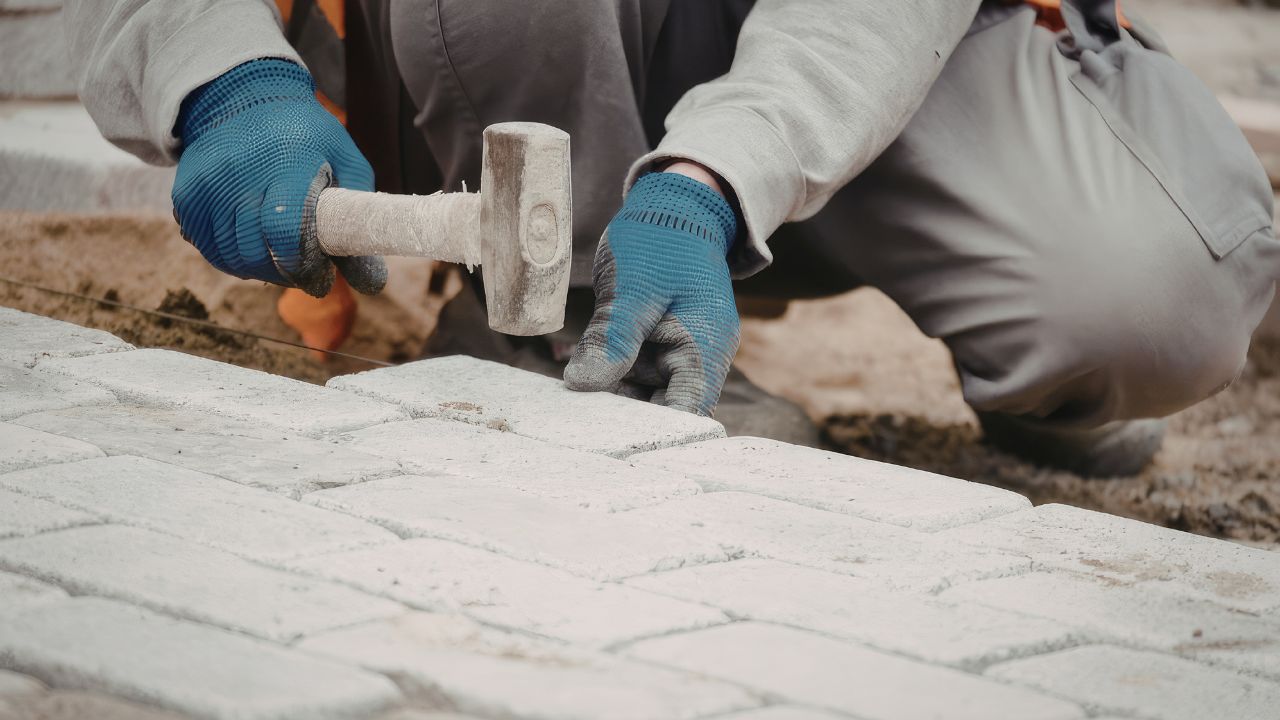
Paver driveway installation begins with demolition and excavation of existing surfaces, followed by grading to establish proper drainage slope. Compacted aggregate base layers provide load-bearing support, typically 6 to 12 inches deep depending on soil conditions and expected vehicle weight.
Paver setting follows base preparation, with units placed in predetermined patterns and secured by restraint edges. Homewyse estimates driveway pavers cost $17.88 to $23.75 per square foot installed, while Techo-Bloc places typical two-car driveway projects between $15,000 and $34,000, depending on material grade, pattern complexity, and site preparation needs.
Basic paver patios cost approximately $20.03 to $25.95 per square foot for simple rectangular layouts with standard concrete pavers and minimal grading. Techo-Bloc estimates typical patio projects range from $8,500 to $27,000, with an average around $17,750 for mid-range installations including lighting, minor grade work, and quality paver selections.
Premium patio projects incorporate fire features, built-in seating, outdoor kitchen tie-ins, and extensive drainage systems that elevate costs beyond basic square-foot multipliers. Larger patios achieve lower per-square-foot costs through efficiency gains, while small courtyard patios carry proportionally higher costs due to mobilization requirements.
Secondary features such as outdoor kitchens, fire elements, lighting systems, and walkways increase both project budgets and buyer interest by creating complete outdoor entertainment environments. These additions transform basic patios into lifestyle destinations supporting extended outdoor use and social gathering.
While secondary features carry lower adoption rates than primary hardscape categories, they generate disproportionate marketing impact and buyer enthusiasm. Strategic inclusion of one or two secondary features often differentiates premium listings from comparable homes in competitive neighborhoods.
Twelve percent of renovating homeowners add or upgrade outdoor kitchens, making this category smaller by adoption but highly impactful for properties targeting entertainment-focused buyers. Built-in outdoor kitchens rank among the most desired kitchen upgrades, appealing particularly to Millennials who prioritize outdoor entertaining capacity.
Outdoor kitchen costs range from $13,000 to $36,000, depending on appliance selection, countertop materials, and utility connections. These installations deliver strong lifestyle value but show lower cost recovery than primary hardscape features because buyer preferences vary more widely regarding cooking equipment compared to universal patio or driveway appeal.
Twenty-one percent of homeowners add or upgrade fire features such as fire pits or fireplaces, extending outdoor use into evening hours and cooler seasons. Millennials lead fire feature adoption at 37%, compared to 23% for Gen X and 17% for Baby Boomers, making these installations particularly valuable when marketing to younger buyer cohorts who prioritize fire pit installations.
Seventy-eight percent of system projects include outdoor lighting, with landscape lighting representing 81% of lighting upgrades among those pursuing illumination improvements. Fire pits typically cost $4,000 to $14,000, while comprehensive lighting systems range from $4,500 to $15,000, depending on fixture count, voltage system, and control integration.
Walkways serve dual functions as aesthetic focal points and practical circulation paths connecting driveways, entries, and outdoor living areas. Natural-flagstone walkways and stone planters appear prominently in the National Association of Realtors' landscape upgrade package that achieved 100% cost recovery.
Typical walkway projects cost $3,500 to $10,000, depending on material selection, width, length, and site preparation requirements. Front walkways particularly enhance curb appeal because they frame the approach to the main entry and establish visual continuity between driveway and doorway, making them cost-effective investments when preparing homes for sale.
Orange County's hardscape market reflects the intersection of high home values, favorable climate, and strong homeowner demand for outdoor improvements. The county has 1.16 million housing units with an owner-occupied rate of 56.4%, below the national average of 65.2% but still representing substantial owner demand.
Median owner-occupied home value reaches $962,600 compared to $332,700 nationally, creating a market where homeowners possess both the financial capacity and resale incentive to invest in professional landscaping. Median household income of $116,289 versus $80,734 nationally further supports discretionary spending on outdoor living enhancements.
Orange County's installed hardscape market is estimated at approximately $183.2 million in 2026 based on modeled analysis of national hardscape spending, owner-occupied housing stock, and local income premiums. This represents a premium county market where project quality, engineering rigor, and professional installation matter more than volume-driven commodity pricing.
For homeowners considering hardscape investments, the strongest approach combines ROI evidence with lifestyle benefits and local market conditions. Patios, paver driveways, and retaining walls deliver measurable value recovery while solving practical challenges unique to Orange County's terrain and climate. Companies like Signature Landscape bring decades of local expertise to these projects, ensuring installations meet both immediate functional needs and long-term durability expectations, supporting property value in one of California's most competitive housing markets.
Choosing the right hardscape investment is a major decision, and the contractor you hire determines whether your patio, driveway, or retaining wall holds its value for decades or needs expensive repairs in a few years. Since 1989, Signature Landscape has helped over 1,000 Orange County homeowners design and build outdoor spaces that still look and perform beautifully 30+ years later.
Every project begins with a free consultation and a 3D CAD rendering, so you see exactly how your finished space will look before any work begins. No guesswork. No surprises. Just a design built around your property, your lifestyle, and the long-term value you want from your investment.
Request your free consultation and let's talk about which hardscape features will deliver the strongest results for your Orange County home.
Schedule A Consultation