Call our Professional Contractors!
(949) 859-9969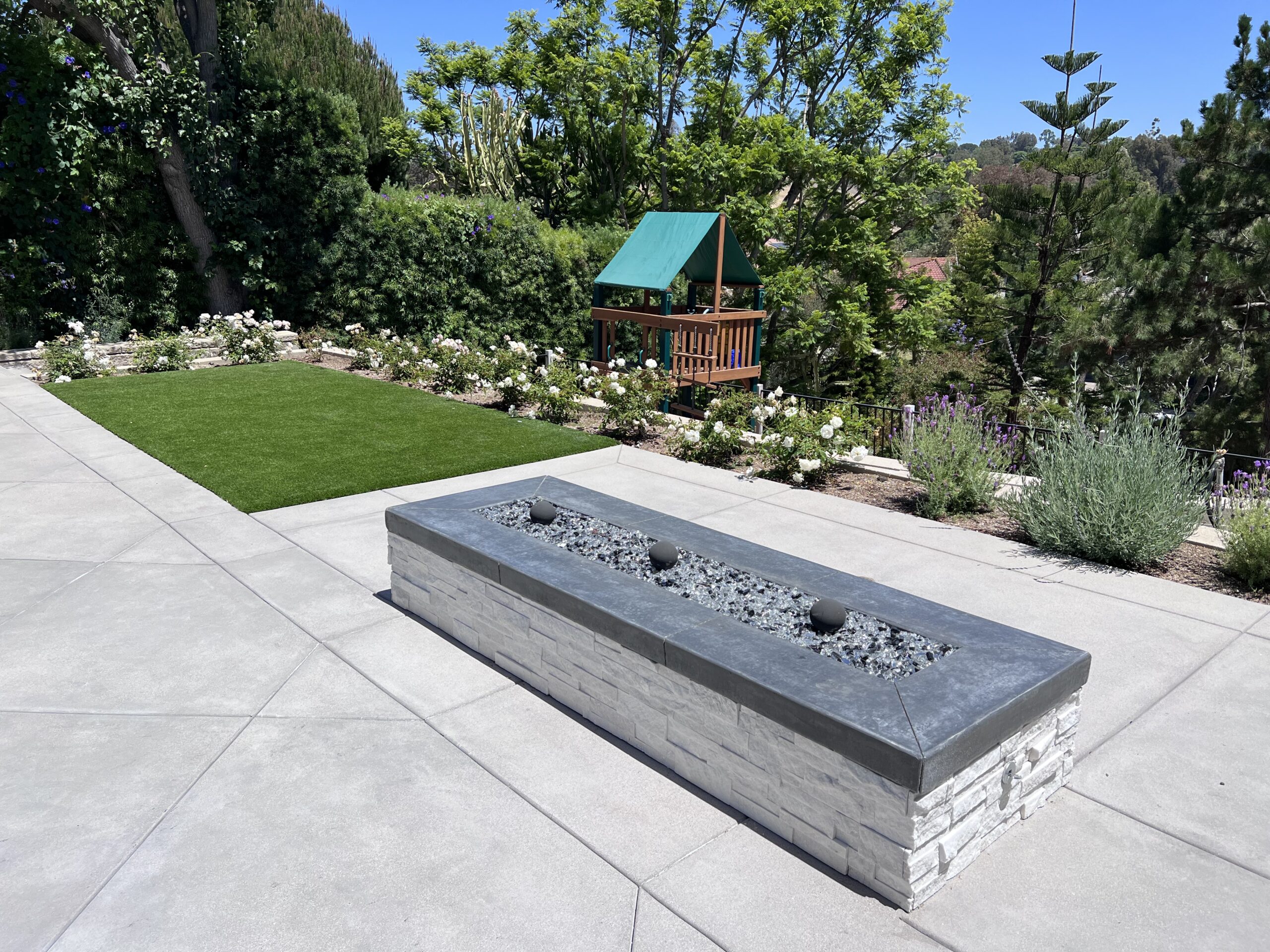
Orange County homeowners invest in outdoor fire features to extend living space and increase property value. The choice between an outdoor fireplace and a fire pit affects initial costs, social functionality, and long-term returns. Fire pits offer 360-degree access and casual gathering spaces, while outdoor fireplaces create architectural focal points with superior smoke management. Understanding these distinctions helps homeowners align investments with lifestyle priorities and spatial constraints.
Market data shows strong growth in outdoor living investments, with the global fire pits market valued at $8.37 billion in 2025. Orange County's median household income of $116,289 positions residents to pursue premium outdoor upgrades. Installation timelines range from 15 minutes for portable fire bowls to three weeks for custom outdoor fireplaces.
Fire pits and outdoor fireplaces serve distinct functions in outdoor entertainment spaces. Fire pits provide open, circular or square designs allowing guests to gather from all sides. Outdoor fireplaces function as permanent architectural structures with enclosed fireboxes, chimneys, and mantels replicating indoor aesthetics outdoors.
Design differences affect heat distribution, smoke management, and installation requirements. Fire pits radiate warmth in all directions, creating inclusive social circles. Outdoor fireplaces direct heat forward while channeling smoke upward through built-in chimneys, reducing wind sensitivity and improving air quality.
Fire pits are open depressions designed for 360-degree flame access, accommodating circular seating, placing all guests equidistant from the heat source. Fire bowls are standalone, bowl-shaped features elevated on legs or pedestals, prioritizing portability and decorative appeal over maximum heat output.
Wood-burning fire pits lead the market with 47.9% share due to authentic ambiance and cooking versatility. Fire bowls accommodate 3-6 people with lower heat output. Installation requires 15-20 feet of total diameter to maintain safe clearance from structures and vegetation.
Outdoor fireplaces are permanent structures featuring an enclosed firebox, chimney, and mantel. These elements create vertical architectural presence, anchoring outdoor living areas. The chimney system draws smoke upward and away from seating areas, maintaining clear air during use.
Construction requires masonry skills and hardscape integration. Outdoor fireplaces demand 12-15 feet of width and 8-12 feet of depth for proper proportions. The enclosed firebox directs heat forward while protecting the flame from wind, extending usability during breezy conditions.
Fire pits require 15-20 feet of total diameter, including safety clearances. Simple portable models need only level ground and propane connections. Adding value to your Orange County property with a professionally installed fire pit involves site preparation, gas line installation, and local code compliance.
Outdoor fireplaces require permits and licensed contractors. Professional fire pit installation takes 2-5 days for permanent in-ground designs. Outdoor fireplace installation requires 1-3 weeks due to foundation work, masonry construction, and chimney assembly.
Initial investment varies dramatically across fire feature categories. Fire bowls start at $100 for basic portable models, while outdoor fireplaces begin at $3,000. Mid-range and premium options incorporate higher-grade materials, custom sizing, and professional design services.
Installation complexity drives labor costs and project timelines. Fire bowls require 15-30 minutes for assembly on level surfaces. Professional installations involving gas lines, retaining walls, and integrated seating add substantial cost but deliver permanent value.
Fire bowls range from $100-$800 for budget options, $500-$2,500 for mid-range models, and $1,500-$5,000 for premium designs. Fire pits span a $150-$2,000 budget, a $2,000-$10,000 mid-range, and $8,000-$25,000+ premium categories. Outdoor fireplaces start at a $3,000-$8,000 budget, rise to $8,000-$25,000 mid-range, and reach $20,000-$50,000+ for premium custom installations.
Budget tiers use basic materials like steel fire bowls or simple stone rings. Mid-range options incorporate stacked stone veneers, gas ignition systems, and professional installation. Premium tiers feature custom masonry work, imported materials, and architectural integration.
Fire bowl installation takes 15-30 minutes for portable models requiring no permanent connections. Professional fire pit installation requires 2-5 days for excavation, utility connections, and hardscape integration. Fire pit installation Orange County permits, costs, and design requirements vary by municipality and project scope.
Outdoor fireplace installation demands 1-3 weeks for foundation work, masonry construction, and finishing. Complex projects involving custom stonework, integrated seating, and dual-sided fireplaces extend timelines. Weather conditions and material availability affect completion schedules.
Permanent fire features require building permits in most Orange County jurisdictions. Permit applications verify proper setbacks from property lines, structures, and overhead obstructions. Gas line installations mandate licensed contractor involvement and pressure testing.
Annual maintenance includes chimney cleaning for outdoor fireplaces and ash removal for all wood-burning units. Gas systems require periodic inspection of burners, valves, and connections. Masonry surfaces benefit from sealing treatments to prevent water infiltration and freeze-thaw damage.
Ambiance derives from flame visibility, heat distribution, and smoke management characteristics. Fire pits create central gathering points where guests face inward toward shared warmth. Outdoor fireplaces establish directional focal points, organizing seating in semicircular arrangements facing the firebox.
Social interaction patterns reflect these spatial configurations. Fire pits encourage informal conversation circles where everyone participates equally. Outdoor fireplaces create more formal entertainment zones with defined host and guest positions.
Fire pits radiate heat 360 degrees, allowing flexible seating arrangements around the perimeter. This omnidirectional warmth accommodates 8-12 people at comfortable distances from the flame. Creating a cozy outdoor gathering space with a fire pit design ideas for Orange County yards maximizes social cohesion through circular configurations.
Outdoor fireplaces direct heat forward in a 120-180 degree arc. Seating concentrates in front of the firebox, where warmth reaches guests most effectively. This directional pattern creates conversation groups facing the fire rather than circular discussions.
Wood-burning fire pits can be challenging during variable wind conditions. Shifting breezes push smoke toward guests, requiring frequent seat adjustments. Gas-burning fire pits eliminate smoke production entirely but sacrifice wood fire ambiance.
Outdoor fireplaces channel smoke upward through integrated chimneys, removing it from the entertainment area. Proper chimney height and draft design ensure consistent updraft during windy conditions. Fire bowls have wind sensitivity due to elevated design, causing flames to flicker and smoke to scatter unpredictably.
Fire pits excel at cooking functionality with open flame access. Adjustable grill grates, rotisserie attachments, and direct ember cooking enable diverse culinary techniques. The 360-degree access allows multiple cooks to work simultaneously on different food items.
Fire bowls have limited cooking capability due to shallow depth and elevated positioning. Most models lack grill attachment points or sufficient coal beds for sustained cooking. Outdoor fireplaces rarely accommodate cooking equipment, serving primarily decorative and heating functions.
Selection criteria balance available space, budget constraints, and entertaining priorities. Fire pits suit homeowners prioritizing flexible gathering spaces and outdoor cooking capabilities. Outdoor fireplaces appeal to those seeking architectural statements and smoke-free entertainment zones.
Orange County's climate permits year-round outdoor living, influencing feature selection. Coastal areas with frequent breezes favor outdoor fireplaces for wind protection. Inland communities with calmer conditions accommodate fire pits effectively.
Suburban areas, including Irvine, Mission Viejo, and Ladera Ranch, offer larger lots accommodating expansive outdoor fireplaces. These communities demonstrate 72% preference for permanent fire pits integrated with comprehensive outdoor kitchens. Generous setbacks and privacy buffers support fire features without impacting neighbors.
Urban areas like Santa Ana and Anaheim favor compact fire bowls and smaller gas fire pits. Limited patio dimensions require space-efficient solutions that maintain functionality. Urban homeowners show 35% portable fire bowl preference, prioritizing flexibility and seasonal storage.
Fire pits require 15-20 feet of total diameter, including safety clearances and seating zones. Compact patios under 300 square feet struggle to accommodate permanent fire pits without compromising other functions. Fire bowls fit spaces as small as 8x8 feet while providing flame ambiance.
Outdoor fireplaces demand 12-15 feet of width and 8-12 feet of depth for proper scale. These footprint requirements suit properties with dedicated outdoor rooms exceeding 400 square feet. Smaller spaces appear overwhelmed by full-height fireplace structures.
Consumer priorities rank cost and ROI at 92 out of 100 for decision importance. Ambiance and aesthetics score 88, while functionality rates 85. Outdoor kitchen integration increases priority scoring as homeowners seek comprehensive entertainment zones.
Design aesthetics at 82 and layout efficiency at 78 indicate a strong preference for cohesive outdoor environments. Ease of maintenance scores 75, reflecting time-constrained professionals seeking low-effort solutions. Weather protection rates 70, particularly important for coastal Orange County locations experiencing marine layer moisture.
Outdoor kitchen layouts determine workflow efficiency and social integration with fire features. Linear layouts provide basic cooking functions along single-wall runs suitable for compact spaces. L-shape and U-shape configurations create dedicated cooking zones separating preparation from entertaining areas.
Fire feature placement relative to kitchen work zones affects safety and functionality. Fire pits positioned 10-15 feet from grilling areas prevent heat overlap while maintaining visual connection. Outdoor fireplaces often anchor opposite patio ends from kitchens, bookending entertainment spaces with dual focal points.
Linear layouts place all elements, including grill, counter, and storage in a single row. These designs require 6 to 12 feet of length while maintaining minimal depth. L-shape layouts use two perpendicular runs joined at a corner, creating open-sided workspaces that accommodate bar seating.
Galley layouts position elements on two parallel sides or along single extended runs beneath covered structures spanning 12 to 18 feet with maximum cooking positions. Corner layouts wrap islands at angles, fitting into patio corners across 9 to 12 feet. U-shape layouts wrap counters on three sides, creating enclosed workspaces requiring minimum 12x12 feet.
Linear layouts sacrifice counter space but maintain simple utility connections and the lowest costs. L-shape layouts create natural work triangles separating cooking, prep, and cold storage zones while enabling social interaction through integrated bar seating.
Galley layouts offer maximum cooking positions suitable for serious entertainers hosting large groups. Orange County outdoor kitchen installations favor L-shape and U-shape designs balancing efficiency with guest engagement. U-shape layouts provide dedicated hot, cold, and wet zones rivaling indoor professional kitchens.
Linear kitchens have limited counter space, restricting food preparation during multi-course meals. Exposed single-wall designs offer no inherent weather protection without supplemental pergolas. L-shaped inside corners can become dead space if poorly designed.
Galley layouts have limited placement flexibility, requiring parallel runs that dictate patio organization. Transform your backyard designing multifunctional spaces with cooking areas, lounges, and fire pits through integrated roof structures and windbreak walls. U-shaped layouts can feel enclosed if too narrow, creating cramped workspaces.
Orange County demographics create favorable conditions for premium outdoor living investments. The population of approximately 3.17 million residents includes substantial affluent segments. Median household income reaches $116,289, significantly exceeding national averages and supporting discretionary spending on property enhancements.
Age distribution concentrates purchasing power in the 45-54 range, representing the largest demographic for outdoor kitchen purchases. These established homeowners possess both financial resources and lifestyle priorities favoring outdoor entertainment. Approximately 60% of outdoor kitchen buyers have children, driving family-friendly design requirements.
The 45-54 age range dominates outdoor kitchen purchases, followed by 35-44 cohorts. These demographics prioritize entertaining capabilities and property value appreciation. Per capita income in Orange County stands at $54,557, supporting individual discretionary spending beyond household budgets.
Family status significantly influences design preferences, with 60% of buyers having children at home. These households require durable materials, safety features, and flexible spaces accommodating both adult entertaining and family use. How to budget for a complete backyard entertainment space in Orange County addresses multifunctional design requirements for diverse user groups.
Suburban U-shaped outdoor kitchen adoption reaches 68% due to larger lot sizes supporting expansive designs. Permanent fire pit preference stands at 72% in suburban communities prioritizing integrated outdoor rooms. These homeowners invest in comprehensive solutions maximizing property value and lifestyle enhancement.
Urban linear outdoor kitchen adoption reaches 42% among space-constrained properties under 5,000 square feet. Portable fire bowl preference hits 35% in urban settings where seasonal storage and flexible arrangements prove essential. Median planned home renovation spend for 2026 reaches $15,000, with top-tier buyers allocating $80,000 for complete outdoor transformations.
The global outdoor living structures market reached $2.5 billion to $3.3 billion in 2025. Projections indicate growth to $6.1 billion to $6.6 billion by 2034-2036, reflecting a Compound Annual Growth Rate of 6.1% to 6.5% driven by increasing home values and lifestyle priorities.
The global fire pits market valued at $8.37 billion in 2025 projects growth to $13.37 billion to $14.9 billion by 2033-2034, demonstrating sustained consumer demand. Patios and decks offer up to 80% ROI, while outdoor living spaces can add $25,000 to $65,000 to resale value.
Expert guidance emphasizes phased investments delivering immediate utility while supporting future expansion. Starting with high-quality core elements provides better long-term value than spreading budgets across multiple basic features. Professional design ensures proper spatial relationships between cooking, dining, and lounging zones.
Material selection balances aesthetic preferences with maintenance requirements and climate durability. Natural stone weathers gracefully but requires periodic sealing. Porcelain tile resists staining and moisture but lacks the warmth of natural materials.
Premium outdoor living spaces provide $45,000 to $65,000 resale value uplift for comprehensive installations. Combining L-shape outdoor kitchens with permanent gas fire pits delivers optimal balance, supporting cooking functionality, social gathering, and architectural interest.
Strategic positioning places fire features 10-15 feet from cooking areas, maintaining visual connection while preventing heat overlap. How to choose the perfect fire pit for your outdoor living space in Orange County considers fuel type, size, and hardscape integration. Gas fire pits offer instant ignition and precise flame control, while wood-burning units provide authentic ambiance at lower initial cost.
Linear outdoor kitchens paired with portable fire bowls maximize functionality on patios under 250 square feet. These compact configurations provide full grilling capabilities while maintaining flexibility. Corner layouts utilize 90-degree angles efficiently, fitting cooking zones into tight spaces.
Vertical storage solutions incorporate overhead cabinets and wall-mounted tool racks preserving counter space. Built-in seating with hidden storage compartments eliminates separate furniture requirements. Multi-fuel fire bowls transition between propane and gel fuels, accommodating varying usage patterns.
Galley layouts with integrated pergolas protect cooking zones from occasional rainfall and intense summer sun. Motorized screens and retractable awnings extend usability during windy conditions. Infrared heaters supplement fire feature warmth, maintaining comfort during cooler evenings.
Outdoor fireplaces provide consistent heat output unaffected by wind, enabling entertainment through winter months. Professional installation ensures proper draft and smoke management regardless of weather. Weather-resistant cabinetry and sealed countertops prevent moisture damage during extended exposure.
Selecting between outdoor fireplaces and fire pits requires evaluating budget parameters, available space, and entertaining priorities. Fire pits deliver versatile gathering spaces with 360-degree access and cooking capabilities. Outdoor fireplaces create architectural focal points with superior smoke management and directional heat distribution.
Orange County's favorable climate and affluent demographics support premium outdoor living investments. Suburban homeowners gravitate toward permanent installations integrated with comprehensive outdoor kitchens. Urban residents prioritize space-efficient solutions balancing functionality with compact footprints.
The outdoor fireplace cost spectrum from $3,000 to $50,000+ reflects material quality, design complexity, and professional installation requirements. Fire pit comparison reveals budget-friendly entry points starting under $200 for portable bowls. Premium permanent fire pits reach $25,000 when integrated with custom hardscape and seating.
Market projections indicate sustained growth in outdoor fire features, with the global fire pits market expanding to $13.37-$14.9 billion by 2033-2034. Orange County's median household income of $116,289 positions residents for continued investment in property enhancements. ROI data shows outdoor living spaces adding $25,000-$65,000 to resale value with up to 80% return.
Ambiance considerations extend beyond flame aesthetics to smoke management, heat distribution, and social interaction patterns. Fire pits foster inclusive circular gatherings, while outdoor fireplaces create more formal entertainment zones. Fuel choices between wood, natural gas, and propane affect operational costs, maintenance requirements, and environmental impact.
Optimal outcomes emerge from professional design integrating fire features with outdoor kitchen layouts, seating arrangements, and landscape architecture. OC homes benefit from cohesive outdoor environments, maximizing property value while delivering lifestyle enhancements. Strategic investments in quality materials and expert installation ensure decades of reliable performance and enduring aesthetic appeal.
You do not have to figure it out alone. Signature Landscape has designed outdoor living spaces across Orange County since 1989, with 1,000+ completed projects and 150+ five-star reviews to show for it. We will walk your yard, talk through how you actually want to use the space, and show you the finished design in 3D before any work starts. That way, you see exactly what you are paying for: a fireplace or a fire pit. Ready to bring warmth to your backyard? Request a free quote or contact us to get started!
Schedule A Consultation