Call our Professional Contractors!
(949) 859-9969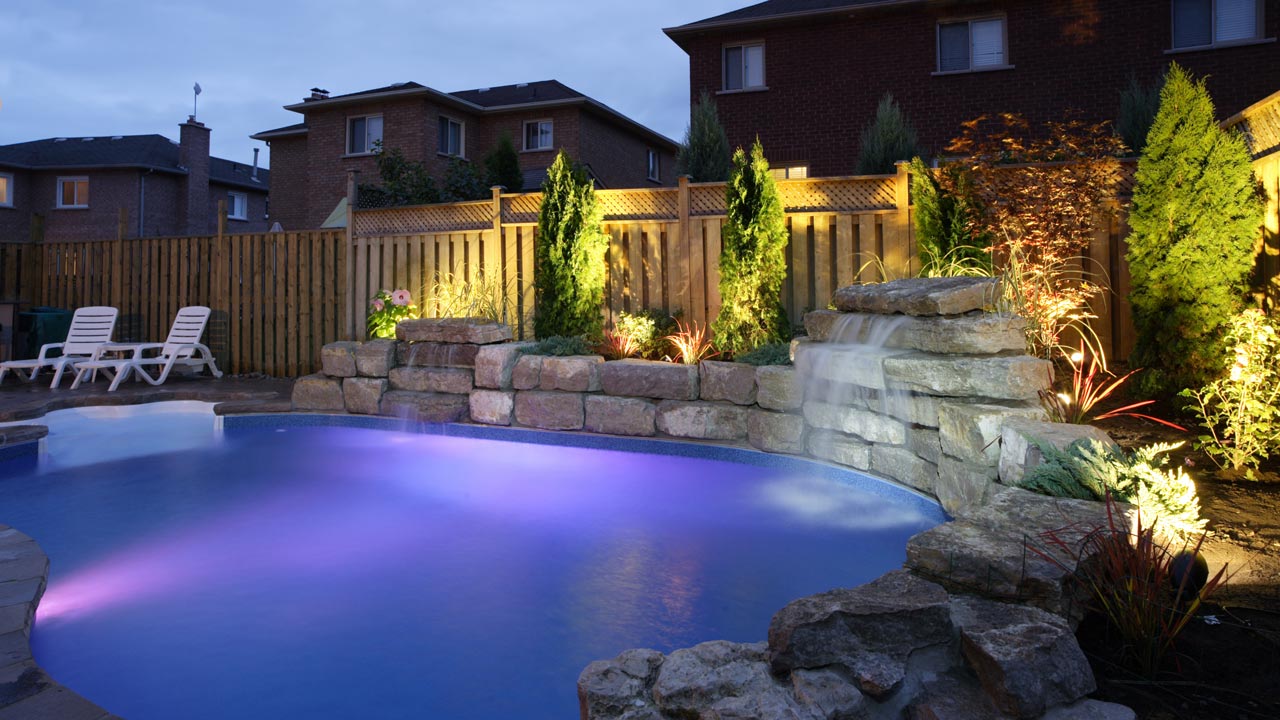
Pool landscaping in Orange County affects comfort, safety, water consumption, maintenance burden, and the finished outdoor-living experience. EPA reports outdoor water use accounts for more than 30% of average household consumption and reaches 60% in arid regions. Poolside plants and hardscape must function effectively alongside coastal heat, wind exposure, salt air, irrigation requirements, and drainage behavior.
Below, you’ll find plant selection traits, deck and hardscape material considerations, water-smart irrigation approaches, drainage and permeable surface strategies, and design elements including shade, privacy, and lighting. Signature Landscape has been creating outdoor environments in Orange County for over 38 years, coordinating pool design, hardscaping, irrigation systems, drainage repair, and modern landscape planning. Each element works together to create poolside spaces that reduce water waste while maintaining year-round comfort and visual appeal.
Orange County poolside landscapes must respond to microclimate variability, water-efficiency expectations, and maintenance realities specific to coastal Southern California. Plant performance, hardscape comfort, and irrigation behavior all depend on site-specific exposure and material selection.
Understanding these factors prevents costly redesign and reduces long-term maintenance. Coastal conditions differ significantly from inland locations, requiring adjusted plant lists, hardscape choices, and irrigation scheduling.
Coastal OC conditions vary by city and site exposure, with Newport Coast, Newport Beach, and Laguna-style sites facing salt air, fog, marine layer, wind, and corrosion concerns. Inland OC locations experience higher heat and drier conditions throughout summer months. Coastal tolerance, pool splash exposure, and root behavior depend on exact plant species, cultivar selection, soil composition, site exposure, and maintenance planning.
EPA data shows residential outdoor water use across the U.S. accounts for nearly 8 billion gallons daily, mainly for landscape irrigation. Outdoor water use represents more than 30% of average household consumption and reaches 60% in arid regions. As much as 50% of outdoor water can be lost through wind, evaporation, and runoff from inefficient irrigation methods. A household with an automatic landscape irrigation system that is not properly maintained can waste up to 25,000 gallons annually.
High-water turf adjacent to pool decks causes irrigation overspray that wastes water and creates slip hazards. Mulches that float, blow, or track easily migrate into the pool, increasing cleaning frequency and filter maintenance.
Selecting coastal climate plants for landscaping poolside OC environments requires evaluating litter production, root behavior, water needs, and safety characteristics. Plant traits determine both visual appeal and long-term maintenance burden around pools.
Prioritizing function alongside aesthetics prevents common poolside plant problems. Water-conserving plant choices reduce irrigation costs while supporting California conservation goals.
Messy fruiting trees drop debris into pools, increasing cleaning time and clogging skimmers. Heavy-flowering trees create litter that requires daily removal during bloom periods. Brittle branches pose safety concerns during Santa Ana wind events common in Orange County.
Invasive root systems can damage pool structure, plumbing, and underground utilities over time. Thorny plants along paths create injury risk for barefoot traffic around pool decks.
Mediterranean-climate plants that tolerate dry summers once established reduce irrigation demand while maintaining year-round visual interest. These species evolved in climates similar to coastal Orange County with wet winters and prolonged summer drought. Established water-conserving plant choices require minimal supplemental irrigation beyond natural rainfall in most coastal OC locations.
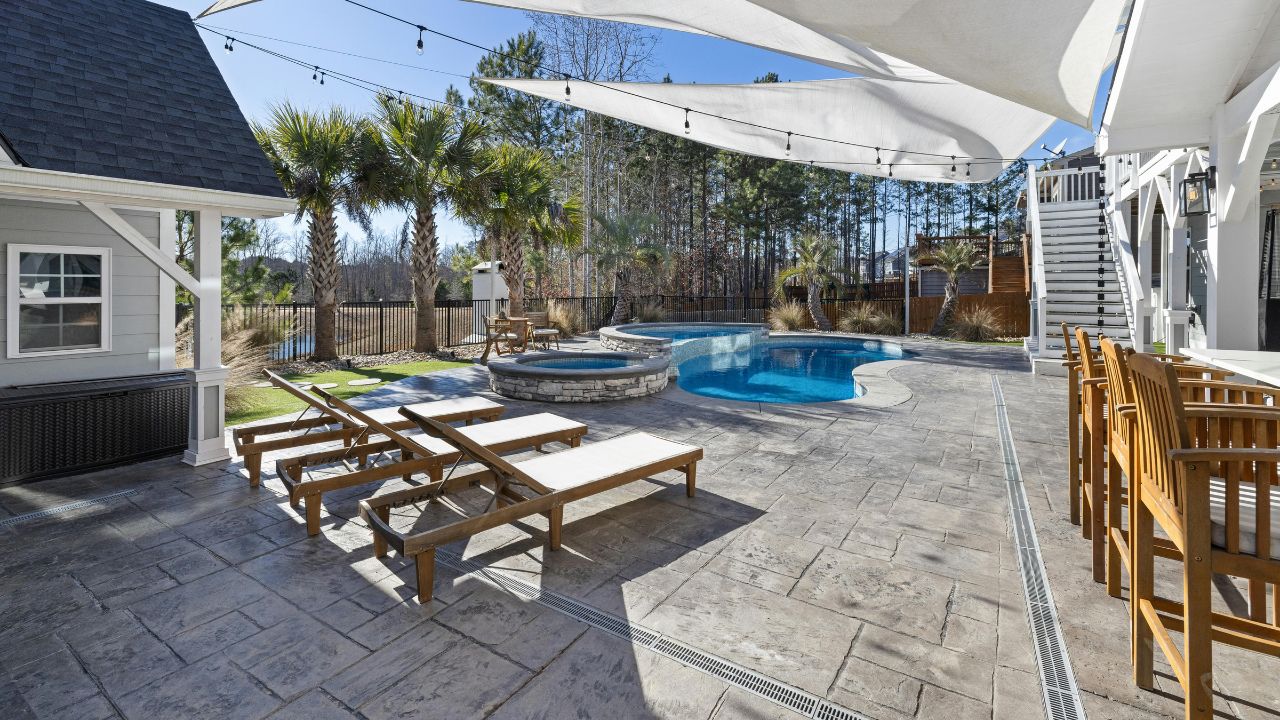
The splash zone encompasses the pool edge area with non-slip, heat-conscious hardscape and low-litter planting immediately adjacent to water. The transition zone includes seating areas, shade structures, walkways, planters, lighting fixtures, and drainage details around the pool perimeter. The privacy and backdrop zone incorporates shrubs, small trees, ornamental grasses, walls, and softscape massing that frames the pool view.
The utility zone accommodates pool equipment, irrigation controllers, drainage infrastructure, lighting transformers, access paths, and maintenance clearances. The outdoor-living zone integrates BBQ areas, fire features, patios, pergolas or shade elements, and entertainment spaces connected to pool activities.
| Zone | Primary Function | Key Design Elements |
| Splash zone | Pool edge safety and cleanliness | Non-slip, heat-conscious hardscape; low-litter planting only |
| Transition zone | Everyday use and circulation | Seating areas, shade structures, walkways, planters, lighting, drainage details |
| Privacy and backdrop zone | Screening and framing the pool view | Shrubs, small trees, ornamental grasses, walls, softscape massing |
| Utility zone | Equipment access and upkeep | Pool equipment, irrigation controllers, drainage infrastructure, access paths |
| Outdoor-living zone | Entertainment and dining | BBQ areas, fire features, patios, pergolas, shade elements |
Hardscape design ideas for pool surrounds must address slip resistance, heat absorption, drainage performance, and long-term durability in coastal climates. Material selection directly affects barefoot comfort and safety around water.
Proper hardscape choices reduce maintenance while improving usability throughout Orange County's extended pool season. Heat-resistant pavers for Orange County pool decks provide surface temperature comparisons across common materials.
Cool pool deck materials include travertine, light-colored concrete, composite decking, and heat-resistant pavers designed for barefoot comfort. Light-colored pavers reduce heat absorption compared with darker surfaces, maintaining lower surface temperatures during summer afternoons.
Textured, slip-conscious surfaces around splash zones improve traction when wet without creating uncomfortable roughness underfoot. Hardscape materials can be compared by heat feel, slip texture, sealing and maintenance requirements, design style compatibility, and budget constraints.
| Material | Heat Comfort | Slip Resistance | Maintenance |
| Travertine | Naturally cool underfoot, low heat absorption | Textured surface with good wet traction | Occasional sealing recommended |
| Light-colored concrete pavers | Cooler than dark finishes in direct sun | Textured finish improves grip | Low; periodic joint sand refresh |
| Composite decking | Engineered to stay cool in shaded areas | Slip-conscious textured surface | Minimal; occasional cleaning |
| Porcelain pavers | Moderate heat retention; lighter tones help | High-traction textured finish available | Very low; stain resistant |
Control joints, base preparation, slope grading, and drainage infrastructure must be planned before surface material selection. Landscape drainage and hardscape design work together to prevent water pooling and structural settling around pool decks.
Pavers offer repairability advantages because individual units can be adjusted or replaced more easily than monolithic concrete slabs. Travertine, porcelain, concrete pavers, and natural stone represent common hardscape options with varying heat performance, slip characteristics, and maintenance profiles. Each material brings distinct aesthetic qualities suited to different architectural styles and landscape themes.
Water-smart irrigation planning reduces consumption, prevents overspray onto pool surfaces, and matches plant water needs to delivery schedules. Efficient systems lower utility costs while supporting California water conservation priorities.
Water-smart landscaping in Orange County includes drought rebate programs that incentivize turf replacement and irrigation upgrades. Smart irrigation technology has advanced significantly in recent years, offering precise control over water delivery.
Hydrozone planning groups plants with similar water needs together, preventing overwatering of drought-tolerant species. EPA research shows well-managed irrigation can reduce a household's irrigation water use by 15%, saving nearly 7,600 gallons annually. Drip and microirrigation systems in planting beds reduce overspray that wastes water on hardscape. Mulch application and soil improvement help retain moisture, extending time between irrigation cycles.
The WaterSense label indicates EPA certification showing products are at least 20% more water efficient than average products in their category. Weather-based irrigation controllers use local weather data and landscape conditions to tailor watering amount, frequency, and timing automatically.
EPA data demonstrates that replacing a clock-based controller with a WaterSense-labeled irrigation controller can reduce average home irrigation water use by up to 30%. This replacement can save up to 15,000 gallons annually in typical residential applications. More than 28 million U.S. homes have in-ground sprinkler systems that benefit from smart controller technology. Pressure regulation at spray bodies and nozzles prevents misting, runoff, and uneven water distribution across landscaped areas.
Fixing pressure problems and overspray reduces runoff into hardscape and pool areas that waste water and carry debris. Sprinkler overspray onto hardscape wastes water while potentially transporting mulch, soil particles, and organic matter toward pool surfaces.
Proper drainage prevents water accumulation that damages hardscape, destabilizes planting beds, and creates slip hazards around pools. Stormwater management strategies protect property while supporting regional water quality goals.
Permeable surfaces reduce runoff volume and recharge groundwater when site conditions allow. Creating low-maintenance yards with hardscaping in Orange County often incorporates drainage solutions into the overall design.
Stormwater is runoff generated when precipitation flows over land or impervious surfaces without percolating into the ground. Rainwater and stormwater retention features support turf replacement projects and drainage objectives where site conditions permit. SoCal Water$mart turf replacement projects must include stormwater retention features as part of program requirements.
Permeable paver areas provide effective drainage and runoff reduction in transition zones around pool decks. SoCal Water$mart allows no hardscape within transformed turf replacement areas except permeable hardscape that meets program specifications.
Slope grading and runoff control prevent erosion, protect pool equipment, and direct water away from structures. Properly designed slopes integrate planting beds, retaining elements, and drainage infrastructure to manage water movement during winter rainfall.
Shade structures, privacy screening, lighting, and outdoor living features transform pool areas into complete entertainment spaces. Thoughtful design extends pool usability throughout the day and into evening hours.
Landscaping with privacy in mind explores tree and shrub combinations that provide screening without excessive litter. These elements work together to create comfortable, functional outdoor environments.
Low-litter shrubs and structural evergreens provide effective screening while minimizing debris falling into the pool. Strategic placement of privacy plants in backdrop zones maintains clean pool edges while blocking sight lines from neighboring properties.
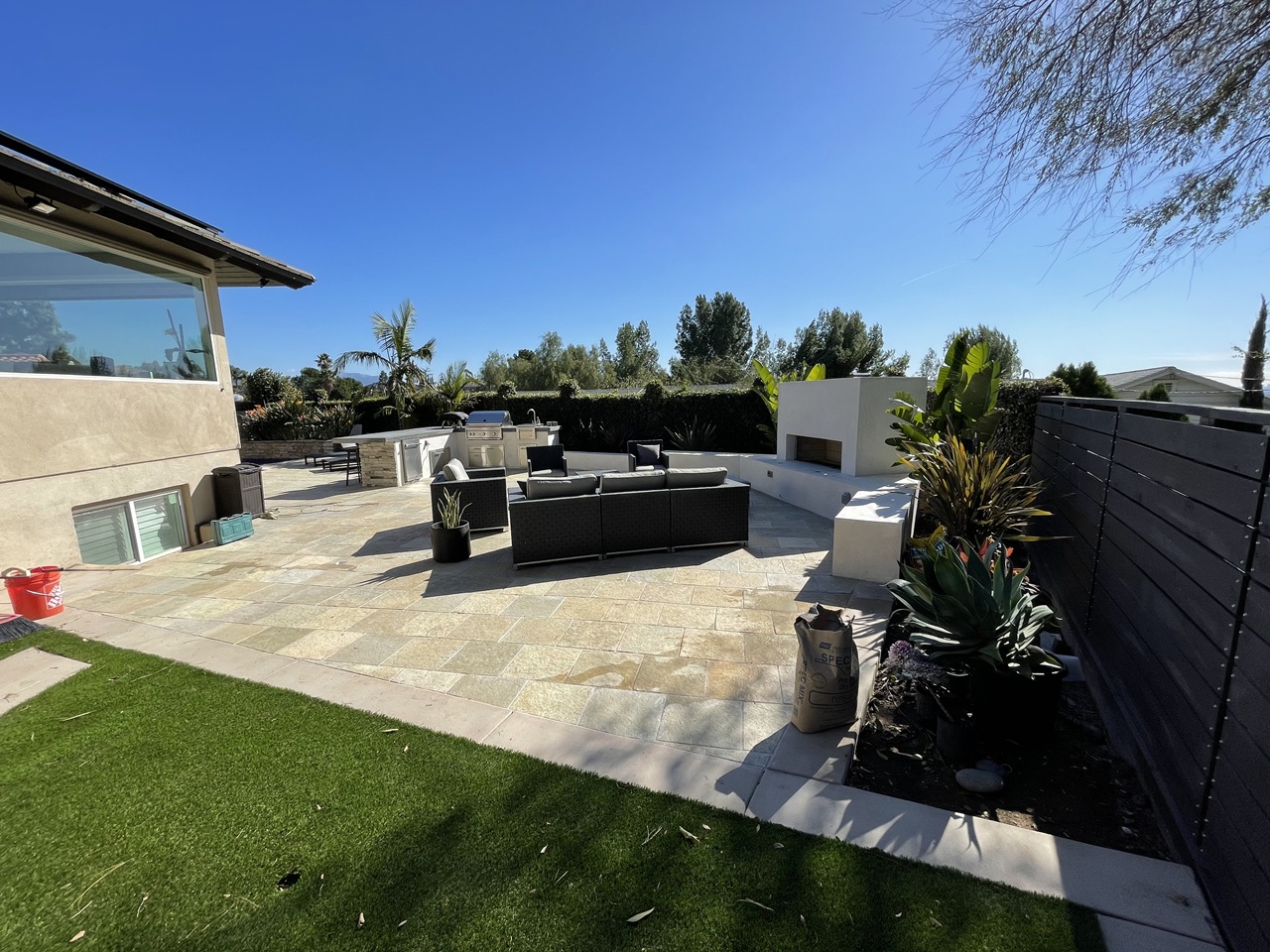
Outdoor kitchens, fire features, pergolas, and covered seating areas extend pool area functionality beyond swimming activities. These features create destination spaces for entertaining, dining, and relaxation that complement poolside activities.
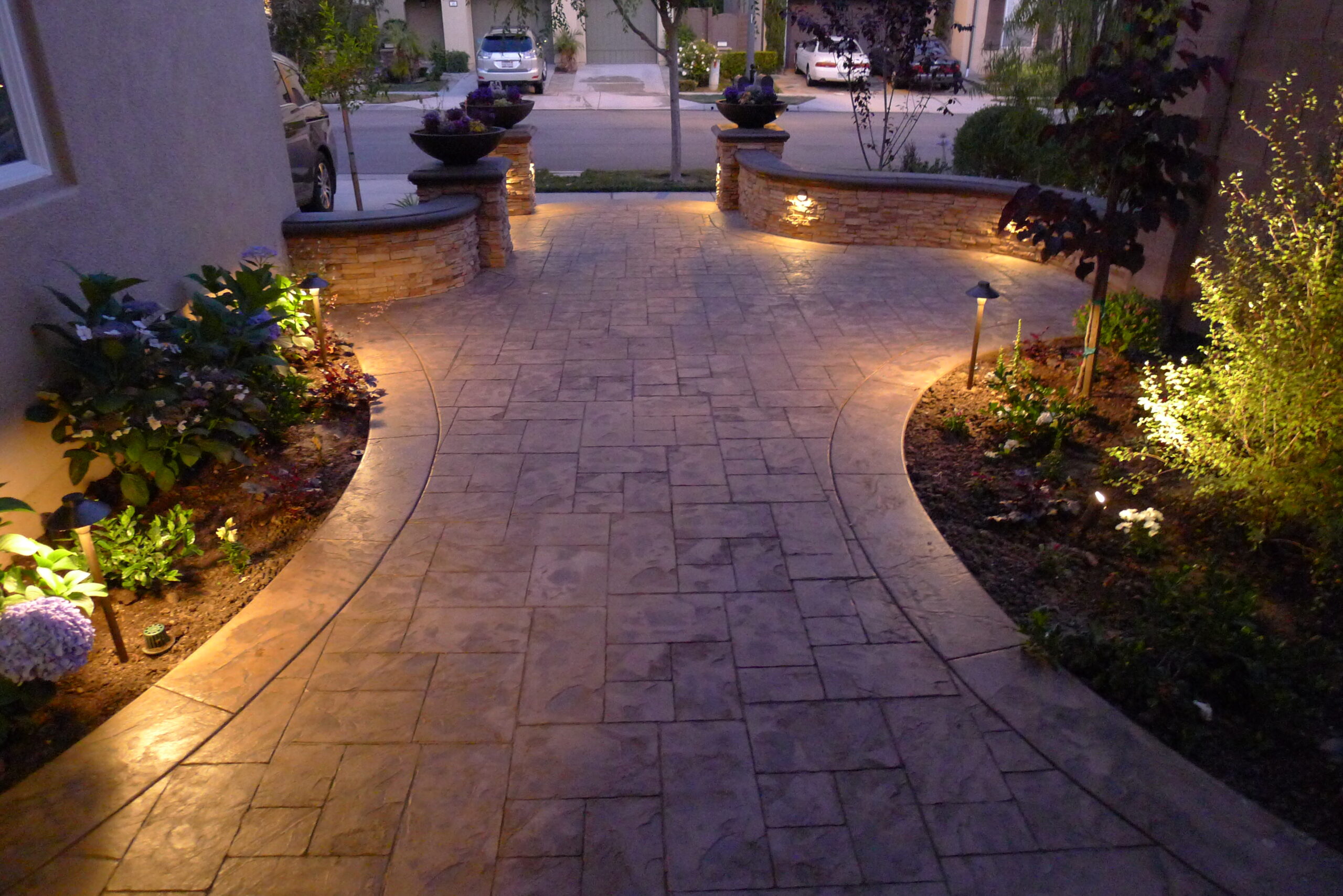
Pathway lighting, deck illumination, and landscape accent lights improve safety during evening pool use. Properly designed lighting creates ambience while ensuring safe movement around water, steps, and grade changes.
Successful low-maintenance pool landscaping requires coordinated planning across all landscape systems from the earliest design stages. Integrated design prevents conflicts between pool equipment, irrigation lines, drainage infrastructure, and planting bed locations.
Budget-conscious landscape planning demonstrates how professional guidance prevents costly mistakes and redesign expenses. System-based thinking produces better long-term results than addressing each element separately.
Integrating deck width, seating clearances, step transitions, coping details, lighting placement, and planting bed dimensions together prevents later conflicts. Coordinated planning ensures irrigation lines do not interfere with future hardscape installation or pool equipment access.
Professional designers understand local microclimate variation, material performance in coastal conditions, and code requirements affecting pool areas. Experienced designers coordinate multiple trades, manage permitting, and deliver 2D CAD visualizations before construction begins.
Signature Landscape has been creating outdoor environments in Orange County for over 38 years across residential and commercial applications. The company coordinates pool design, pool construction, pool remodeling, hardscaping, irrigation system installation, drainage repair, and outdoor lighting. This comprehensive approach ensures all poolside elements work together from initial concept through final installation.
Successful poolside landscaping in Orange County balances aesthetic goals with functional requirements, including water efficiency, maintenance reduction, and coastal-climate durability. Selecting appropriate coastal climate plants, hardscape design ideas, and irrigation strategies creates outdoor spaces that remain comfortable and attractive year-round. Comparing patio materials for Orange County helps homeowners understand performance differences across common hardscape options.
Professional landscape design coordinates pool construction, hardscape installation, water-conserving plant selection, efficient irrigation, drainage solutions, and outdoor living features into complete environments. This integrated approach prevents conflicts, reduces long-term maintenance, and maximizes the investment in poolside outdoor spaces. Signature Landscape brings 38 years of Orange County experience to every pool landscape project, ensuring coastal climate considerations inform every material choice and design decision.
Signature Landscape has been designing and building outdoor environments across Orange County since 1989, coordinating pool design, hardscape selection, water-smart planting, irrigation, and drainage into one process. Our 3D CAD design approach lets you see your finished poolside space before construction begins, so plant choices, hardscape materials, and drainage details are settled with confidence rather than guesswork. Call (949) 859-9969 or request a free quote at signaturelandscape.com/quote to start planning a coastal-climate pool landscape built for Orange County's conditions.
Pool landscaping costs vary based on hardscape material selection, plant density, irrigation upgrades, and any drainage work the site requires. Natural stone and travertine typically cost more than concrete pavers, while permeable paving and drought-tolerant plant palettes can offset some of that expense through reduced water use. Site-specific factors such as slope, soil conditions, and existing drainage infrastructure also affect the final scope. A design consultation with a licensed Orange County landscape contractor provides the most accurate estimate for a specific property.
Mediterranean-climate plants that evolved for dry summers and coastal exposure generally handle salt air, wind, and occasional pool splash with minimal damage. Low-litter shrubs and structural evergreens work well in splash zones because they avoid dropping debris into the water. Plant selection should also account for root behavior near pool structures, since invasive roots can affect plumbing and decking over time. A landscape designer familiar with Orange County's coastal microclimates can match specific species to a property's sun exposure and wind patterns.
Maintenance frequency depends on plant selection, irrigation system type, and hardscape material. Drought-tolerant, low-litter plants paired with drip irrigation and mulch typically need less attention than turf or high-water plantings near the pool edge. Hardscape surfaces such as pavers may need occasional joint sand refresh or sealing, while a poorly maintained irrigation system can waste tens of thousands of gallons a year. A seasonal check of irrigation controllers, drainage points, and plant health helps prevent larger repairs later.
Permeable pavers can often be installed around an existing pool deck, though feasibility depends on current grading, base preparation, and proximity to pool equipment and plumbing. Retrofitting permeable surfaces into transition zones around the pool can improve drainage and reduce runoff without a full deck replacement. Turf replacement programs, such as SoCal Water$mart, may also apply if the project converts lawn area to permeable hardscape. A site evaluation confirms whether the existing base and drainage can support a permeable paver retrofit.
A typical poolside landscaping project includes several weeks of design development, including site analysis and 3D CAD visualization, before construction begins. Simple hardscape or planting updates may take just a few weeks to install, while comprehensive projects involving drainage work, irrigation upgrades, and multiple plant zones can take a few months from start to finish. HOA-governed communities may add several weeks for architectural review approval before construction starts. Coordinating pool, hardscape, planting, and irrigation work under one design-build process helps keep the overall timeline on track.
Schedule A Consultation