Call our Professional Contractors!
(949) 859-9969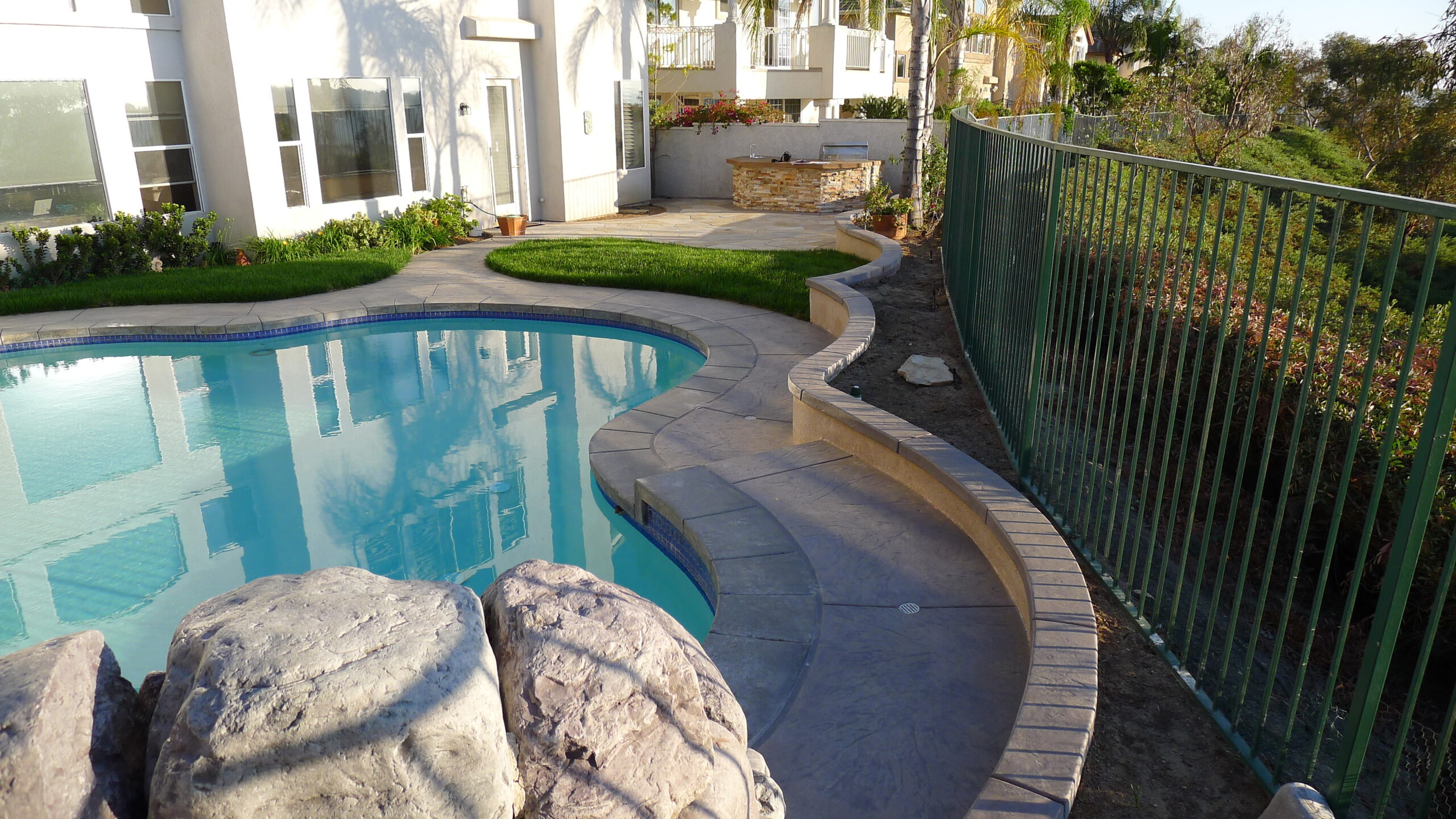
A swimming pool brings families together, but it also needs care and safe access. The CDC reports about 4,000 fatal and 8,000 nonfatal drownings each year in the United States. These are national figures, not local pool counts. Drowning is the main cause of death for children ages one to four. Good pool safety uses more than one layer of protection.
For homeowners in Orange County, Regulatory Compliance and Permits for Landscape Projects matters long before crews start work. The rules affect pool layouts, fences, doors, drains, and the yard around the water. When planning a new pool design, it helps to check these items early. Here is how California pool safety requirements Orange County homeowners face apply to new pools, remodels, and safety upgrades.
The Swimming Pool Safety Act sets rules for certain private home pool jobs. First, find out what type of work you plan to do. A new pool, a remodel, and routine care do not always follow the same permit path.
Under California Health & Safety Code Section 115921, a pool is a structure made for swimming or bathing that holds water more than 18 inches deep. The depth and use of the water matter, not just the pool shape.
The law also has exceptions. For example, some hot tubs and spas with a qualifying locking safety cover are exempt from this part of the Act. This guide focuses on private single-family homes. Public pools, hotel pools, and pools at apartment sites may follow other rules.
Section 115922 generally requires two listed drowning-prevention features when building permits are issued for a new pool or spa, or for a remodel of an existing one, at a private single-family home. The Act has exceptions, and not every pair of features counts. The local building department must inspect required features before final approval.
That does not mean every old pool must add two new devices at once. If your pool has not changed, ask the city or county which rules apply. If you plan pool construction or major changes, check the permit process before you buy safety products. California pool safety laws can affect the plans as well as the finished site. That is why California pool safety requirements Orange County owners review should be tied to the exact permit.
California's Swimming Pool Safety Act lists seven ways to help stop a child from reaching the water. For covered work, you must use a valid pair. Some devices look similar, but the law treats them as separate types.
| Feature | What the law calls for |
| Permanent enclosure | A barrier that meets Section 115923 and separates the pool from the home |
| Removable mesh fencing | A system that meets ASTM F2286, with a qualifying gate |
| Safety cover | A manual or powered cover with an ASTM F1346-23 verifying label |
| Exit alarms | Required audible or spoken alerts on direct-access doors and windows |
| Door closing devices | A qualifying self-latching device and automatic closing on direct-access doors |
| In-water alarm | A working alarm independently certified to ASTM F2208 |
| Other safety method | Equal or greater protection, verified by an approved lab and marked with a label |
Check Section 115922 for the full wording. A product name on its own is not proof that it qualifies. Ask for the test record, label, or manual before choosing an alarm, cover, or fence.
California changed this part of the law effective January 1, 2025. The following pairings do not satisfy the two-feature rule:
| Pair that does not count | Why it matters for planning |
| Exit alarm and closing/latching device on the same door | Two parts on one door do not form an accepted pair |
| Exit alarm and a door latch on separate doors | Splitting these devices across doors does not make the pair valid |
| Safety cover and a qualifying in-water alarm | Each is a listed feature, but this pair is barred |
Confirm each planned pair with the local office before buying.
A fence only helps when it blocks access in real life. Pool safety barriers must still work when a child reaches the gate, a planter, or a low spot in the yard. Residential pool barrier compliance Orange County plans should show these details before installation.
A qualifying enclosure under Section 115923 has set limits. They apply to the whole enclosure, not just one fence panel.
| Barrier detail | California rule |
| Fence height | At least 60 inches |
| Ground clearance | No more than 2 inches below the fence |
| Gaps | Must not let a sphere 4 inches across pass through |
| Gate swing | Away from the pool |
| Gate action | Must close and latch on its own |
| Gate latch height | At least 60 inches above the ground |
| Outer surface | No grips or footholds that allow a child under five to climb over |
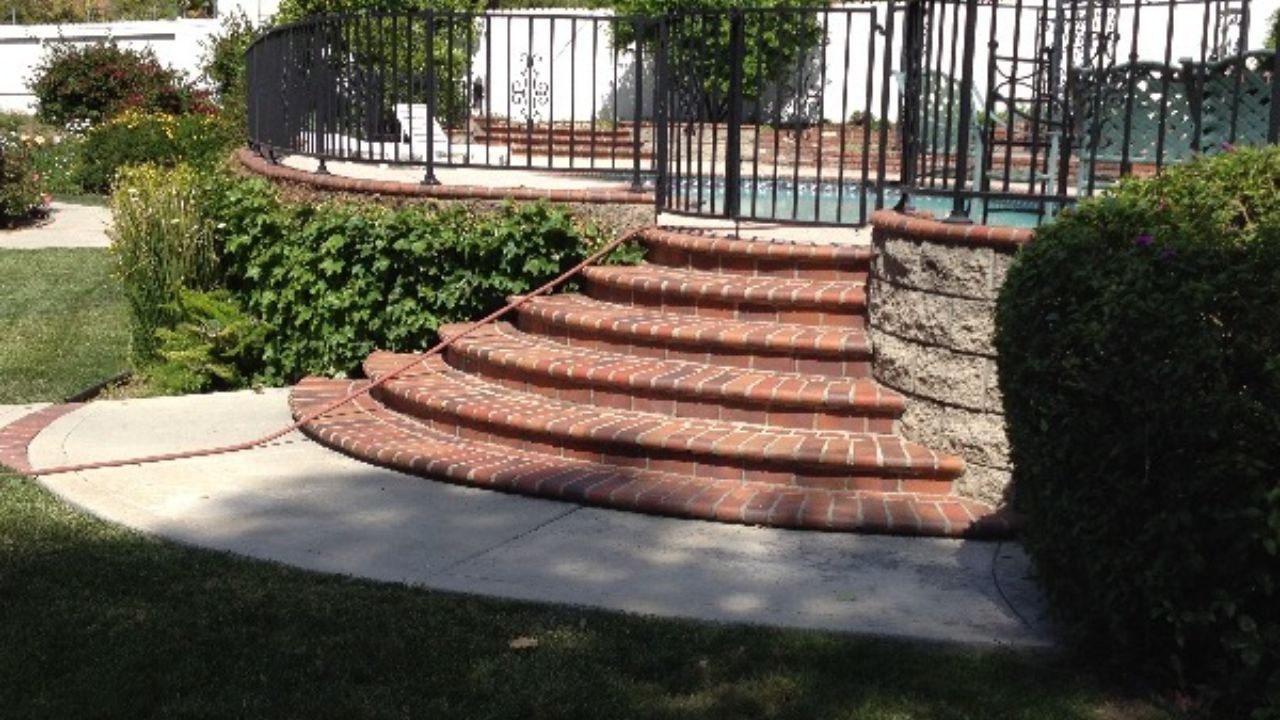
A perimeter fence may not isolate the water from the home. Raised planters, steps, deck edges, furniture, and Retaining Walls can also create a way to climb over a barrier. Check gates and access points after any change to the yard. For residential pool barrier compliance Orange County inspectors review the installed fence, not just the drawing.
Removable pool fences can be useful where the yard needs a clear pool zone. But mesh fencing must meet ASTM International F2286 and have a self-closing gate with a latch. Look for complete system records, not just a claim that the UV-resistant mesh or stainless-steel hardware is strong.
Permanent pool fencing may use materials such as metal or glass, but the material alone does not prove compliance. With tempered glass panels or glass systems, gaps, climb points, and gate hardware still need review. California's pool fencing requirements should guide product selection, but the current statute and the local office control final approval.
Pool alarm installation Orange County plans should start with one question: what does the device detect? An alarm near a door warns when that route opens. An in-water device reacts when someone enters the water. Neither takes the place of an adult watching a child. For pool alarm installation Orange County owners should confirm the model and location with the inspector.
Under the Act, exit pool alarms apply to doors and windows that open right into the pool area without a barrier between them and the water. When such an opening is opened or left ajar, the device must give a steady audible warning or a repeating spoken warning. It may use a battery or a wired electric connection.
A smart-home alarm system may send alerts but still fail to meet the law. A weak speaker or a muted device can fail to warn the home. Check the sound volume, setup, and maker's test steps. Do not rely on an internet connection to replace a required local alarm warning.
A qualifying in-water device detects unexpected entry into the water. California requires it to work as intended and be independently certified to ASTM F2208. That standard covers several alarm methods, such as water movement, pressure, sonar, and infrared sensing. A wearable alarm attached to a child does not qualify as this safety feature.
Record the model, power source, and test steps. If you set the alarm but cannot hear it from the intended area, check the instructions and ask for help. A loud noise alone does not prove legal compliance. For direct-access home doors, a separate closing and latching option can qualify when the release is at least 54 inches above the floor. This is a different height from a pool gate latch.
A Safety pool cover is made to limit access to water when it is secured. A solar blanket helps with heat loss, while a leaf cover helps keep debris out. Neither should be treated as a legal safety cover without proof that it meets the named standard.
California requires a manually operated or powered safety cover with a label that verifies ASTM F1346-23. ASTM International describes tests and labels for these covers. The goal is to help stop a child under five from reaching the water when the cover is fitted and used as directed.
Ask to see the label and product guide before buying. Check that the cover works with your pool shape, steps, and deck edge. Never treat a cover as a reason to leave a young child alone near water.
Drains pose a different type of risk. Water moves through outlets to the pump, and a poor design or damaged cover can create safety hazards. Pool drain cover regulations Orange County work must be checked against both the state code and the cover's product rules.
Under Section 115928, a new permitted pool or spa that uses suction outlets must have at least two outlets per pump. They must be balanced, linked in a safe layout, and placed at least three feet apart in any direction. The law also allows circulation designs that use other methods, such as skimmers or a perimeter overflow system.
All suction outlets must have anti-entrapment grates that meet ANSI/APSP-16 or a named successor standard. The grates must need tools for removal. A Main Drain cover cannot be chosen by its looks alone. The cover model, pump flow, fittings, and outlet design need to work together. For pool drain cover regulations Orange County homeowners should keep product and permit records. Do not run a pool with a broken, missing, or loose cover.
When a building permit is issued to remodel or modify an existing pool, toddler pool, or spa, Section 115928.5 requires existing suction outlets to be updated with compliant anti-entrapment grates. Whether a given repair counts as a covered change is a question for the local office.
If you plan pool remodeling, ask about drain safety while discussing tile, plaster, pumps, or Pool equipment. There is no single safe replacement date for every drain cover. Follow the listed product's service life and inspection steps.
The federal Virginia Graeme Baker Pool and Spa Safety Act is often named in drain safety advice. Its drain-cover product rule applies to covered products entering U.S. commerce and uses ANSI/APSP/ICC-16 2017, subject to listed exceptions.
The federal Act also sets added anti-entrapment system rules for certain public pools with one blockable main drain. That public-pool duty is not an identical rule for a private backyard pool. Private homeowners still need to follow California's suction-outlet rules for covered work.
Orange County has city building offices and county offices. A homeowner in an incorporated city may use a different permit desk than one in an unincorporated area. This makes Regulatory Compliance and Permits for Landscape Projects a site-by-site task, not a single county checklist.
Start with the address of the home. For county-administered sites, Orange County Building and Safety has permit resources. For city sites, check with that city's building office. Ask whether your work is a new pool, a remodel, a repair, or another type of job. Then confirm which code edition and local changes apply.
The office may need drawings for fences, doors, drains, grading, lighting, and other work. Decking, walls, drainage, and Pool Light work can also affect the plan. If a Homeowners Associations review applies, get that approval too. HOA approval does not replace a city or county permit. These pool permit and HOA planning notes can help frame the questions.
Section 115922 calls for a local official to inspect the required drowning-prevention features before final approval. Covered contractors also have consumer warning notice duties under Section 115924. Keep the approved drawings, safety labels, device manuals, and drain records ready. Test gates and alarms as the makers direct before the visit.
Ask your office about its inspection obligations and the order of visits. There is no verified single countywide fee or approval time for every pool project. The local office has the final say on permits.
A safe setup can change as the yard ages. New pavers may lift the level near a fence. Soil may shift under a gate. A planter or chair may create a step near the water's edge. These small changes may affect access even if the original plans passed review.
During swimming pool maintenance Orange County homeowners should check gate action, latch contact, barrier gaps, and any new climb points. Look for weak alarm batteries, damaged cover anchors, and loose drain grates. Also check whether anyone has wedged a gate open for yard work or a party. Use product manuals to set the test and service schedule. Swimming pool maintenance Orange County plans should include each safety item, not only the pump and filter.
The CPSC's pool barrier guide stresses that gates need to close and latch in normal use. Every safety layer must work each day. A pool equipment maintenance schedule can help you plan checks, but hands-on care and active adult supervision still matter.
A pool should be planned as part of the full outdoor space. At Signature Landscape, we offer pool design, pool construction, and pool remodeling in Orange County, along with hardscape work such as pavers, drainage solutions, and Retaining Walls. We can discuss how your pool layout and yard features fit together before you settle on the final plans. Local officials and qualified trades must still review and approve the code items that apply to your job. Request a free quote to talk with our team about your pool and landscape plans.
No. Section 115922 ties the two-feature rule to a permit for a new pool or spa or remodeling an existing one at a private single-family home. Some exceptions also apply. An older pool with no permitted change does not automatically trigger that same section just because it exists. Ask your local office about other rules that may affect the site.
A qualifying permanent enclosure under Section 115923 must meet a specific minimum height. The fence also needs the right gaps, clearance, and gate action. A simple backyard perimeter barrier may not meet all these rules. The local inspector will check the actual setup, not just the product label.
Yes, if the removable mesh fencing system meets ASTM F2286 and has the required gate. The gate must close and latch on its own and accept a key-lockable device. The layout should also account for paving, slopes, and access routes. Keep the system records for the permit review.
Not always. Home Alarms that send phone notices may be helpful, but a qualifying exit alarm must give the warning required by state law. A qualifying in-water alarm needs independent ASTM F2208 certification. Check the model and how it works before you buy it. Ask the inspector if the planned device meets the permit requirements.
A permit for remodeling or modifying an existing pool, toddler pool, or spa triggers California's drain-grate upgrade rule. The grate must meet the required anti-entrapment standard or its approved successor. A cover also has to match the drain and pump setup. Ask the building office how the rule applies to your exact project and use a qualified pool professional for the work.
Schedule A Consultation