Call our Professional Contractors!
(949) 859-9969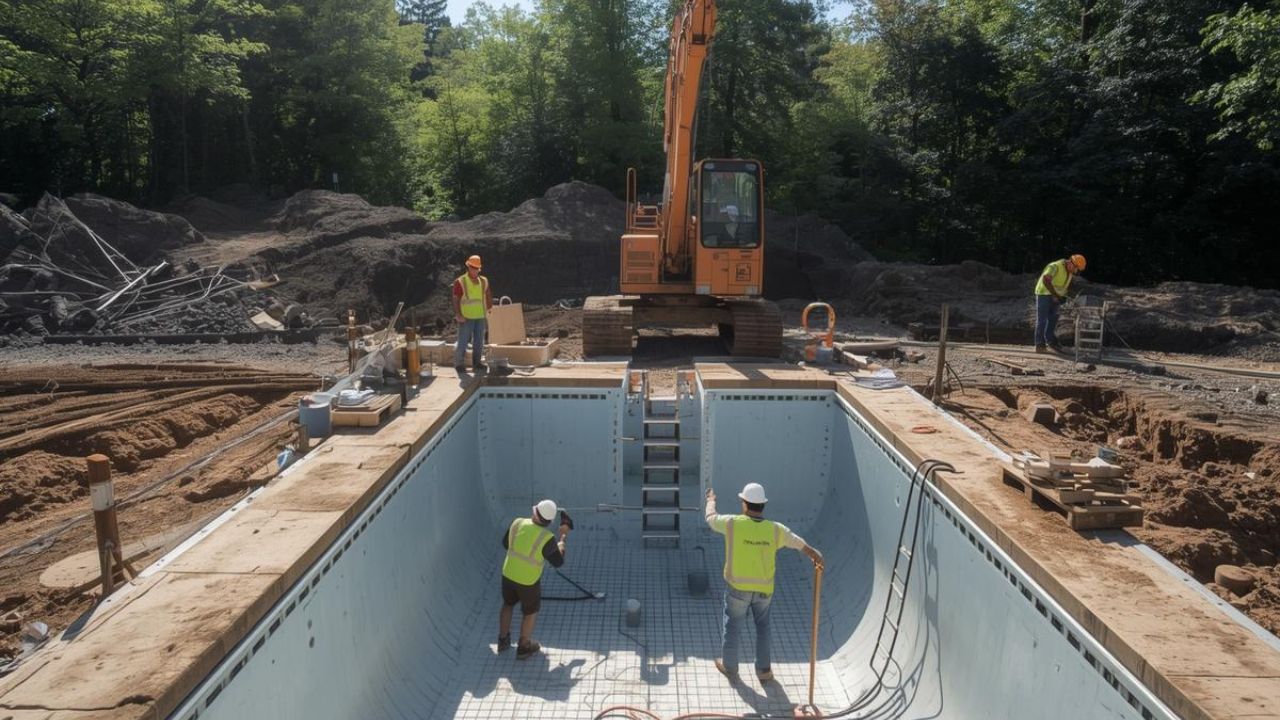
Key Takeaways:
Building a pool in Orange County is a significant financial commitment. Knowing what drives costs before you start saves money, time, and frustration.
Your final number depends on three things: pool type, site conditions, and the features you choose. Get a handle on all three before you budget anything.
For a standard 14x28-foot pool in Orange County in 2026, expect to pay $85,000–$150,000+ for gunite (average: $132,500), $65,000–$110,000 for fiberglass (average: $101,500), and $50,000–$85,000 for vinyl (average: $76,500). These figures reflect Orange County's high labor rates, strict building codes, and demand for quality materials.
A basic build is a vinyl liner pool with minimal decking and no added features. Mid-range means a fiberglass shell with standard equipment and simple landscaping. Luxury means a custom gunite pool with premium finishes, full automation, hardscape, and outdoor living integration — costs there easily exceed $150,000. A Newport Beach gunite build with an infinity edge, integrated spa, and glass tile finish came in at $185,000.
Pool type is the biggest variable. Gunite costs the most to build; vinyl costs the least upfront. Site conditions are second: rocky soil, slopes, and limited access all drive up excavation. Feature selection adds cost at every decision point. Coastal Orange County also carries higher labor and compliance costs than inland communities.
The shell is one line item. A complete budget has eight. Missing any of them produces an underestimate that will catch you mid-project.
Permitting and engineering runs $4,000–$8,000. Orange County requires permits, structural engineering plans, and often soil reports, especially on hillside lots. Excavation adds $5,000–$15,000 depending on soil and access. The shell itself costs $45,000–$70,000 for gunite, $30,000–$50,000 for fiberglass, and $15,000–$30,000 for vinyl.
Plumbing and electrical runs $8,000–$15,000 and covers all piping, drains, skimmers, and the electrical sub-panel. Equipment costs $6,000–$12,000 and includes variable-speed pumps (required by California Title 24), filters, and heaters. Smart automation adds $2,000–$5,000 and allows smartphone control of all pool systems — it is now standard in new Orange County builds.
Hard clay, rock, and tight access push excavation toward the top of its range. Hillside properties add structural engineering and grading costs that sit outside the pool budget line but are inseparable from the project. The Newport Beach build required managing tight lot lines and extensive structural engineering before a single shovel hit the ground.
Pool type sets your cost floor. Size and shape determine how far above it you land. Decide both together.
Gunite has the highest shell cost but the longest lifespan — 30 to 50+ years — and the strongest resale return. Fiberglass sits in the middle on cost, installs the fastest, and carries the lowest long-term maintenance expense. Vinyl has the lowest shell cost but requires liner replacement every 7 to 12 years at $4,500–$7,000 per cycle, which erodes its upfront advantage over time. In Orange County, vinyl has low market prevalence and rarely meets buyer expectations in premium neighborhoods. For properties that already have a pool, pool remodeling can modernize an outdated build at a lower entry cost than new construction.
All ranges in this article are based on a standard 14x28-foot pool. Larger pools require more shell material, longer plumbing runs, bigger filtration equipment, and more decking. Every added dimension compounds cost across multiple budget lines. Equipment sizing scales with pool volume, so a larger pool pushes the $6,000–$12,000 equipment line upward.
Gunite is the only pool type that supports unlimited custom shapes, extreme depths, and features like infinity edges and grottos. That flexibility comes at the highest construction cost. Fiberglass limits buyers to pre-existing molds with a maximum shell width of approximately 16 feet due to shipping regulations. Custom shapes in gunite increase both labor hours and concrete volume, raising costs across the shell, plumbing, and finishing stages simultaneously.
Every upgrade adds cost. The question is which ones improve daily life and which ones just look good in the quote.
Each integrated feature — spa, tanning ledge, grotto, water feature — adds to both structural complexity and plumbing scope. The Mission Viejo project, a gunite pool with a Baja shelf and attached spa, came in at $115,000, illustrating how integrated add-ons affect the mid-market total. Outdoor fire features fall within the landscaping integration budget line, which runs $5,000–$50,000+.
Decking and hardscape adds $10,000–$30,000+ depending on material. Standard brushed concrete sits at the low end; travertine, natural stone, and pavers push toward the top. Material choice also affects comfort. In Orange County's heat, pool deck materials that stay cool are a practical consideration, not just an aesthetic one.
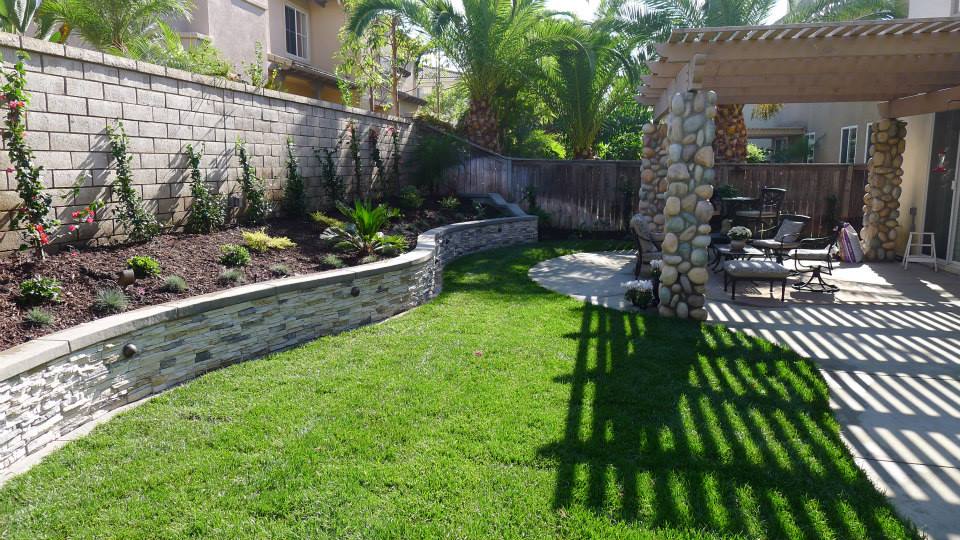
Landscaping integration runs $5,000–$50,000+ and includes retaining walls, planting, outdoor kitchens, and fire features. Homeowners who design the pool as part of a full outdoor system typically spend at the higher end of this range but get a cohesive, resort-quality result. Lighting can be added post-construction, but planning it upfront produces better integration and lower installation cost.
Two identical pool designs can carry very different construction costs. Site conditions are the variable most homeowners underestimate before they see their first quote.
Standard excavation runs $5,000–$15,000. Rock, hard clay, and steep slopes push that number toward the top of the range and beyond. Hillside lots require retaining walls, grading, and engineering oversight that fall outside the pool line item but are part of the real project cost. A pool built without proper drainage planning can accelerate runoff, cause erosion, and in severe cases damage the home's foundation.
Limited site access requires specialized equipment and directly increases excavation cost. The Yorba Linda fiberglass project required confirming crane access for shell delivery before the project could proceed. Existing hardscape, mature trees, or structures adjacent to the build zone add complexity to excavation and site preparation. These are site-specific costs that only a physical assessment can quantify accurately.
Permitting and engineering costs are fixed at $4,000–$8,000 and are non-negotiable. Orange County requires permits, engineering plans, and soil reports before any excavation begins. In HOA communities, architectural guidelines add an approval layer that can require design revisions, adding both time and cost before a shovel touches the ground.
Construction costs end on completion day. Ownership costs run for decades. Budget for both or you will underprice the real investment.
Professional pool service in Orange County runs $150–$300 per month. Gunite's porous surface demands more frequent brushing and chemical balancing, putting its routine maintenance cost at the higher end. Fiberglass's smooth gel coat resists algae with minimal chemical input and keeps service costs at the lower end. Southern California's dry climate means every pool type requires regular water top-offs year-round due to evaporation.
Utilities add $100–$300+ per month for pump electricity and gas heating. Gunite resurfacing costs $10,000–$20,000 every 10 to 15 years. Vinyl liner replacement runs $4,500–$7,000 every 7 to 12 years. Over a 30-year ownership horizon, fiberglass carries the lowest cumulative maintenance cost of the three pool types.
Gunite plaster interiors need resurfacing every 7 to 15 years. Upgrading to a pebble finish at the build stage extends that interval to 15 to 30 years and is worth the additional cost for long-term owners. Fiberglass gel coats may need professional restoration after 15 to 20 years — far less frequent and less costly than gunite resurfacing. Variable-speed pumps, LED lighting, and efficient heaters specified at the build stage avoid a costly retrofit later and comply with California Title 24 from day one.
Most pool budgets fail at the same point: the homeowner prices the shell and forgets everything else. A complete budget accounts for all eight cost categories before any contracts are signed.
All eight line items must be present: permitting and engineering, excavation, shell and structure, plumbing and electrical, equipment, automation, decking and hardscape, and landscaping integration. These items together routinely add 30 to 50% above the base shell cost. The Yorba Linda fiberglass project at $85,000 and the Mission Viejo gunite project at $115,000 both show how far the all-in number sits above the shell cost alone.
Soil conditions and site access are the two most common sources of unplanned cost, and both are only fully understood once excavation begins. Hard clay, buried rock, or unexpected drainage problems can push the excavation line well above the original estimate. HOA revision requests and permit resubmissions also add time and cost. Budget contingency for at least one iteration of each.
The most common mistake is pricing the shell without the surrounding landscape work. Decking alone adds $10,000–$30,000+. Skipping automation at build and adding it later costs more than specifying it upfront. Overbuilding for the neighborhood is also a frequent error: coastal Orange County supports higher-end finishes because buyer expectations demand them, but inland properties that over-invest in luxury features recover less of that cost at resale.
Not every upgrade pays back equally. Some improve daily use for years. Others look impressive on paper but rarely justify the cost in practice.
Smart automation delivers daily convenience at $2,000–$5,000 and is now standard. Variable-speed pumps and energy-efficient heating reduce monthly utility costs by $100–$300+ compared to older equipment. An integrated spa extends year-round use and improves both lifestyle value and resale appeal. A custom pool design that integrates the pool with the patio, outdoor kitchen, and landscape creates a unified outdoor living system that consistently outperforms standalone pool installations on both daily enjoyment and property value.
Grottos and elaborate water features add visual drama but carry higher construction and maintenance costs, and their ROI varies significantly by neighborhood. An above-ground jacuzzi can be a practical, lower-cost alternative to a fully integrated spa for homeowners who want hydrotherapy without the full structural commitment. Complex lighting packages beyond standard LED can also be deferred and added after completion without affecting the pool structure.
Coastal properties in Newport Beach, Laguna Beach, and Dana Point warrant higher-end finishes because buyers in those markets expect resort-quality outdoor spaces and pool ROI there approaches 60 to 70% of construction cost. Inland and master-planned communities like Irvine, Mission Viejo, and Yorba Linda benefit from family-friendly features like Baja shelves and integrated spas; ROI in those areas typically runs 40 to 50%. Across all of Orange County, a well-designed pool can add 5 to 8% to home value, translating to $65,000–$104,000 on a median-priced property.
The costliest mistakes happen before construction starts. A contractor who designs the full outdoor project eliminates the surprises and changes orders that blow budgets midstream.
2D CAD design and project visualization allow homeowners to see the full build before excavation begins, eliminating guesswork and costly mid-build revisions. Site analysis conducted before design is finalized identifies soil conditions, drainage constraints, and HOA requirements that would otherwise surface as expensive change orders. Thorough design documentation also strengthens permit submissions and reduces revision requests from Orange County building departments.
Designing the pool, patio, outdoor kitchen, outdoor hot tub, and landscape as one system from the start produces a cohesive result and avoids the duplication of excavation work, the disruption of completed surfaces, and the integration problems that come from features added as afterthoughts.
Does the estimate include all eight budget categories or only the shell? What are the permitting and soil report requirements for the specific property? Does the HOA have guidelines that affect design, placement, or approval timeline? What is the excavation contingency assumption? Are variable-speed pumps and Title 24-compliant equipment included in the base price?
The most important decision happens before the design meeting: are you building for your lifestyle, your resale value, or both? That answer determines pool type, features, and budget ceiling.
Gunite is the Orange County standard for good reason. It offers the greatest design freedom, the longest structural lifespan, and the strongest resale impact. Fiberglass fits when speed and low maintenance matter more than customization. Vinyl is the lowest entry point but underperforms on resale in most Orange County neighborhoods and should be chosen with clear-eyed awareness of its long-term trade-offs.
Compare full all-in estimates, not shell-only quotes. Confirm the builder has hands-on experience with Orange County permitting, HOA approval processes, and constrained or hillside lot builds. Ask whether the contractor handles the full outdoor environment or only the pool structure. A full-scope contractor eliminates coordination risk between trades and the cost of integrating work completed at different stages.
Your Pool Budget Deserves the Same Craftsmanship as Your Pool
A number on a page is just an estimate. What gives it value is the expertise behind it and the contractor who stands behind every line item.
Signature Landscape has designed and built exceptional outdoor spaces across Orange County for over 38 years. From the first site consultation to final installation, every project is planned with the precision your investment requires. Get your budget right from the start. Request your free quote from Signature Landscape and get a complete project assessment built around your property, your neighborhood, and your goals.
Schedule A Consultation