Call our Professional Contractors!
(949) 859-9969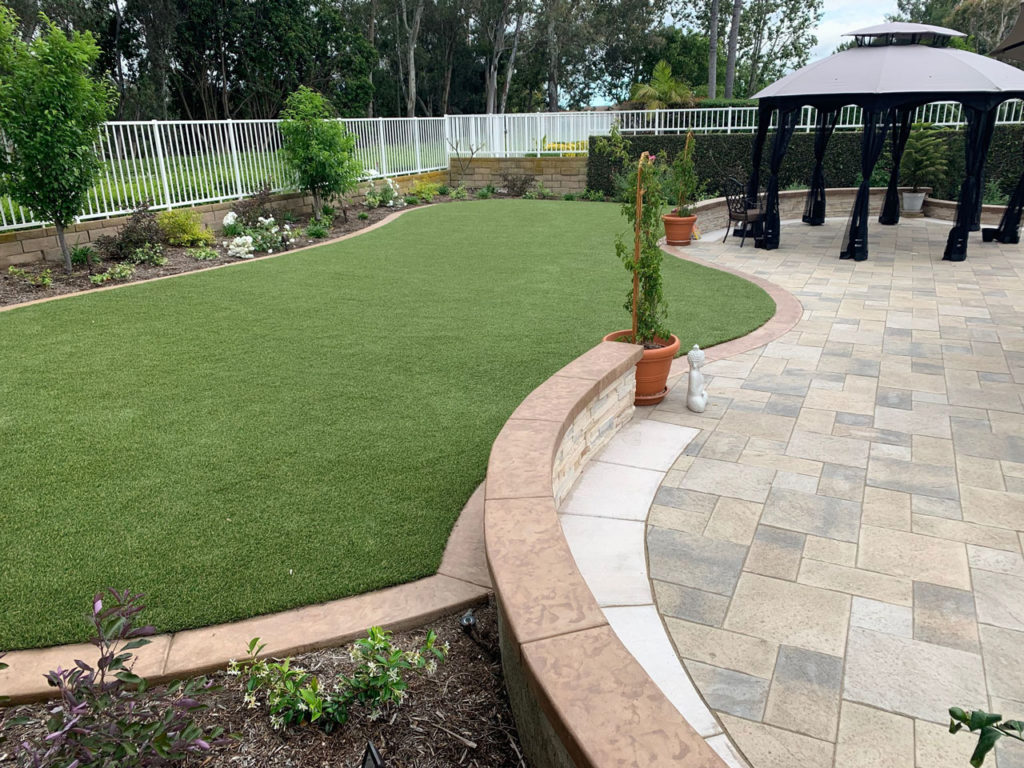
Orange County homeowners face rising water costs, drought-conscious landscaping expectations, and the challenge of protecting pools and hardscape from irrigation overspray. Choosing between sprinkler and drip irrigation affects water bills, plant health, maintenance schedules, and long-term landscape investment.
Sprinkler systems deliver broad coverage suitable for lawns and uniform groundcover zones, while drip irrigation provides targeted watering for planting beds, shrubs, trees, and narrow strips. Understanding cost comparisons of irrigation methods, water-saving landscaping principles, and best applications for each system helps homeowners design irrigation that matches their specific landscape zones and outdoor living goals.
Sprinkler and drip irrigation are the two primary methods for delivering water to residential landscapes in Orange County. Both systems require controllers, valves, piping, and zone design, but they differ fundamentally in how they apply water to plants.
A sprinkler system uses pressurized water delivered through underground pipes to spray heads or rotors that distribute water above the soil surface. The spray pattern covers a defined area, making sprinklers efficient for uniform turf zones and broad groundcover plantings.
Drip irrigation delivers water directly to the root zone through emitters, micro-tubing, or soaker lines installed on or below the soil surface. This targeted delivery reduces overspray and evaporation from broadcast spray, concentrating moisture where plants absorb it.
Sprinkler systems require spray heads or rotors, valves, backflow prevention devices, controllers, and zone piping sized for pressure and flow. Drip systems use emitters, distribution tubing, filters, pressure regulators, valves, and controllers to deliver low-volume water at consistent rates.
Coverage patterns, water delivery rates, and maintenance needs separate sprinkler and drip irrigation systems in practical landscape use. The drip irrigation advantages include precision and reduced evaporation, while sprinklers excel at covering large uniform areas quickly.
| Comparison Point | Sprinkler Irrigation | Drip Irrigation |
| Coverage pattern | Broad spray across uniform zones | Targeted emitters at the root zone |
| Water efficiency | Higher evaporation and overspray risk | Lower evaporation, water delivered near roots |
| Preferred use | Lawns and large turf areas | Beds, shrubs, trees, slopes, hardscape edges |
| Hardscape overspray | Possible when heads misalign | Minimal, keeps water off decks and coping |
| Maintenance focus | Head alignment, nozzle and pressure checks | Filter flushing, emitter and tubing checks |
| Common failure point | Broken or misaligned heads, runoff | Silent clogs or leaks in emitters |
Sprinklers are efficient for broad uniform zones like lawns, while drip systems are efficient for distributed plantings such as beds and hedges. Sprinklers face overspray, misting, wind drift, and runoff risk, while drip systems have lower overspray risk but can waste water through silent leaks or clogs.
Sprinkler maintenance includes head alignment, replacing broken heads, checking pressure, and adjusting controller settings seasonally. Drip maintenance involves filter flushing, clearing emitter clogs, repairing tubing breaks, and updating emitter placement as plants grow. Checking irrigation systems for leaks and operational problems can reduce water use by 10% or more and improve application uniformity. Both sprinkler and drip systems need seasonal checks; drip is not a no-maintenance solution.
Drip layout must match plant growth patterns and soil type to deliver adequate water without creating dry spots or saturation. Drip systems may need filtration and pressure regulation to prevent clogging and ensure consistent emitter flow. Drip installation requires more emitter and tubing layout detail, while sprinklers require more heads and zones for complex layouts. Subsurface drip for turf is a specialized option not commonly used in most residential Orange County landscapes.
Landscape zones around pools, patios, slopes, and drought-tolerant planting designs influence irrigation system choice in Orange County. Matching the delivery method to plant type, soil conditions, and hardscape proximity improves water efficiency and reduces maintenance.
| Landscape Zone | Suggested System | Why It Fits |
| Lawn and turf areas | Sprinkler | Uniform coverage suits plants with matching water needs |
| Planting beds and shrubs | Drip | Emitters place water at the root zone with less waste |
| Trees and hedges | Drip | Slow, deep watering supports mature root systems |
| Slopes and hillsides | Drip with cycle-and-soak | Reduces runoff on grades common in coastal Orange County |
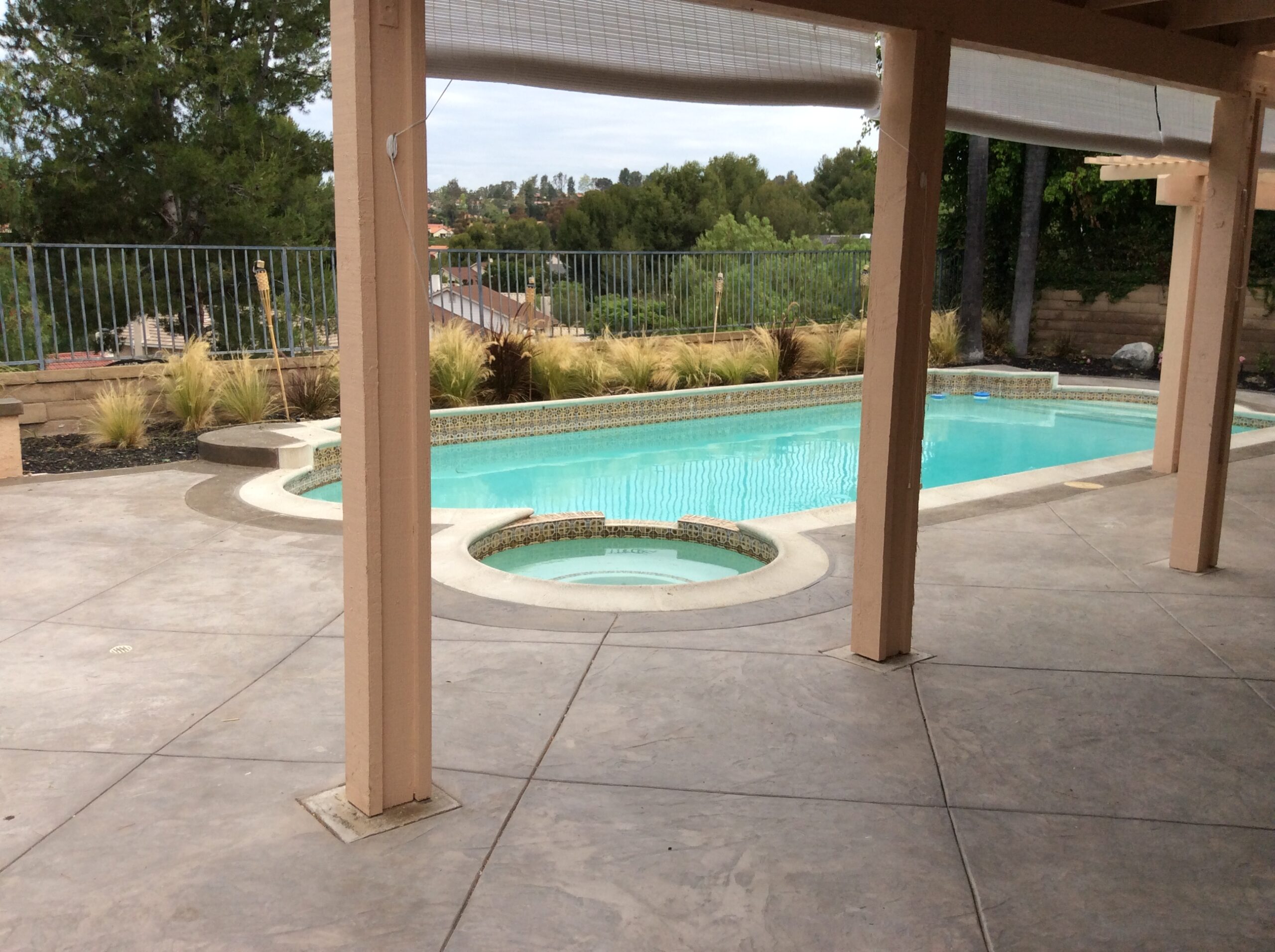
| Pool-adjacent planters | Drip | Keeps water off decks, coping, and outdoor kitchens |
| Drought-tolerant zones | Drip | Matches hydrozoning and can qualify for turf rebates |
Sprinkler applications include lawns, large turf zones, uniform groundcover areas, and broad coverage zones that benefit from simultaneous watering. These systems work well where plants share similar water needs, and the area lacks irregular hardscape edges or sensitive features.
Drip irrigation applications include planting beds, shrubs, trees, hedges, narrow strips, slope-sensitive areas, pool-adjacent planters, drought-tolerant landscape designs, and hardscape edges. Targeted emitters keep water closer to plant roots and away from decks, coping, patios, walls, and outdoor kitchens.
Sprinklers can wet decks, coping, patios, walls, and outdoor kitchens when misaligned, creating slip hazards and mineral deposits on surfaces. Drip systems keep water closer to plants with targeted emitters, making them suitable for narrow planters adjacent to Orange County pool design features and hardscape installations. Misaligned sprinkler heads can also wet sidewalks and streets, wasting water and violating local water-efficiency expectations.
Material cost alone does not determine total irrigation cost; design labor, filtration, pressure regulation, tubing layout, retrofits, and plant spacing affect final expense. Homeowners should perform a site assessment before pricing irrigation installation to understand zone complexity and infrastructure needs.
| Cost Factor | Sprinkler | Drip |
| Core hardware | Spray heads, rotors, valves, controller | Emitters, tubing, filter, pressure regulator, controller |
| Main cost drivers | Zone count, head count, trenching | Emitter quantity, tubing length, layout detail |
| Added components | Backflow prevention | Backflow prevention plus filtration |
| Retrofit path | Premium nozzles and a smart controller | Valve changes, pressure regulator, new tubing layout |
| Ongoing repair | Head and nozzle replacement | Emitter replacement, filter cleaning, flushing |
Sprinkler installation costs depend on the number of zones, head count, pipe trenching, valve placement, and controller complexity for broad coverage areas. Drip installation costs reflect emitter quantity, tubing length, filter and pressure regulator requirements, valve zone count, and layout detail matching plant spacing. Both systems require backflow prevention devices and controllers, but drip systems often need additional filtration to prevent clogging from sediment.
Sprinkler maintenance costs include head replacement, nozzle upgrades, pressure adjustment, and controller reprogramming to address broken or misaligned components. Drip maintenance costs involve filter cleaning, emitter replacement, tubing repair, and periodic system flushing to clear clogs and mineral buildup.
Both systems benefit from seasonal professional inspections that identify leaks, pressure problems, and coverage gaps before water waste accumulates.
Sprinklers may be upgraded with high-efficiency nozzles and smart controllers if the existing layout and zone design are sound.
Drip conversion may require valve modifications, pressure regulator installation, filter addition, and complete tubing layout to match current plant locations. Landscape drainage and hardscape design integration during new construction simplifies irrigation planning by establishing grading and plant zones before irrigation installation.
EPA data shows residential outdoor water use accounts for nearly 8 billion gallons daily in the United States, with experts estimating as much as 50% of outdoor water wasted due to overwatering from inefficiencies in irrigation methods and systems. Orange County homeowners can reduce waste through controller upgrades, proper scheduling, maintenance, and local rebate programs.
A WaterSense-labeled irrigation controller is an EPA-certified device that can replace standard clock controllers by adjusting watering schedules based on weather, soil moisture, and plant needs. Replacing a standard clock-based controller with a WaterSense-labeled irrigation controller can save an average home up to 15,000 gallons annually.
Homes with clock-timer controlled irrigation systems use about 50% more water outdoors than homes without irrigation systems, highlighting the importance of smart scheduling. Smart controllers and premium high-efficiency nozzles may qualify for rebates, while landscape and turf conversion projects may involve drip irrigation as part of water‑saving landscaping designs.
Cycle-and-soak scheduling is a technique for clay and slope areas that prevents runoff by breaking watering into shorter intervals with soak time between cycles. Homeowners should check irrigation systems for leaks and operational problems regularly and adjust controller settings seasonally to match changing plant water needs. Aligning sprinkler heads to prevent overspray onto sidewalks, pool decks, patios, walls, and streets eliminates a major source of water waste visible during routine inspections.
MWELO governs new development and retrofitted landscape water-efficiency standards in California, establishing maximum water allowances and design requirements for irrigation systems. Orange County rebates cover smart sprinkler timers, rain barrels, and other water-saving devices through programs administered by local water agencies.
BeWaterWise lists regional rebates including turf replacement and premium high-efficiency nozzle rebates with per-square-foot and per-device amounts. MWDOC offers free water-smart landscape designs for Orange County residents that include landscape layout, drought-tolerant plant suggestions, and an irrigation map. Rebate availability and amounts can change, so homeowners should verify current eligibility before purchasing equipment.
Water applied to landscapes is estimated to account for about 50% of residential water consumption statewide in California. Residential landscape water share varies from about 30% in some coastal communities to 60% or more in many inland suburban communities. Integrating irrigation planning with drainage, hardscape, pool design, and plant selection prevents costly retrofits and ensures system efficiency.
Professional landscape design coordinates irrigation zones with drainage systems to prevent runoff pooling, soil erosion, and hardscape damage from excessive watering. Pool-area planning includes planters, drainage systems, irrigation systems, lighting, safety, and landscaping to create cohesive outdoor spaces where water delivery supports plant health without creating slip hazards. Retaining walls and grading features establish elevation changes that influence irrigation pressure and runoff patterns, requiring careful emitter or head placement.
Hydrozoning is grouping plants by water needs in irrigation design, allowing controllers to deliver appropriate amounts to each zone without overwatering or underwatering. Drought-tolerant plants grouped into low-water zones reduce irrigation demand and qualify for turf replacement rebates in many Orange County programs. Drip irrigation requires periodic clog and leak checks and careful zoning by plant water needs to prevent silent failures that stress plants.
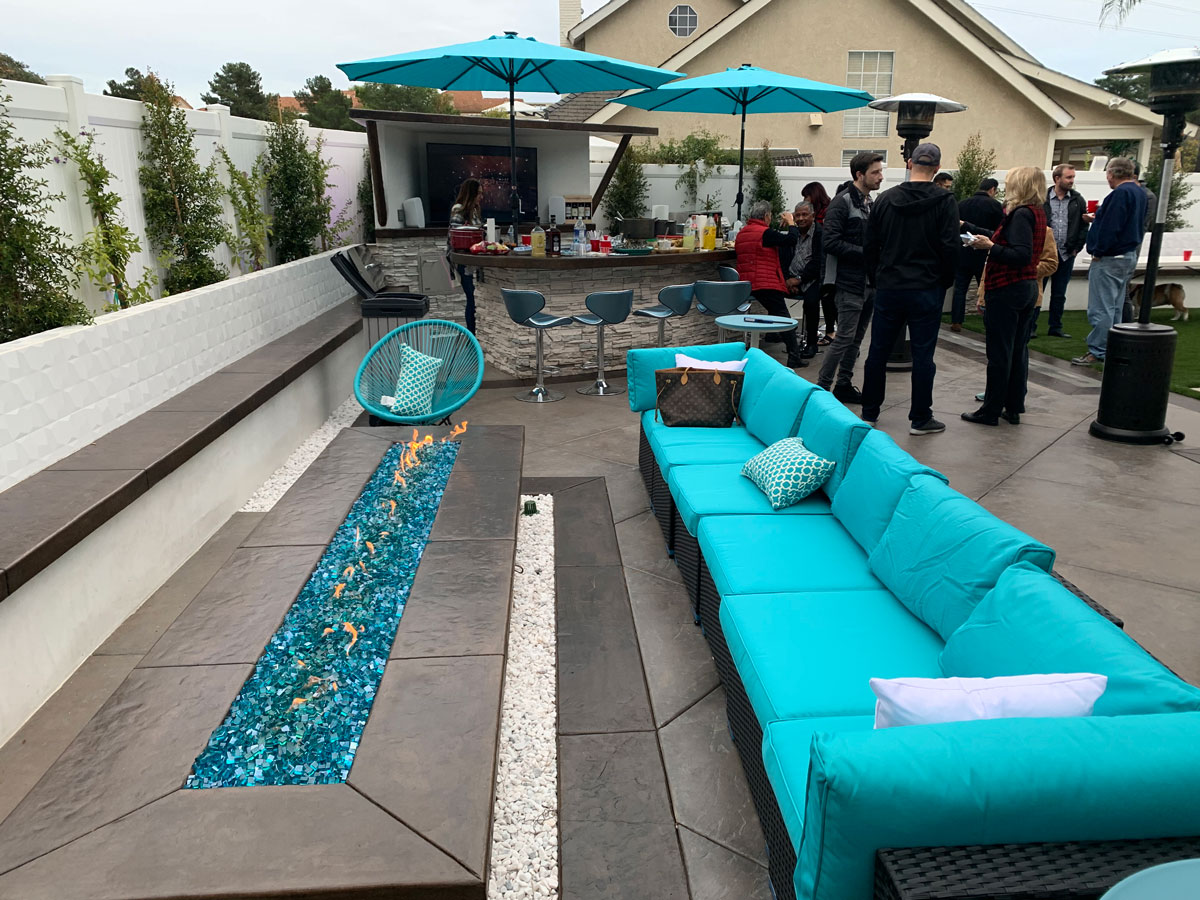
Irrigation systems designed around outdoor kitchens, fire features, dining areas, and pool decks deliver water to plantings without wetting entertainment surfaces or creating maintenance burdens. Targeted drip emitters keep moisture away from seating areas, while properly aligned sprinklers cover lawn zones without overspray onto patios and walkways. Coordinating irrigation with lighting, drainage, and hardscape layout during initial design prevents conflicts that require expensive retrofits.
Homeowners choosing between sprinkler and drip irrigation should evaluate coverage needs, plant types, hardscape proximity, drainage conditions, and maintenance preferences before installation. The choice depends on landscape zones and outdoor living goals rather than a universal preference for one system.
Sprinklers remain practical for lawns and broad uniform areas, while drip irrigation excels in beds, hardscape-adjacent plantings, slopes, and drought-tolerant designs. Both systems benefit from smart controllers, seasonal maintenance, and proper zoning to maximize water savings and plant health. Signature Landscape integrates irrigation planning with comprehensive landscape services to design systems that support long-term property value and outdoor enjoyment.
Signature Landscape has designed and built outdoor spaces across Orange County since 1989, with more than 1,000 completed projects and over 150 five-star reviews. Our team plans irrigation alongside drainage, hardscape, and pool design, so your sprinkler and drip zones work together and protect the surfaces around them. We map every zone with a 3D CAD design before work begins, which means you see the layout before a single line goes in the ground. As a licensed California contractor (License #583113), we handle the full project from consultation through installation. Call (949) 859-9969 or request a free quote at signaturelandscape.com/quote/ to start planning a system that fits your yard.
Neither system is automatically cheaper, because total cost depends on zone count, layout detail, and existing infrastructure. Sprinkler pricing tracks the number of heads, zones, and trenching, while drip pricing reflects emitter quantity, tubing length, and added filtration. Drip often costs more upfront in planted areas because the layout must match plant spacing, yet it can lower water bills over time. A site assessment gives the most accurate comparison for your property.
Sprinklers remain the practical choice for most Orange County lawns because turf needs even, broad coverage. Subsurface drip can water turf, but it is a specialized option that is not common in typical residential yards. For beds, shrubs, and trees next to a lawn, drip is usually the stronger fit. Many properties use both methods, with sprinklers on turf and drip on planted zones.
Water savings come mostly from reducing evaporation, overspray, and runoff, which drip handles well in planted areas. The EPA reports that replacing a standard clock controller with a WaterSense-labeled controller can save an average home up to 15,000 gallons a year. Pairing drip with a smart controller and cycle-and-soak scheduling adds further savings on slopes and clay soils. Actual results vary with plant type, soil, and how the system is scheduled.
Both systems need seasonal attention, and drip is not a no-maintenance solution. Sprinkler upkeep centers on head alignment, nozzle replacement, and pressure checks. Drip upkeep involves flushing filters, clearing emitter clogs, and repairing tubing as plants grow. Regular checks on either system can cut water use by 10% or more by catching leaks and coverage gaps early.
Drip irrigation usually works better near pools, patios, and hardscape because targeted emitters keep water off decks, coping, and outdoor kitchens. Misaligned sprinkler heads can wet these surfaces, creating slip hazards and mineral deposits. For lawn areas set back from hardscape, well-aligned sprinklers still perform well. Coordinating irrigation with pool and hardscape design during planning prevents overspray problems later.
Schedule A Consultation