Call our Professional Contractors!
(949) 859-9969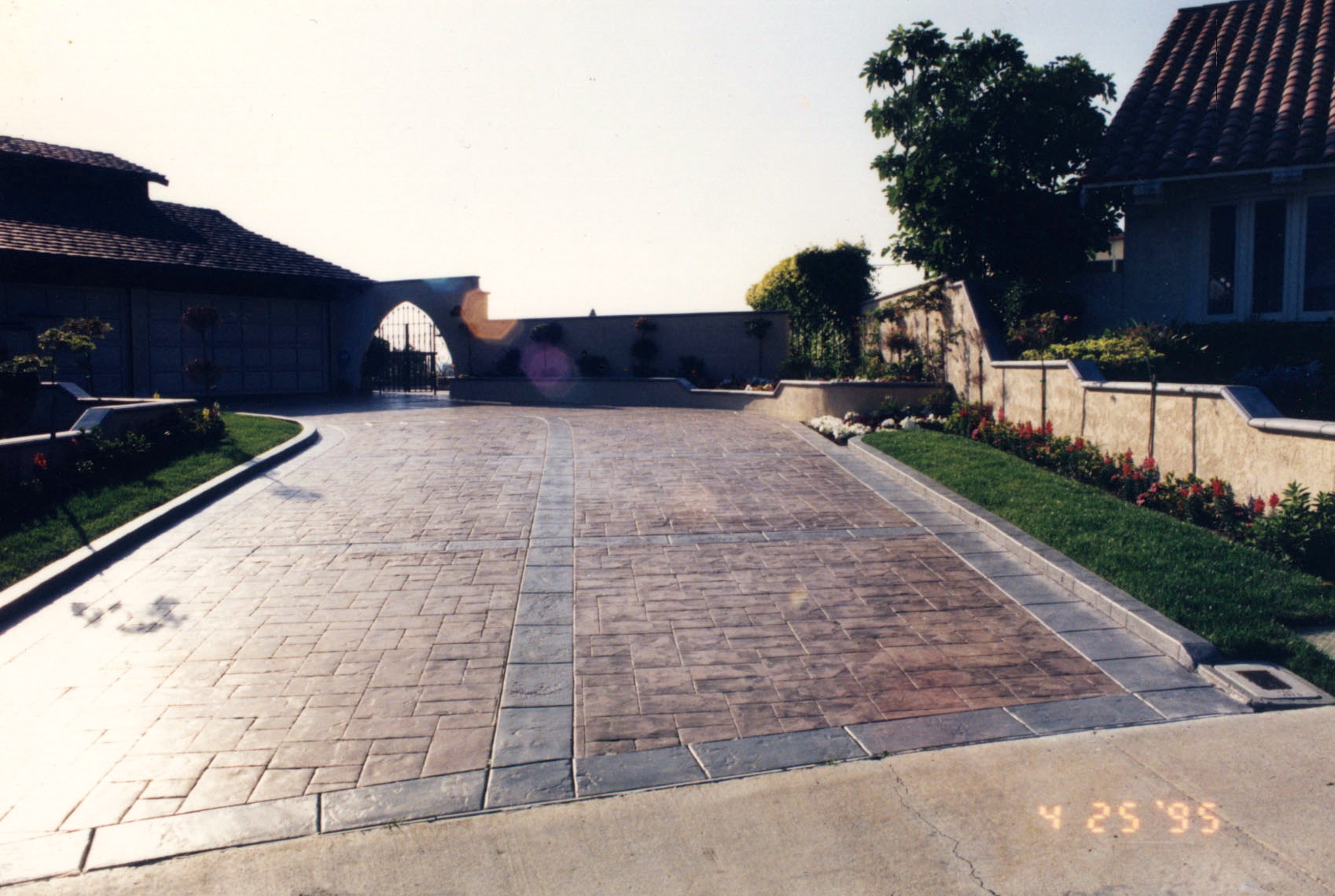
Decorative concrete finishes offer property owners versatile surface treatment options that enhance both function and visual appeal. These finishes transform standard concrete slabs into textured, colored surfaces suitable for driveways, patios, pool decks, and walkways. What are the different types of concrete finishes? The primary categories include stamped, brushed, exposed aggregate, and stained concrete, each delivering distinct performance characteristics and design possibilities. Understanding concrete finish types enables homeowners to match specific applications with appropriate surface treatments that balance durability, safety, maintenance requirements, and budget constraints.
Decorative concrete finishes alter the surface appearance and texture of poured concrete through various application techniques. These treatments serve functional purposes, including slip resistance and durability, while providing aesthetic enhancement. The global decorative concrete market reached $19.48 billion in 2025 and is projected to reach $26.87 billion by 2031. Residential applications account for 57.85% of this market, driven by demand for low-maintenance outdoor living spaces.
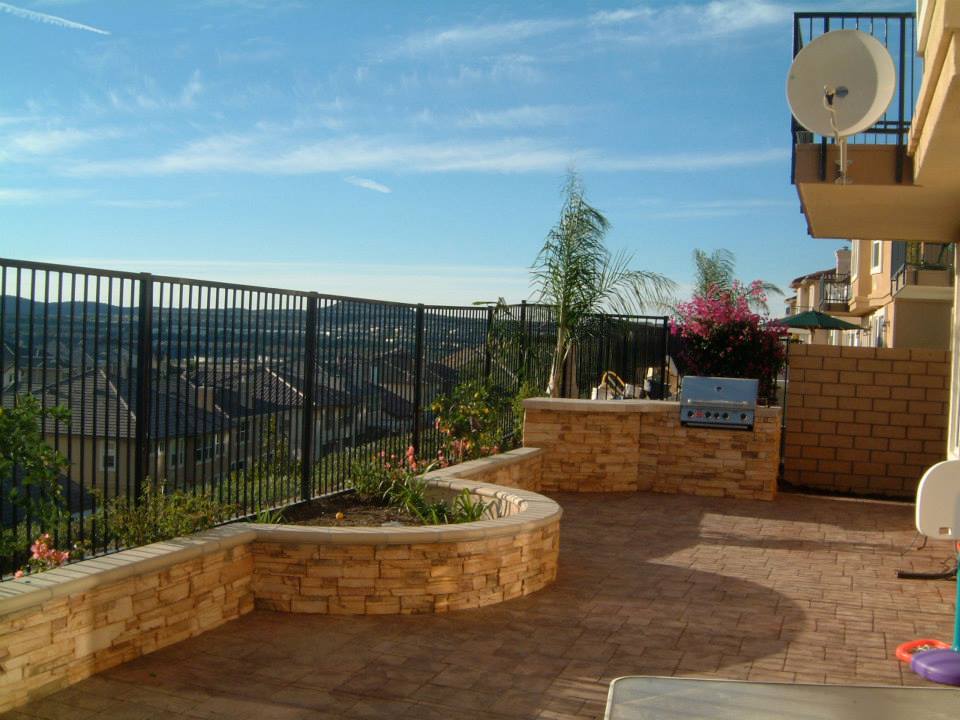
Stamped concrete, sometimes called stamped cement, involves pressing textured mats or concrete stamps into freshly poured concrete before it fully cures. Color hardeners, integrated colors, and release agents create patterns mimicking natural stone, brick, slate, or wood. This finish accounts for 39.86% of the decorative concrete market share in 2025, making it the dominant choice. Advanced stamping technology enables the realistic replication of premium materials at reduced cost compared to authentic stone or brick installation.
A brushed concrete finish is created by dragging a broom across wet concrete to produce parallel grooves. This simple technique delivers reliable traction at minimal cost, making it ideal for utilitarian applications. Exposed aggregate removes the top layer of cement paste to reveal decorative stones underneath through chemical retarders or pressure washing. The resulting surface displays embedded pebbles, gravel, or crushed stone in various colors and sizes. A sand finish offers a subtler alternative, exposing only the fine sand particles for a smooth, uniform texture.
Staining penetrates concrete with acid-based or water-based concrete colorants to create permanent color variations. Acid-based stains react chemically with concrete minerals, producing earthy, mottled tones including browns, tans, and greens. Water-based stains offer broader color palettes with more consistent coverage but less natural variation. Both staining methods preserve the concrete's natural texture while adding visual depth through translucent color layers.
The four primary concrete finish types differ significantly in appearance, installation complexity, cost, and maintenance demands. Stamped concrete provides the widest design versatility through pattern and color customization. Brushed concrete delivers a basic utilitarian appearance with superior traction at the lowest price point. Exposed aggregate offers natural slip resistance with moderate aesthetic appeal, while staining enhances existing surfaces without altering texture.
Stamped concrete replicates natural materials through hundreds of pattern options, including cobblestone, flagstone, and wood plank designs. Color choices span the full spectrum of colored concrete through integral pigments and surface hardeners. Exposed aggregate has a limited design range determined by the size, color, and type of aggregates selected during concrete mixing. Brushed concrete has a basic utilitarian appearance defined solely by groove depth and direction, offering minimal aesthetic customization beyond concrete color.
Stamped concrete requires resealing every 2-3 years to maintain color vibrancy and weather resistance. Surface wear concentrates in high-traffic areas, and stamped concrete is difficult to repair seamlessly when cracks develop. Exposed aggregate withstands weathering exceptionally well and conceals minor surface imperfections naturally through its textured appearance. Brushed concrete demands minimal maintenance beyond periodic cleaning, but may require resurfacing after heavy use degrades groove definition.
Stamped concrete costs $20-$33 per square foot installed, reflecting specialized labor and material requirements. Exposed aggregate ranges from $18-$28 per square foot installed, depending on aggregate quality and reveal depth. Brushed concrete represents the most economical choice at approximately $15 per square foot installed due to straightforward application. Staining adds $2-$4 per square foot to existing concrete surfaces, making it an affordable enhancement option for previously poured slabs.
Demographic factors significantly impact decorative concrete selection patterns across age groups and geographic settings. Consumer research reveals distinct generational preferences driven by aesthetic values, safety priorities, and budget considerations. Market data indicates that durability consistently ranks as the top decision factor across all demographics, scoring 95 out of 100 in consumer priority rankings.
Younger homeowners aged 25-44 gravitate toward stamped concrete and honed and polished concrete that deliver contemporary aesthetics. This demographic values modern design elements, including large-format patterns and monochromatic color schemes. Older demographics aged 55 and above prioritize exposed aggregate and brushed finishes for their slip-resistant properties and traditional appearance. Safety considerations increasingly influence finish selection as homeowners age, with textured surfaces preferred over smooth decorative options.
Orange County suburban homeowners drive the majority of comprehensive hardscaping projects featuring stamped concrete and exposed aggregate. Larger lot sizes enable extensive patio networks and outdoor living spaces where aesthetic impact justifies premium finish investments. Urban dwellers focus on premium porcelain pavers or polished concrete for small spaces where every square foot demands maximum visual impact. Constrained urban footprints prioritize sleek, contemporary finishes over traditional textured surfaces.
Consumer priority rankings place durability at 95/100, cost at 88/100, aesthetic appeal at 82/100, strength at 78/100, and maintenance at 75/100. These metrics reveal that performance characteristics outweigh visual considerations during initial material selection. However, aesthetic appeal becomes the deciding factor when comparing finishes with equivalent durability ratings. Property owners investing in permanent outdoor improvements weigh long-term value over short-term installation savings, favoring driveways and patios that maintain appearance for decades.
Installation procedures vary substantially across decorative concrete finishes, affecting project timelines and labor costs. Stamped concrete demands precise timing during the stamping window between initial set and final cure. Exposed aggregate requires careful surface preparation and aggregate exposure techniques. Brushed finishes involve straightforward brooming during the plastic stage when concrete accepts texture but supports the broom's weight.
Site preparation begins the process, as crews grade and compact the base before they pour and level concrete to a uniform thickness, then apply color hardener to the surface. Release powder prevents stamping mats from adhering while adding secondary color accents. Installers press textured mats into the surface, creating relief patterns that mimic natural materials. After initial curing, crews clean residual release agent and apply penetrating sealers, including colored concrete sealers, to protect the finish and enhance color depth.
Contractors mix decorative aggregates into concrete during batching to ensure uniform distribution throughout the slab. Surface retarders applied immediately after finishing delay cement curing in the top layer. Once the underlying concrete hardens, crews wash away the retarded cement paste using pressure sprayers, revealing embedded stones. Final cleaning removes residual cement film, and sealers enhance aggregate colors while protecting the surface.
Workers' time brooming to coincide with the concrete's plastic stage, when the surface supports light pressure. Soft-bristle brooms dragged perpendicular to the slope direction create uniform grooves that channel water. Groove depth depends on broom stiffness and operator pressure, with deeper textures providing enhanced traction. The entire process occurs during initial finishing, adding minimal time or material cost to standard concrete placement.
Application requirements dictate appropriate finish selection based on traffic intensity, safety needs, and aesthetic priorities. Driveways demand compressive strength and abrasion resistance to withstand vehicle loads. Pool decks prioritize slip resistance in wet conditions. Patios balance aesthetic appeal with functional durability for outdoor entertaining spaces.
Exposed aggregate hides dirt well and provides natural slip resistance without compromising vehicle traction. The textured surface masks tire marks and oil stains that would appear prominently on smooth finishes. Brushed concrete delivers reliable performance for decorative walkways and functional driveways where appearance takes secondary priority to traction. Stamped concrete serves driveways effectively when properly sealed and reinforced, though high-traffic areas may require more frequent resealing than decorative patios.
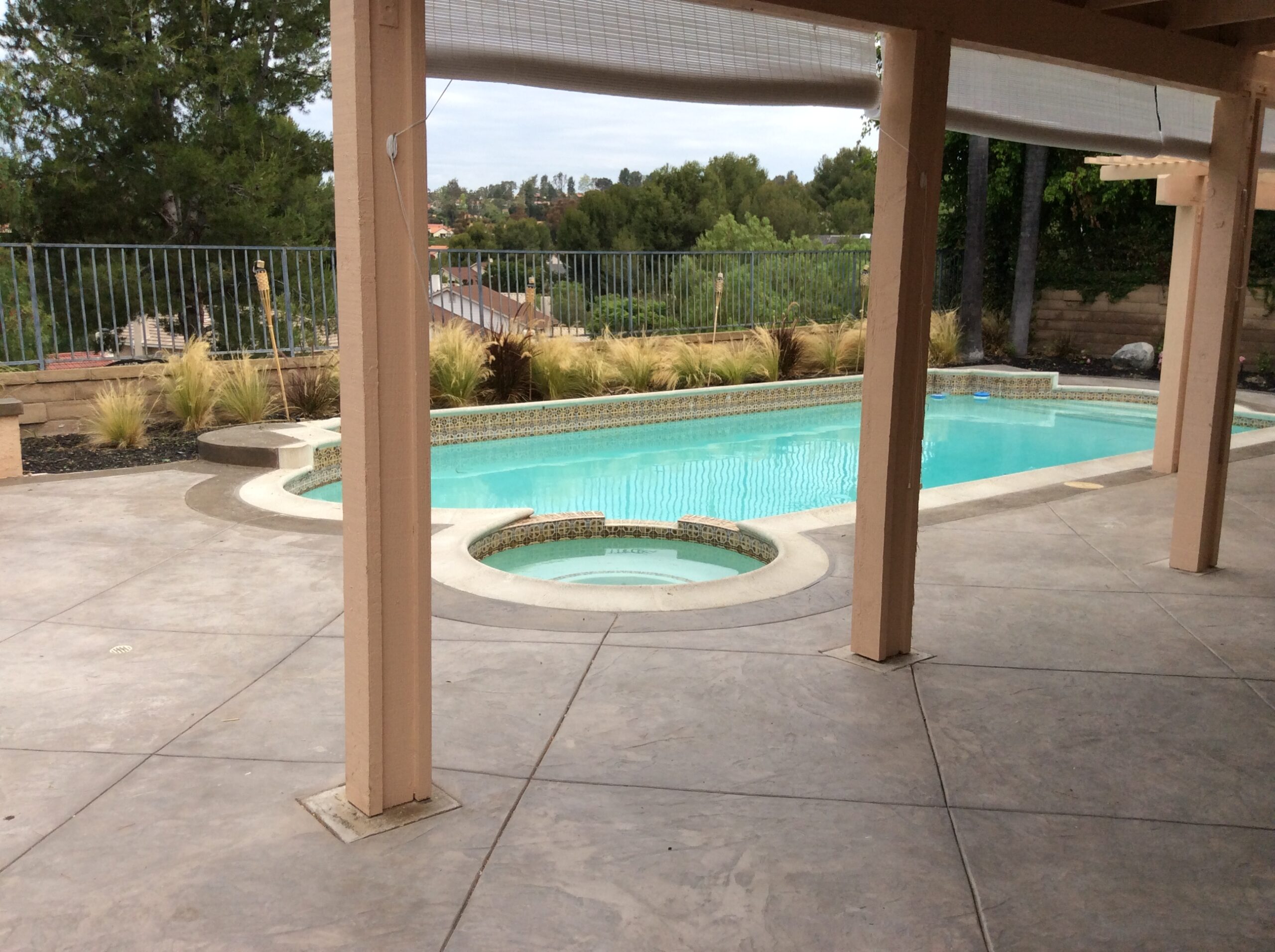
Exposed aggregate offers superior barefoot comfort compared to rough-textured alternatives while maintaining slip resistance when wet. The stones create micro-texture that channels water away from foot contact points. Stamped concrete can be slippery when wet, creating safety hazards around pools unless treated with an anti-slip sealer or traction additive. Pool deck stamped concrete can become dangerously slick when wet unless heavily treated with specialized traction-enhancing sealers that may compromise aesthetic appearance.
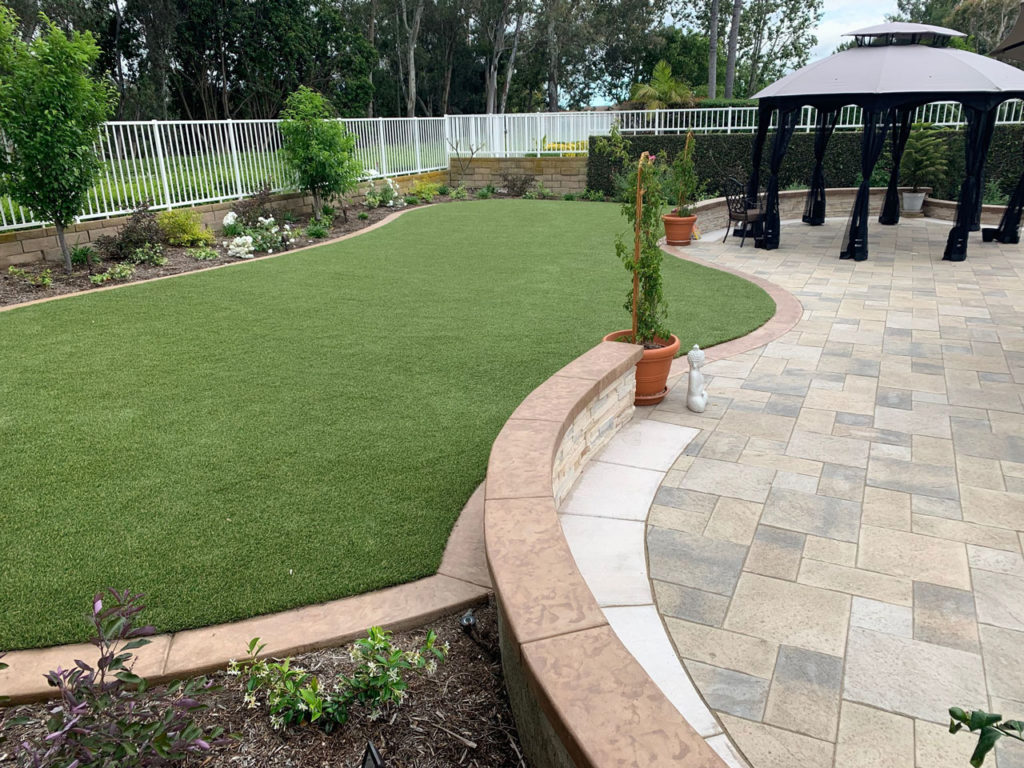
Stamped concrete transforms ordinary patios into extensions of indoor living areas through pattern coordination with interior flooring. Color customization enables seamless transitions between indoor and outdoor spaces, creating visual continuity. Stained concrete and concrete dyes add subtle color variations to existing patio surfaces without major reconstruction, offering economical aesthetic upgrades. These topical stains sit on the existing surface, refreshing color without altering texture. Combined applications using stamped borders with exposed aggregate fields provide visual interest while managing costs across larger patio footprints.
Decorative concrete installations generate measurable property value increases when properly designed and maintained. Professional hardscape contractors recommend finish selection based on specific application requirements rather than aesthetic preference alone. Return on investment varies by finish type, installation quality, and regional market conditions.
A paver patio typically returns 80% to 95% of cost at resale, establishing a benchmark for hardscape investment returns. Stamped concrete delivers comparable ROI when professionally installed and maintained through regular resealing. Exposed aggregate provides strong long-term value through minimal maintenance requirements and extended service life. Brushed concrete offers limited resale impact beyond functional necessity, making it suitable for utility areas rather than showcase spaces.
Contractors recommend exposed aggregate or brushed concrete for pool decks where slip resistance outweighs aesthetic considerations. Stamped concrete suits entertaining areas and front entries where visual impact influences property perception. Professional installation proves critical for pavers and decorative concrete alike, as improper base preparation leads to premature failure. Design consultations should address drainage integration, as proper water management extends surface longevity regardless of finish type.
Strategic finish selection matching application requirements prevents overspending on unnecessary aesthetic features in functional areas. Investing in proper base preparation and reinforcement delivers better long-term value than premium surface finishes over inadequate foundations. Regular maintenance, including timely resealing, preserves finish integrity and prevents expensive repair requirements. Combining multiple finish types within single projects optimizes cost allocation, placing premium treatments in high-visibility areas while using economical options for utilitarian zones.
Modern hardscape design frequently combines decorative concrete with complementary materials across exterior hardscapes to create visual interest and optimize functionality. Material integration requires understanding compatibility factors, including expansion rates, drainage characteristics, and aesthetic coordination. Successful mixed-material projects balance cost efficiency with cohesive design execution.
Stamped concrete borders surrounding paver fields reduce project costs while maintaining a premium appearance at key visual boundaries. Exposed aggregate walkways connecting paver patios provide textural contrast and improved drainage along transition zones. Brushed concrete serves as an economical base material beneath permeable pavers in areas requiring enhanced landscape drainage and hardscape design integration. Contrasting material combinations define functional zones within larger outdoor living spaces without requiring walls or planters.
Interlocking concrete pavers achieve approximately 8,000 PSI compressive strength, exceeding poured concrete's typical 3,000-4,000 PSI rating. This strength differential influences material selection for vehicle-bearing surfaces versus pedestrian areas. Decorative concrete finishes and pavers exhibit different expansion coefficients, requiring proper joint placement at material transitions. Long-term performance depends on compatible base preparation across material types, as settlement affects integrated systems more severely than single-material installations.
Contemporary designs incorporate geometric concrete panels with contrasting paver accents to create modern outdoor rooms. Natural stone edging frames stamped concrete fields, adding organic elements to manufactured surfaces. Stained concrete bands separate functional zones within expansive patio networks, providing subtle visual guidance without physical barriers. Strategic material placement considers both immediate visual impact and the complete Orange County hardscape maintenance requirements, as mixed systems demand coordinated care schedules across different surface types.
Selecting appropriate decorative concrete finishes requires balancing aesthetic goals against functional requirements and budget constraints. Stamped concrete dominates the market through versatile design options despite higher maintenance demands and installation costs. Exposed aggregate delivers superior durability and slip resistance for high-traffic and wet applications while maintaining moderate aesthetic appeal. Brushed concrete provides economical traction for safety-critical areas where appearance remains secondary. Staining enhances existing surfaces economically without altering texture or requiring major reconstruction.
Application-specific selection maximizes value by matching finish capabilities to site conditions and usage patterns. Pool decks benefit from exposed aggregate's slip resistance and barefoot comfort more than stamped concrete's visual variety. Driveways require durable surfaces that withstand vehicle loads and conceal dirt, making exposed aggregate or properly sealed stamped concrete appropriate choices. Entertaining patios justify premium finishes that extend indoor design aesthetics outdoors.
Long-term ownership costs extend beyond initial installation expenses to include resealing, repairs, and eventual replacement. Signature Landscape brings 38 years of experience helping Orange County homeowners select and install decorative concrete finishes that balance immediate impact with lasting performance. Professional installation ensures proper base preparation, drainage integration, and finish application techniques that maximize service life and minimize maintenance burdens.
Picking between stamped, brushed, exposed aggregate, and stained concrete comes down to how you actually use the space, what your property demands, and how much upkeep you want to sign up for. That choice is a lot easier with someone who has poured all four finishes across Orange County for decades.
Signature Landscape has designed and installed decorative concrete for homeowners here since 1989, with more than 1,000 completed projects and 150+ five-star reviews behind the work. You will see your patio, driveway, or pool deck in 3D before we break ground, so you know exactly what you are getting. Request a free quote or contact us to talk through the finish that fits your project.
Schedule A Consultation