Call our Professional Contractors!
(949) 859-9969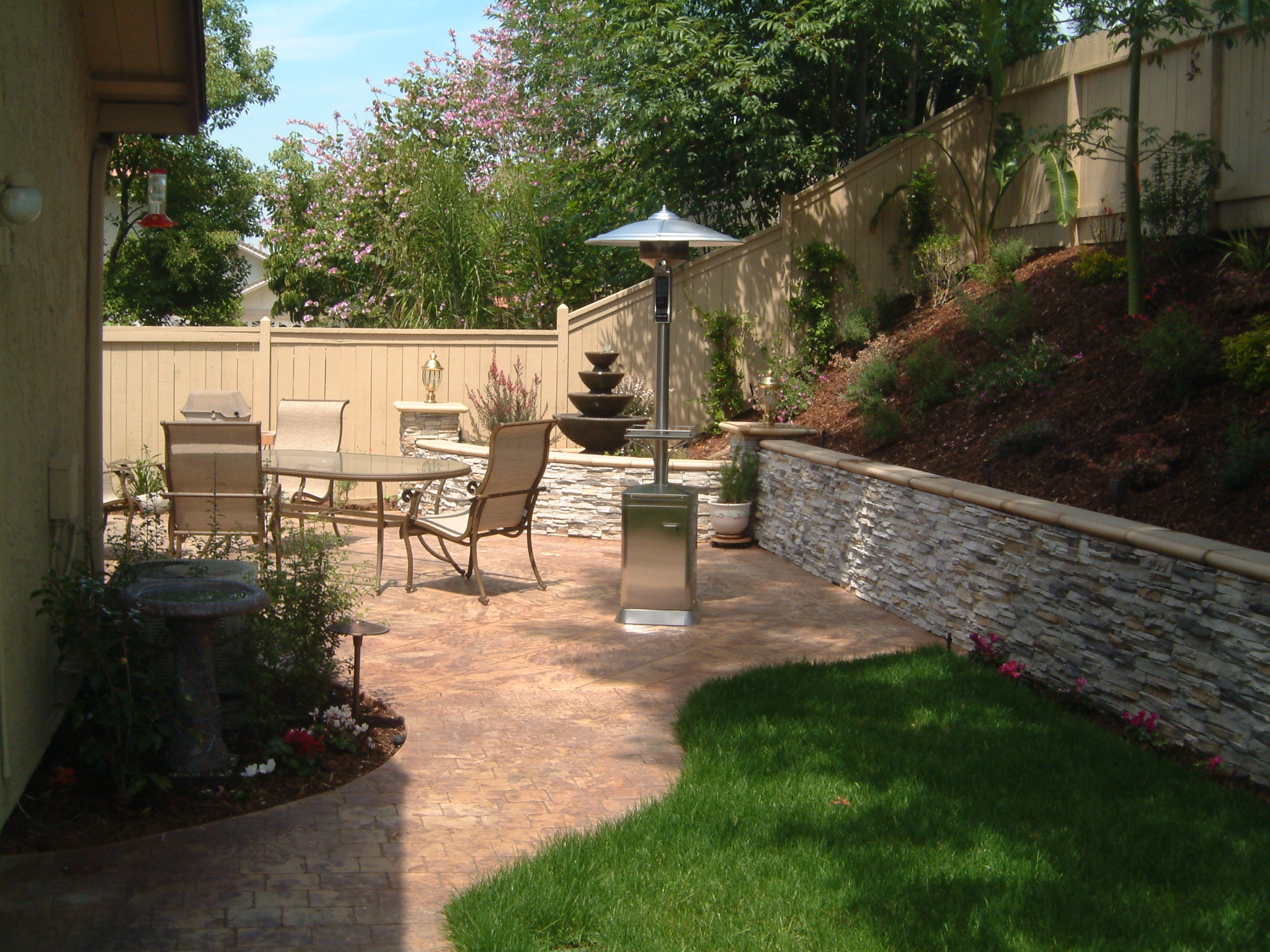
Retaining walls in Orange County represent both a functional necessity and a significant financial investment for homeowners managing sloped properties as part of broader landscape design plans. Understanding retaining wall cost structures helps property owners make informed decisions about wall material, height specifications, soil conditions, and engineering requirements before committing to construction.
Orange County's unique combination of hillside topography, strict permitting standards, and premium labor markets creates pricing dynamics that differ substantially from national averages. Homeowners planning retaining wall projects in 2026 should expect material costs ranging from $15 per square foot for basic timber walls to $57 per square foot for engineered reinforced concrete structures, with final budgets heavily influenced by wall height, drainage complexity, and site-specific challenges.
Retaining walls are structural barriers designed to hold back soil and manage grade changes on sloped properties. Like other fences & walls used to define outdoor spaces, these engineered systems prevent erosion, create usable flat areas, and protect downslope structures from soil movement and water damage.
Orange County retaining walls face more stringent oversight than many other California markets due to seismic activity and hillside development patterns. Permit exemptions are limited for retaining walls that exceed common exempt conditions, typically involving height, setback, or surcharge limitations. Walls exceeding exempt conditions require stamped design plans, a foundation plan, engineering review, and permitting through Orange County Public Works, adding both time and cost to project timelines.
Complex site geometry triggers permit requirements even for shorter walls when factors like proximity to property lines, foundation conflicts, or irregular slope angles create additional structural concerns.
Proper drainage systems determine whether retaining walls last decades or fail within years of installation. Drainage failure is the leading cause of wall failure because hydrostatic pressure from saturated backfill overwhelms structural capacity and destabilizes foundations. Coordinating drainage with irrigation solutions on the property helps manage water use behind the wall and reduces pressure buildup over time.
Underfunded drainage systems lead to wall failure even when the wall structure itself was properly designed and built. Permeable interlocking concrete pavers are drainage-forward and code-friendly products that allow water infiltration rather than forcing runoff to accumulate behind retaining structures.
Timber walls represent the most budget-conscious option for low retaining structures in non-critical applications. Timber walls at approximately $15 to $25 per square foot cost significantly less than segmental block at approximately $20 to $35 per square foot in basic configurations. However, timber's shorter lifespan and limited structural capacity make it unsuitable for most Orange County applications where long-term property value and seismic performance matter.
Segmental retaining wall block systems are generally recommended for walls under 6 feet, where they provide strong drainage compatibility and modular repairability. The segmental retaining wall market declined 6.1% in 2023, reflecting broader construction cycle normalization after pandemic-era demand spikes. Segmental block systems vs poured concrete for walls under 6 feet often favor block because of lower formwork costs, easier repairs, and better drainage integration without sacrificing structural performance.
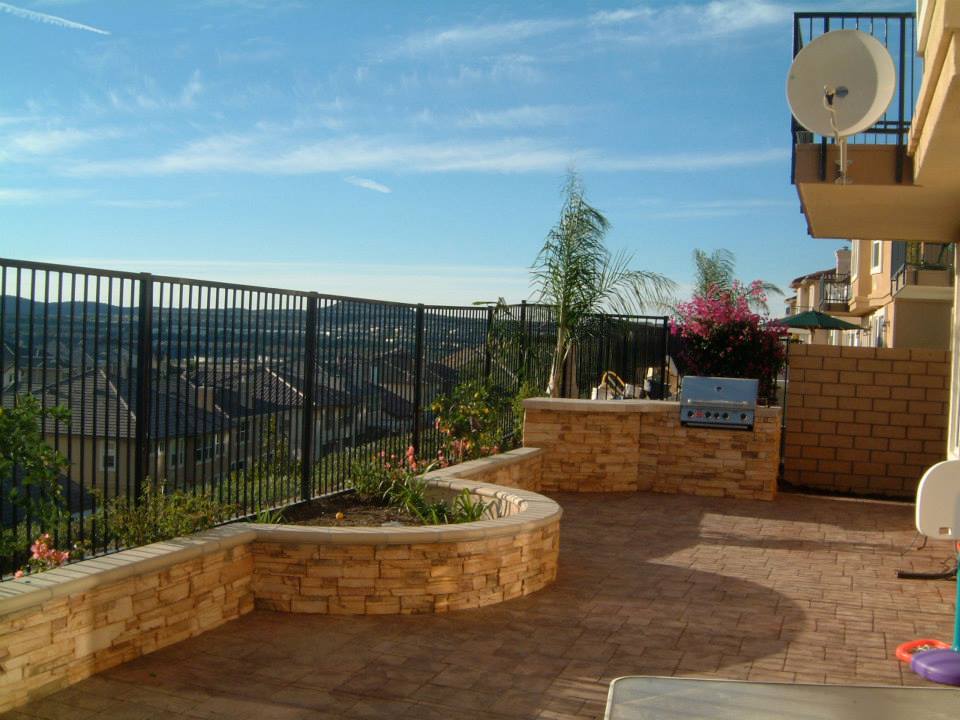
Natural stone walls at approximately $25 to $40+ per square foot deliver premium aesthetics but cost less than reinforced concrete at approximately $52 to $57 per square foot for engineered applications. Natural stone provides the highest-end aesthetic and lifespan vs other materials, making it the preferred choice for visible applications in high-value neighborhoods. Natural stone has availability and craftsmanship variability, meaning installation quality depends heavily on contractor skill and local material sourcing. Formwork cost increases concrete wall expenses because temporary support structures add labor hours and material waste. Premium blocks add cost to segmental systems when homeowners choose larger formats, textured finishes, or integrated cap units.
Wall height determines both regulatory requirements and structural complexity in Orange County retaining wall projects. Segmental retaining wall block systems are generally recommended for walls under 6 feet because taller structures require geogrid reinforcement and formal engineering analysis. Engineering is often needed as wall height rises beyond basic thresholds because lateral earth pressure increases exponentially, and building departments demand professionally stamped plans. Adding Computer-Aided Design to the design process helps homeowners visualize the finished wall before any concrete is poured.
Walls exceeding six feet face substantially higher design loads that require deeper footings, reinforcement systems, and drainage upgrades. Material costs remain similar on a per-foot basis, but engineering fees, permit costs, and installation complexity push total project budgets significantly higher. The difference between a decorative four-foot wall and an engineered eight-foot wall often doubles or triples the final cost, even when using the same wall material.
Hillside properties introduce access challenges, excavation complexity, and surcharge loads that increase both material quantities and labor hours. Steep slopes require benching or terracing multiple shorter walls rather than building one tall structure, multiplying foundation work and material use. Soil conditions like poor compaction, high groundwater, or limited equipment access can add 30% to 50% to baseline retaining wall cost estimates even before material selection.
Budget-tier retaining walls in Orange County typically start around $6,000 for simple projects and scale upward based on scope. A decorative wall under 4 feet costing $6,000 to $12,000 represents typical pricing for basic segmental block installations with standard drainage and minimal excavation challenges. An engineered segmental wall costing $10,000 to $18,000 reflects the added expense of professional design, geogrid reinforcement, and more extensive drainage systems required for taller or more complex applications.
Premium stone or poured structural wall costing $12,000 to $20,000 in the lower range can easily escalate to $40,000 or beyond when project scope, wall height, or site complexity increases during the construction phase. Orange County labor costs run roughly 15% to 25% above national averages due to higher wage floors, insurance requirements, and competitive demand for a skilled installation crew. These premiums compound quickly on labor-intensive projects like natural stone walls, where experienced masons command premium rates.
Budget shoppers who underfund drainage create future replacement costs by allowing hydrostatic pressure to destabilize wall structures over time. Underfunded drainage systems lead to wall failure regardless of wall material quality or installation precision. Proper landscape drainage solutions include aggregate backfill, perforated drainpipe, and outlet systems that add $2,000 to $5,000 to project budgets but prevent catastrophic failures.
Paver driveways occupy a different value proposition than retaining walls because they emphasize curb appeal over structural necessity. Basic driveway pavers cost $17.88 to $23.75 per square foot for standard installations without extensive grading or drainage work. A typical two-car paver driveway costs $15,000 to $34,000, depending on finish level, drainage requirements, and existing site conditions. The average two-car paver driveway around $24,500, falls within the same budget range as mid-tier retaining wall projects but serves different functional priorities.
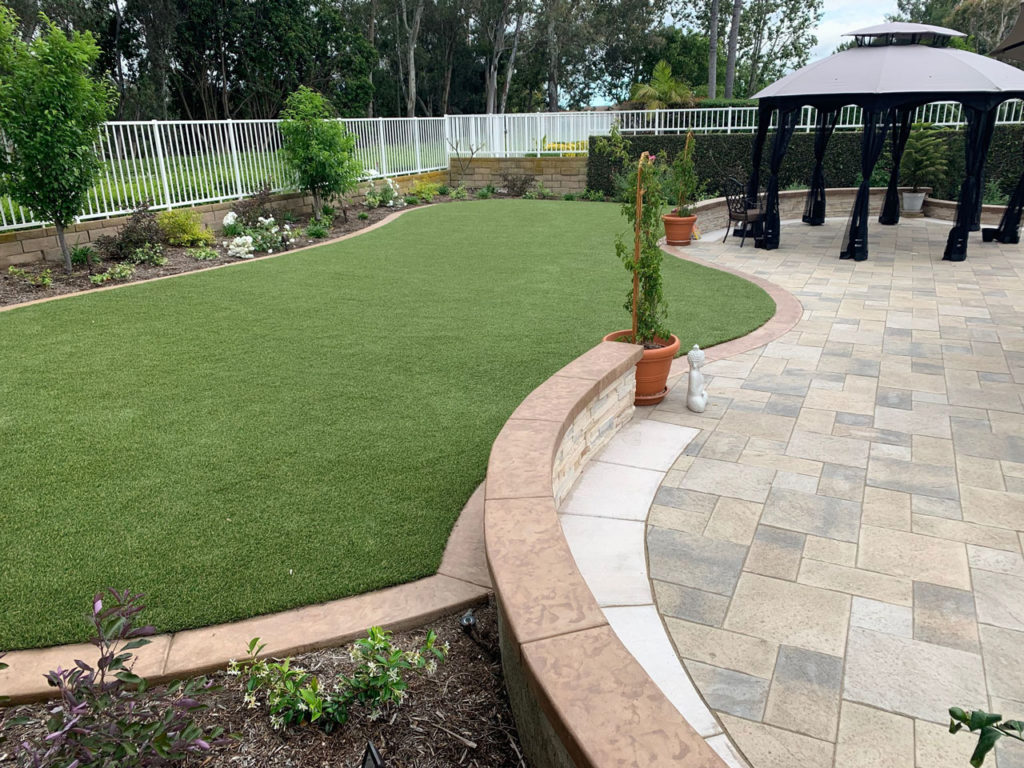
Patios and outdoor living areas dominate hardscape demand because they expand usable square footage and support entertainment lifestyles, including outdoor dining spaces and connecting garden pathways. Patios and terraces represent 34% of Orange County hardscape demand in modeled estimates, reflecting strong homeowner preference for livable outdoor living environments. Retaining walls represent 16% of Orange County hardscape demand, smaller by project count but often larger by individual ticket size, and they shape how other hardscape elements fit into broader hardscape layouts. Paver driveways represent 22% of Orange County hardscape demand, positioned between patios and retaining walls in both volume and value.
Orange County homes carry roughly 2.9 times the U.S. median owner value, creating stronger economic incentives for permanent structural improvements like retaining walls, pools, and water features. The median owner-occupied home value of $962,600 in Orange County means retaining wall investments represent a smaller percentage of property value than in lower-cost markets. Orange County is a high-value, design-intensive market for hardscape design where retaining walls serve essential functions beyond simple aesthetics in hillside communities.
Drainage failure is the leading cause of wall failure, making adequate drainage investment a non-negotiable budget item rather than an optional upgrade. Budget shoppers who underfund drainage create future replacement costs that often exceed the initial savings by requiring complete wall demolition and reconstruction. A comprehensive landscape drainage guide helps homeowners understand grading, perforated pipe, aggregate backfill, and outlet systems that protect long-term wall stability.
Material selection affects not only upfront costs but also maintenance requirements and resale value over decades of ownership. Research shows 75% of consumers believe landscaping increases home value, making retaining walls a defensible capital investment when integrated into a thoughtful landscape design. Data indicates 69% say curb appeal is important when deciding which home to purchase, reinforcing the value of visible front-yard retaining walls and entrance features.
Permit exemptions are limited for retaining walls, meaning most projects exceeding basic height and setback thresholds require formal plan review and inspection. Orange County labor costs roughly 15% to 25% above national averages, making contractor selection critical to avoiding both low-quality work and excessive pricing. Licensed contractors with local permit experience navigate Orange County requirements more efficiently than out-of-area or unlicensed installers.
Successful retaining wall projects align wall material with specific site challenges like soil type, drainage patterns, surrounding plants and materials, and aesthetic priorities. Segmental block excels in moderate-height applications where drainage integration and future repairability matter most for long-term value. Natural stone suits high-visibility applications where a premium appearance justifies higher installation costs and the investment through enhanced curb appeal.
Consumer research shows 71% consider aesthetics in product purchase decisions, making visual quality a primary decision factor alongside cost. The same research indicates 71% consider durability in product purchase decisions, demonstrating that homeowners prioritize long-term performance equally with appearance. The functional and aesthetic benefits of properly designed retaining walls justify premium material investment when projects serve dual purposes of structural necessity and landscape enhancement.
Professional engineering oversight from a licensed landscape architect or seasoned landscape designer prevents costly failures by ensuring adequate foundation design, reinforcement specifications, and drainage system capacity throughout the installation process. Licensed contractors bring permit knowledge, insurance protection, and warranty coverage that protect homeowners from both construction defects and regulatory violations. Understanding how retaining walls protect homes from water damage helps homeowners appreciate the value of professional design over DIY or budget-tier installations.
Orange County retaining walls in 2026 reflect a market where per-foot pricing varies dramatically based on wall material selection, height cost thresholds, and how the wall fits into the broader landscape architecture of the property. Timber systems remain available at $15 to $25 per square foot for non-critical applications, while segmental block installations range from $20 to $35 per square foot for standard configurations. Natural stone commands $25 to $40+ per square foot, depending on stone type and installation complexity, while reinforced concrete peaks at $52 to $57 per square foot for fully engineered structural walls.
Height cost increases accelerate above six-foot thresholds because engineering requirements, geogrid reinforcement, and permit fees compound material and labor expenses. A four-foot decorative wall may cost $6,000 to $12,000, while an eight-foot engineered wall often exceeds $18,000 to $35,000, even using similar materials due to structural complexity. Homeowners should budget an additional $2,000 to $5,000 for drainage systems that protect wall longevity and prevent hydrostatic failure regardless of wall material choice.
Orange County's combination of premium housing values, hillside topography, and strict building standards creates market conditions where quality installation and proper engineering deliver measurable long-term value. Retaining walls built to current standards with adequate drainage protect both property functionality and resale marketability in a county where median home values approach $1 million. Signature Landscape brings 38 years of Orange County experience to retaining wall projects, combining in-house design capabilities with licensed installation expertise to deliver walls that remain structurally sound for decades.
Homeowners planning retaining wall projects in 2026 should prioritize drainage investment, select materials appropriate to wall height and site conditions, and work with licensed contractors who understand local permit requirements. Request a free consultation to receive site-specific cost estimates and professional design recommendations for your Orange County retaining wall project.
Since 1989, Signature Landscape has helped Orange County homeowners turn sloped lots into the dream yard they had always pictured. Our in-house team handles every step, from the first 3D CAD rendering to the final paver, and our landscape design services bring together hardscape design, drainage planning, and surrounding outdoor living environments into one cohesive plan. Every project is backed by an installation guarantee from a licensed crew with more than 35 years of local experience and over 1,000 completed projects across Newport Beach, Newport Coast, Irvine, and the wider Orange County area. Request a free consultation today to receive a site-specific cost estimate and a design plan built around your property and budget.
Schedule A Consultation