Call our Professional Contractors!
(949) 859-9969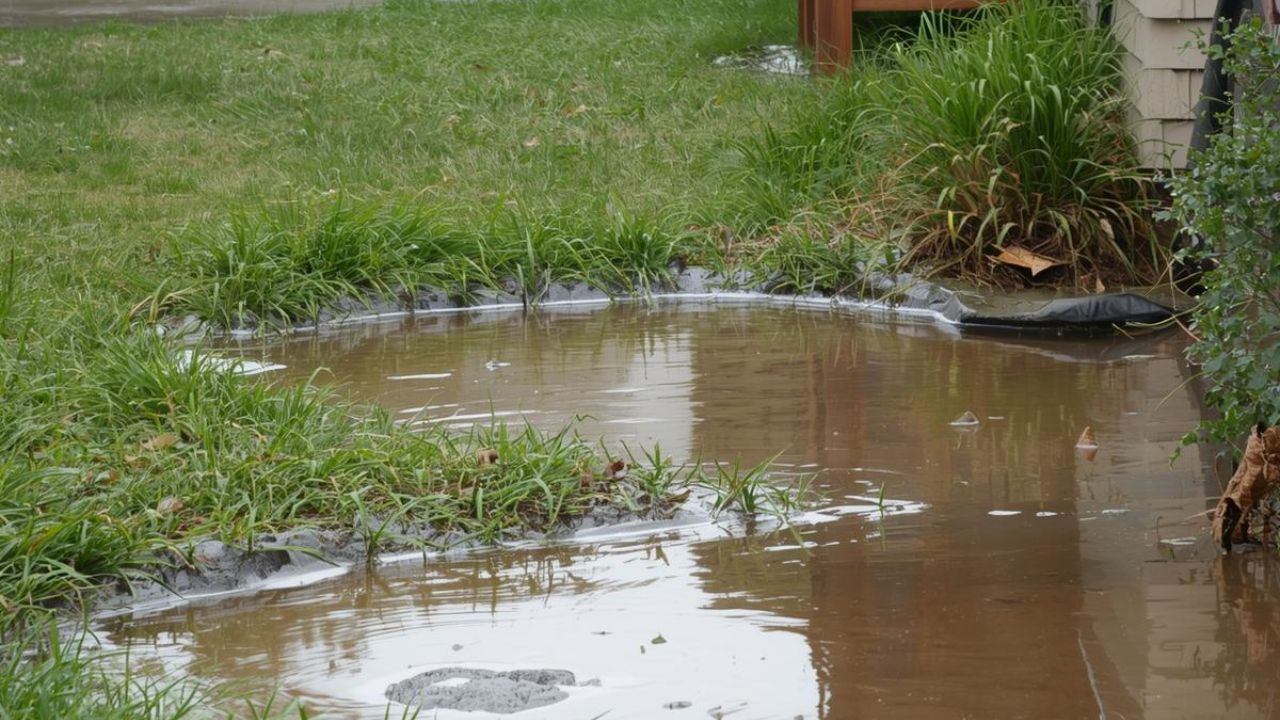
Key Takeaways:
Winter brings unique drainage challenges that damage property and create unusable outdoor spaces. Frozen ground prevents water absorption, forcing snowmelt and rainfall to accumulate on the surface. When systems can't handle the volume, water pools near foundations, saturated soil, and erodes landscapes.
The consequences are severe. Foundation damage from hydrostatic pressure costs $10,000 to $30,000 or more to repair. Basement flooding destroys belongings and creates health hazards. Soil erosion undermines hardscapes and kills plants. Winter freeze-thaw cycles accelerate deterioration.
This guide provides essential information to prevent water damage through understanding causes, assessing vulnerabilities, implementing solutions, and maintaining systems consistently.
Winter flooding stems from multiple interconnected factors that compromise your property's ability to manage water. The combination of frozen soil, accumulated snow, and winter storms creates perfect conditions for drainage failure. Recognizing these causes helps you address problems before they escalate into expensive damage.
Excessive rainfall creates flooding when frozen ground prevents water absorption. Winter precipitation combined with snowmelt produces volumes that overwhelm existing infrastructure. Water stays on the surface instead of infiltrating soil, accumulating in low spots and near foundations. Temperature fluctuations worsen this—daytime thaws create liquid water that refreezes overnight, forming ice layers that block drainage paths. Saturated soil loses structural integrity, leading to settling and erosion.
Poor drainage systems fail because of improper grading and inadequate infrastructure. When the ground slopes toward your foundation instead of away, surface water flows directly to your house. The EPA recommends a minimum slope of 0.25 inches per foot for patio slabs and walkways, with a final grade of 0.5 inches per foot away from the foundation for at least 10 feet. Missing this standard causes water pooling, hydrostatic pressure, foundation damage, and basement flooding.
Clogged gutters compound the problem. Leaves, twigs, and ice dams prevent proper water diversion from your roof. Water overflows and cascades down siding, pooling near foundations. This leads to fascia rot, foundation cracks, and basement leaks. Insufficient systems—lacking French drains, surface drains, or proper downspout extensions—simply can't redirect excess water effectively.
Soil compaction reduces pore space and blocks water infiltration. Heavy foot traffic, construction equipment, and machinery compress soil particles, leaving nowhere for water to go. The problem intensifies in winter when frozen ground becomes impermeable. Test your drainage by digging a 1-foot deep hole, filling it with water, and measuring the drainage rate. Less than 2 inches per hour signals poor drainage requiring intervention.
Clay soil presents particular challenges. Fine, tightly packed clay particles resist water penetration. When saturated, clay expands and pressures foundations. As it dries, it contracts, creating heave-and-settlement cycles. Clay percolation rates fall significantly below 1 inch per hour, while sandy soils drain quickly. Understanding your soil type determines which drainage repair solutions work best.
A thorough assessment identifies problem areas and guides solution selection. Skip this step and you'll waste money on fixes that don't address root causes. Systematic evaluation reveals where water comes from, where it goes, and what's preventing proper drainage. This information determines which solutions will actually work for your property.
Key indicators include visible water pooling, slow drainage, and altered runoff patterns during rainfall. Watch for soggy lawns that stay wet days after rain stops. Standing water near foundations signals immediate danger—this is where you'll see basement leaks and foundation cracks develop. Erosion in garden beds shows water is flowing with enough force to move soil, indicating paths that need redirection.
Compacted soil and low spots accumulate water because natural flow is blocked or absorption is impossible. Look for areas where grass won't grow or where you sink into muddy ground when walking. These signs reveal where intervention is needed most. Document these problem areas with photos during rain events—this visual record helps professionals design effective solutions.
Identify low-lying areas through flow mapping during rain events. Simple observation shows how water moves across your property. Note where water naturally collects and which paths it follows. Professionals use GPS tools to map drainage layouts precisely and identify optimal placement for new systems. Install catch basins at the lowest points where water accumulates—these grate-covered boxes collect and redirect water before flooding occurs.
Evaluating existing systems reveals clogs, damage, and improper installation. Inspect gutters, downspouts, French drains, and other infrastructure for issues. Downspouts dumping water within feet of your foundation create immediate problems. Determine whether your water source is surface runoff, groundwater from a high water table, or municipal backup—this dictates appropriate solutions.
Conduct percolation tests to measure soil drainage capacity. Dig a hole 12 inches deep and wide, fill it with water, let it drain, then refill and time how long one inch takes to drop. This quantifies absorption capability and confirms whether your soil can handle additional water or requires engineered drainage.
Multiple drainage solutions address different water management needs. No single system handles every scenario—you need the right tool for each problem. Surface water requires different approaches than subsurface groundwater. High-volume areas need different capacity than occasional trouble spots. Combining systems creates comprehensive protection that handles various water sources and flow conditions.
French drains collect and redirect subsurface water using perforated pipes surrounded by gravel in trenches. The system diverts groundwater and surface water away from foundations and problem areas. Water enters through perforations in the pipe, travels along the slope, and discharges at a safe location away from structures.
Install trenches with a minimum 1% slope—1/8 inch per foot—to ensure gravity-driven flow. Steeper slopes work better but aren't always feasible given terrain constraints. Filter fabric wraps pipes and lines trenches, preventing soil and sediment from clogging the system. This fabric layer is critical—without it, fine particles migrate into the gravel and pipe, reducing capacity over time.
French drains cost $20 to $30 per linear foot. Professional installation of a 100-foot system runs $2,000 to $3,000. This includes excavation, materials, proper slope calculation, and backfilling. Maintenance is minimal but requires periodic outlet inspection to confirm debris isn't blocking flow. These systems effectively prevent pooling and protect foundations from water damage when properly installed.
Dry wells are underground structures that collect and slowly disperse water into surrounding soil. They manage downspout runoff by capturing large volumes and allowing gradual infiltration rather than surface discharge. This eliminates erosion and prevents water from overwhelming other drainage components.
A typical dry well consists of a large perforated chamber buried several feet underground and filled with gravel. Downspouts and drainage pipes feed into the top. Water fills the chamber, then percolates through holes into the surrounding soil. The system essentially creates an underground reservoir that releases water slowly over hours or days rather than dumping it all at once onto your yard.
Dry wells work best in soils with reasonable percolation rates. Sandy or loamy soils drain well enough to accept the dispersed water. Clay soils with poor infiltration can't absorb water fast enough, causing the dry well to fill and back up. Test your soil's percolation rate before investing in this solution.
Sump pumps actively remove water from basements and crawl spaces in homes with high groundwater tables where passive drainage can't keep up. The pump sits in a sump pit at the lowest basement floor point. As groundwater seeps in, rising water triggers a float switch. The pump activates and discharges water through pipes to a location at least 10 feet from foundations to prevent recirculation.
Battery backup systems ensure operation during power outages that often coincide with heavy storms. Test pumps periodically by pouring water into the pit to verify smooth operation. Check discharge pipes for clogs or winter freezing. A failed pump during major storms can flood basements in hours.
Strategic landscaping directs water away from vulnerable areas while enhancing aesthetics. Proper design integrates drainage function with visual appeal—you don't have to sacrifice beauty for performance. Thoughtful plant selection, material choices, and terrain shaping create yards that handle water efficiently without looking like industrial drainage facilities.
Gravel improves drainage by creating porous layers that facilitate water movement. Use it as backfill in French drain trenches around perforated pipes—gaps between stones allow water to flow freely. Install permeable pavers on gravel beds that provide stable bases while allowing drainage to soil below.
Ground covers and mulch reduce soil compaction from rainfall impact. Heavy rain hitting bare soil creates a surface seal that blocks absorption. Mulch absorbs impact energy, keeping soil structure intact and maintaining pore space for water infiltration. Organic mulch improves soil structure as it decomposes. A 2-3 inch layer is optimal—replenish annually as decomposition reduces depth.
Proper slope directs water away from foundations and structures through gravity. Grade your yard at 3% to 10% away from your home—this translates to 3 to 10 feet of horizontal distance for each foot of elevation drop. A house with 10 feet of yard space should have the ground 3 to 12 inches lower at the property edge than at the foundation.
Concrete surfaces near foundations require 1/4 to 1/2 inch per foot grading within 10 feet of the building. This may seem subtle, but it's enough to prevent water from pooling against basement walls. Even small amounts of standing water create hydrostatic pressure that forces moisture through foundation walls and cracks.
This reshaping ensures gravity moves water toward safe discharge points instead of pooling against your house. Professional hardscaping installation ensures proper grades are maintained during construction. Settling over time can reduce effectiveness, so periodic regrading may be necessary to restore proper slope.
Swales are shallow, sloped channels that manage surface water at ground level. They work with natural topography to guide water toward appropriate discharge areas. Unlike pipes that hide drainage underground, swales are visible landscape features that move water across the surface in controlled paths.
Bioswales add vegetation to these channels—native plants tolerate both wet and dry conditions while conveying stormwater, removing pollutants, and promoting infiltration. The plants slow water velocity, allowing sediment to settle and contaminants to filter out before water reaches storm drains or natural waterways. Root systems create channels that enhance soil infiltration.
These vegetated systems provide drainage function plus environmental benefits like water filtration and habitat for beneficial insects and birds. They integrate seamlessly into landscape design as attractive features rather than purely functional elements. Strategic plant selection creates year-round visual interest while maintaining drainage capacity.
Rain gardens complement swales as shallow depressions planted with adaptive vegetation. They capture runoff, absorb water, and recharge groundwater. Costs run $5 to $15 per square foot. Combined with other water-smart landscaping approaches, these systems create multilayered drainage while supporting sustainable water management. Many municipalities offer rebates for installing these green infrastructure features.
Regular maintenance preserves drainage effectiveness and prevents system failures. Even the best-designed systems degrade without care. Debris accumulates, pipes settle, and plant roots intrude. Scheduled inspections catch small problems before they become expensive repairs. A few hours of maintenance annually protects thousands of dollars in drainage investments.
Regular inspection detects clogs, damage, and deterioration early. Check drainage systems for debris accumulation, structural issues, and signs of reduced function. Look for slow drainage, unusual odors, or standing water that previously drained quickly. These indicate developing problems that will worsen if ignored.
Inspect gutters, downspouts, and drainage pipes twice yearly—spring and fall are ideal timing. Remove debris from catch basins and French drains to maintain flow capacity. A single season of leaves can reduce a catch basin's capacity by 50% or more. Check French drain outlets to confirm they're clear and water flows freely during rain.
Early detection prevents minor issues from escalating into major failures that require expensive remediation. A $50 gutter cleaning prevents a $5,000 foundation repair. A cleared French drain outlet prevents the entire system from backing up and flooding your yard. The cost-benefit ratio of preventive maintenance far exceeds reactive repairs.
Clean gutters and downspouts twice per year minimum—spring and fall. Spring cleaning removes winter debris and prepares systems for heavy spring rains. Fall cleaning prevents leaves from clogging gutters before winter precipitation begins. Properties with overhanging trees may need quarterly cleaning to prevent overflow.
Professional gutter cleaning costs $150 to $300 depending on home size and gutter length. DIY cleaning saves money but requires ladder safety awareness and proper technique. Consider gutter guards at $5 to $30 per linear foot installed to reduce maintenance frequency. Quality guards pay for themselves within a few years through reduced cleaning costs.
Extend downspouts 6 to 10 feet from foundations to discharge water safely away from the structure. Shorter extensions dump water too close to your house, creating the exact problem your gutters are supposed to prevent. Use splash blocks or underground extensions to carry water to appropriate drainage areas.
Size gutters and downspouts appropriately for your roof area—undersized systems overflow even when clean, defeating their purpose. A 1,500 square foot roof section typically requires 5-inch gutters and 3-inch downspouts. Larger roof areas or steep pitches need larger components to handle higher water volumes.
Warning signs include water pooling where it previously drained, standing water near foundations, and perpetually soggy lawns. If areas that dried within hours after rain now stay wet for days, your drainage capacity has declined. This happens gradually as systems clog or settle, making it easy to miss until problems become severe.
Erosion in garden beds or around drainage features indicates improper flow patterns. Water should move slowly and evenly, not carve channels through landscaping. Gullies and exposed roots show water is concentrating in paths it shouldn't follow. This erosion undermines plants and hardscapes, creating larger problems over time.
Water backing up or overflowing from gutters and drains signals blockages or inadequate capacity. During moderate rain, water should flow smoothly through your drainage system. If you see overflows or backups, something is preventing proper function. Don't wait for heavier storms to reveal the full extent of the problem.
Visible settling or sinking of hardscapes reveals base erosion from poor drainage—water washing away supporting materials compromises structural integrity. Patios that were once level now slope toward foundations. Pavers separate or sink unevenly. These movements indicate water is removing base materials that support the surface, requiring expensive repairs if not addressed promptly.
Professional expertise ensures complex drainage systems are designed and installed correctly. The wrong contractor creates problems that cost more to fix than doing it right the first time. Knowing what to look for protects your investment and ensures you get solutions that actually work. Experience, credentials, and communication skills all matter when selecting a drainage professional.
Ensure experience by reviewing past projects similar to your needs. Ask to see photos of completed drainage installations, not general landscaping work. Request contact information for recent clients with similar challenges. A contractor experienced in French drains may lack experience with bioswales or permeable paving.
Complex issues—extensive excavation, integrated systems, major grading—require professional expertise involving heavy equipment, precise calculations, and local soil knowledge. Simple fixes like downspout extensions or minor regrading are DIY-appropriate. French drains, significant grading changes, and landscape integration demand proper design and installation precision to avoid costly mistakes.
Ask for references from previous clients and verify the contractor has completed matching projects. Call references and ask about timeliness, communication, and whether systems solved drainage problems. A contractor with five foundation drainage projects is better qualified than one with fifty general landscape installations.
Licensed professionals ensure compliance with local building codes and regulations. Drainage work often requires permits, especially when connecting to municipal systems or altering property grading. Licensed contractors handle permit applications. Unlicensed contractors leave you liable for code violations and unpermitted work.
Insurance protects you from liability for accidents or property damage during installation. Worker injuries on your property are covered by their employer's insurance. Property damage insurance covers accidents like broken water lines during excavation.
Professional contractors understand stormwater ordinances, permit requirements, and HOA rules. Jurisdictions regulate stormwater management to protect municipal systems and waterways. You cannot legally divert water onto neighboring properties in ways that cause harm. Licensed contractors ensure your project meets all legal requirements and handle neighbor notification requirements.
Ask about experience with similar properties, licensing and insurance verification, and detailed cost estimates with material specifications. Get timelines for completion and understand warranty policies. Request references. Questions should cover years in business, annual drainage project volume, and what percentage of their work involves drainage versus general landscaping.
Understand cost ranges before getting quotes. Minor drainage issues run $500 to $2,000, moderate issues cost $2,000 to $8,000, and extensive problems reach $8,000 to $20,000 or more. These ranges help identify unrealistically low bids that signal corner-cutting or inflated estimates.
Specific component costs provide context. Catch basins cost $300 to $800 per unit. Channel drains run $15 to $40 per linear foot. Permeable pavers cost $10 to $30 per square foot. Ask contractors to break down estimates by component.
Effective drainage prevents foundation damage costing $10,000 to $30,000 or more to repair. A $5,000 drainage system preventing $20,000 in foundation repairs is excellent value. Get multiple quotes and compare proposed solutions, not just prices. The cheapest bid often uses inferior materials or shortcuts that compromise performance.
Preventing yard flooding requires understanding causes, assessing your property's needs, selecting appropriate solutions, and maintaining systems consistently. Winter's frozen ground, heavy precipitation, and snowmelt challenge inadequate drainage infrastructure. Proper grading, French drains, catch basins, and integrated landscaping create comprehensive protection.
Don't wait for water damage to force action. Signature Landscape specializes in drainage solutions that protect Orange County properties from flooding and foundation damage. Our licensed professionals design and install systems tailored to your property's unique challenges. Contact us today for a comprehensive drainage assessment and discover how proper water management preserves your investment and keeps your outdoor spaces functional year-round.
Schedule A Consultation