Call our Professional Contractors!
(949) 859-9969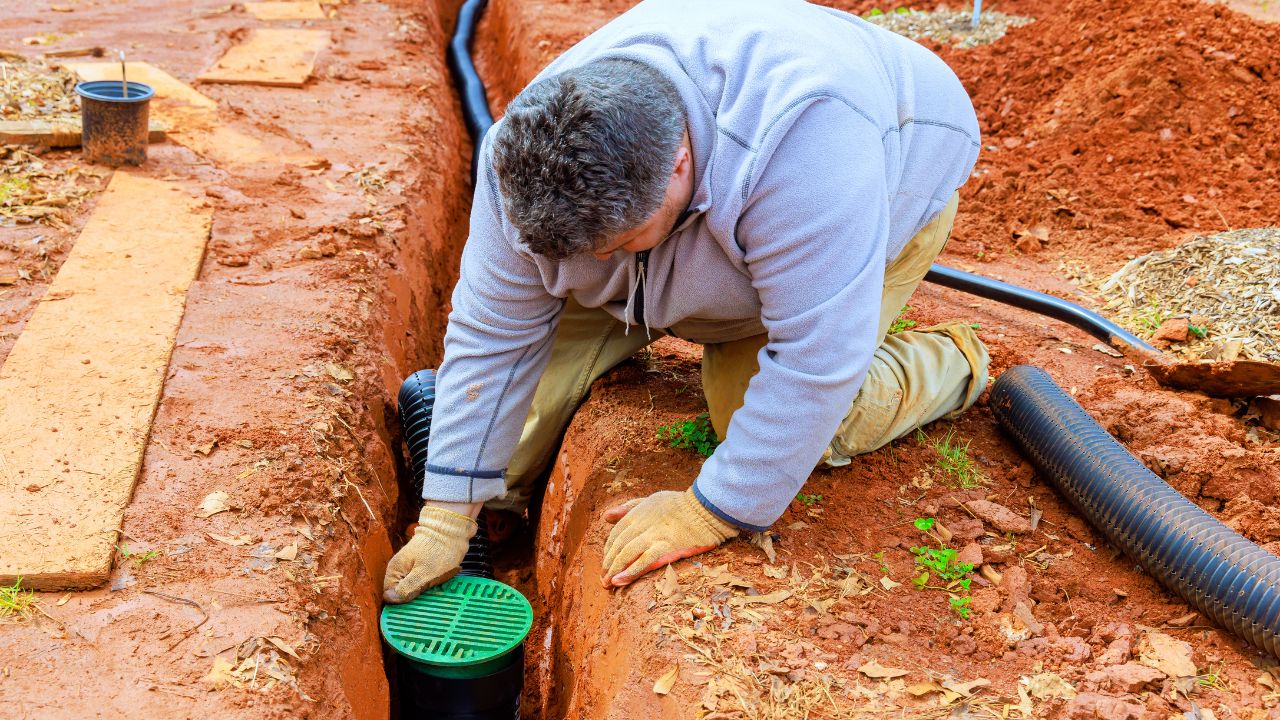
Key Takeaways:
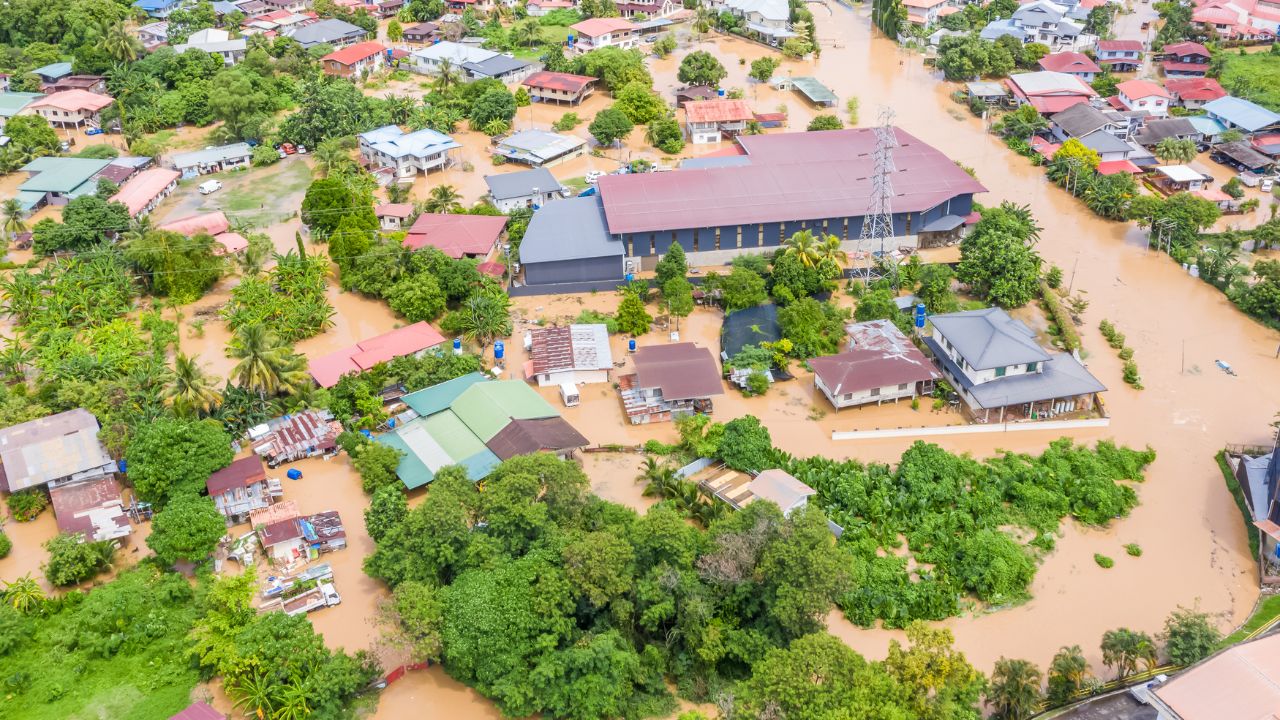
Seasonal flooding threatens foundations, damages landscapes, and creates costly repairs. Winter snowmelt, spring rains, and overwhelmed drainage systems turn properties into saturated hazards. What starts as minor pooling escalates into foundation cracks, basement flooding, and landscape erosion that destroys plantings and hardscaping investments.
The financial impact extends beyond immediate water damage. Water infiltration leads to foundation damage costing $10,000 to $30,000 or more to repair. Mold remediation in flooded basements adds thousands more. Property values decline when chronic flooding becomes apparent during inspections. Liability concerns arise when flooding affects neighboring properties.
Understanding causes, implementing effective solutions, and maintaining systems protects your home and preserves property value. This guide provides essential information to identify vulnerabilities, evaluate options, and make informed decisions about flood prevention that actually work.
Seasonal flooding results from multiple factors converging—excessive precipitation, inadequate infrastructure, and frozen ground conditions. These issues compound during transitional seasons when temperature fluctuations create freeze-thaw cycles that worsen drainage problems. Winter and spring create perfect conditions for flooding when drainage systems can't handle combined snowmelt and rainfall. Understanding these interconnected causes helps you address problems permanently rather than managing symptoms seasonally.
Heavy rainfall overwhelms drainage capacity when systems can't handle volume. A typical 1,500 square foot roof sheds over 900 gallons of water during a 1-inch rainstorm. When infrastructure is absent or inadequate, this massive volume accumulates leading to saturated soil and flooding. Winter precipitation combined with snowmelt produces volumes exceeding what existing drainage can manage—a heavy snow followed by warm rain creates worst-case scenarios.
Impermeable hardscaping materials like concrete driveways, patios, and walkways prevent natural infiltration, concentrating runoff that flows toward foundations and low spots. Properties with extensive hardscaping can generate thousands of gallons of runoff during moderate storms. This concentrated discharge overwhelms soil absorption capacity and creates standing water around structures. The problem intensifies when clay soils with poor permeability prevent water from infiltrating even when it reaches landscaped areas.
Poor drainage systems fail because of inadequate design or improper installation. Missing French drains, insufficient surface drains, and short downspout extensions leave water with nowhere to go. Inadequate grading—when ground slopes toward foundations instead of away—directs surface water directly to your house. The EPA recommends a minimum slope of 0.25 inches per foot for paved surfaces and 0.5 inches per foot away from foundations for at least 10 feet. Failing to maintain this grade causes water pooling near foundations, creating hydrostatic pressure that leads to basement flooding and structural damage.
Clogged gutters compound drainage failures. Leaves, twigs, and ice dams block flow, causing overflow that cascades down siding and pools at foundations. This leads to fascia rot, foundation cracks, and basement leaks. Downspouts dumping water within feet of foundations create immediate problems—that concentrated volume overwhelms local drainage. Professional drainage repair addresses these infrastructure deficiencies with properly designed systems.
Frozen ground prevents water absorption, forcing snowmelt to remain on surfaces rather than infiltrating soil. Winter conditions create impermeable barriers—when ground freezes solid several inches deep, it acts like concrete blocking infiltration. A moderate snowfall of 6 inches can produce over an inch of water equivalent when it melts. On frozen ground, this water has nowhere to go except across surfaces.
Temperature fluctuations worsen this. Daytime thaws produce liquid water that refreezes overnight, creating ice layers that block drainage paths and seal surfaces. Snowmelt cannot penetrate frozen soil, so it flows across surfaces toward foundations and low areas where it accumulates. This is particularly problematic in late winter and early spring when heavy snow accumulation melts rapidly during warm spells or rain-on-snow events. These conditions produce volumes that overwhelm even well-designed drainage systems, creating flooding where it never occurred during rain-only events.
Systematic risk assessment identifies vulnerable areas and guides solution selection. Understanding your property's unique characteristics—soil type, topography, existing infrastructure—determines which solutions will actually work. Observation during rain events reveals how water moves across your property and where it accumulates. Testing soil drainage capacity quantifies absorption rates and confirms whether engineered drainage is necessary. Evaluating existing infrastructure shows what's failing, what's adequate, and what's missing entirely.
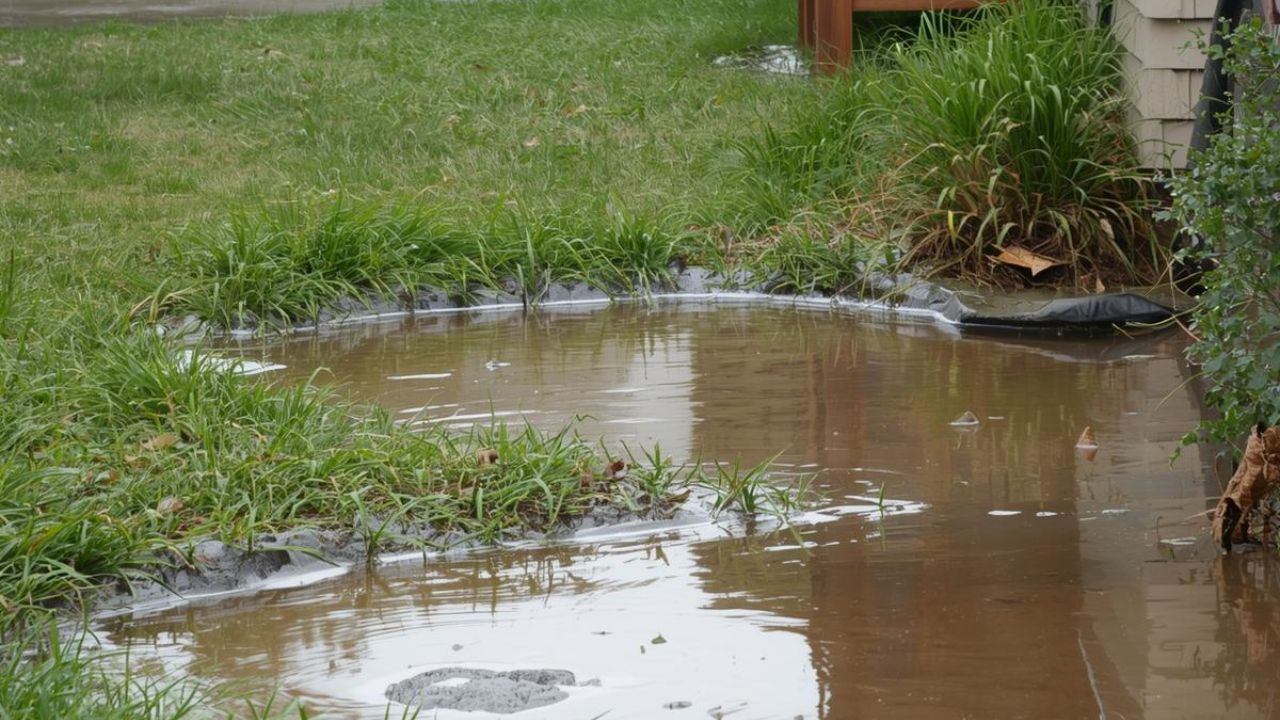
Key indicators include water pooling, slow drainage, and erosion during rainfall. Watch for soggy lawns that stay wet days after rain stops—this indicates poor soil drainage or high water tables. Standing water near foundations signals immediate danger where basement leaks and foundation cracks develop. Erosion in garden beds reveals where water flows with enough force to move soil, indicating paths needing redirection or stabilization.
Areas with compacted soil or natural low spots are particularly prone to accumulation. Compacted soil from foot traffic, vehicles, or construction loses pore space needed for infiltration. Natural depressions collect water because flow converges there. Water collects where natural flow is blocked by structures, landscaping, or grade changes, or where ground cannot absorb efficiently due to clay soil or saturation.
Document problem areas during multiple rain events—patterns emerge showing consistent trouble spots. Take photos and videos during heavy rain to show contractors exactly where intervention is needed. Note how long water stands before draining and whether duration is increasing over time. This documentation helps professionals design effective solutions and provides before/after comparison once systems are installed.
Identify vulnerable areas through flow mapping during rain. Simple observation shows how water moves across your property and where it accumulates. For detailed analysis, professionals use GPS to map drainage layouts and identify optimal placement for new systems. Low spots where water naturally collects need catch basins or other collection systems.
Walk your property during and after heavy rain. Mark areas where water pools, flows with force, or erodes soil. Check foundation perimeters for standing water or damp soil. Inspect basement walls for moisture or efflorescence—white mineral deposits indicating water infiltration. These vulnerable areas require priority attention.
Evaluating existing systems reveals whether they're adequate or need upgrades. Inspect gutters, downspouts, French drains, and other infrastructure for clogs, damage, or improper installation. Determine whether water sources are surface runoff, groundwater from high water tables, or municipal system backup—this dictates appropriate solutions.
Conduct percolation tests to measure soil drainage capacity. Dig a hole 12 inches deep and wide, fill with water, let it drain, then refill and measure how long water takes to drop one inch. Rates significantly below 1 inch per hour indicate poor drainage requiring engineered solutions. Compacted soil from foot traffic, construction, or heavy machinery has reduced pore space that blocks infiltration. A simple test—less than 2 inches of drainage per hour—confirms problems requiring professional intervention.
Effective drainage systems intercept water before it causes damage and redirect it to safe discharge points. Multiple solutions work together based on your property's unique conditions. Subsurface systems handle groundwater, surface systems manage runoff, and active pumps remove water when passive drainage can't keep up.
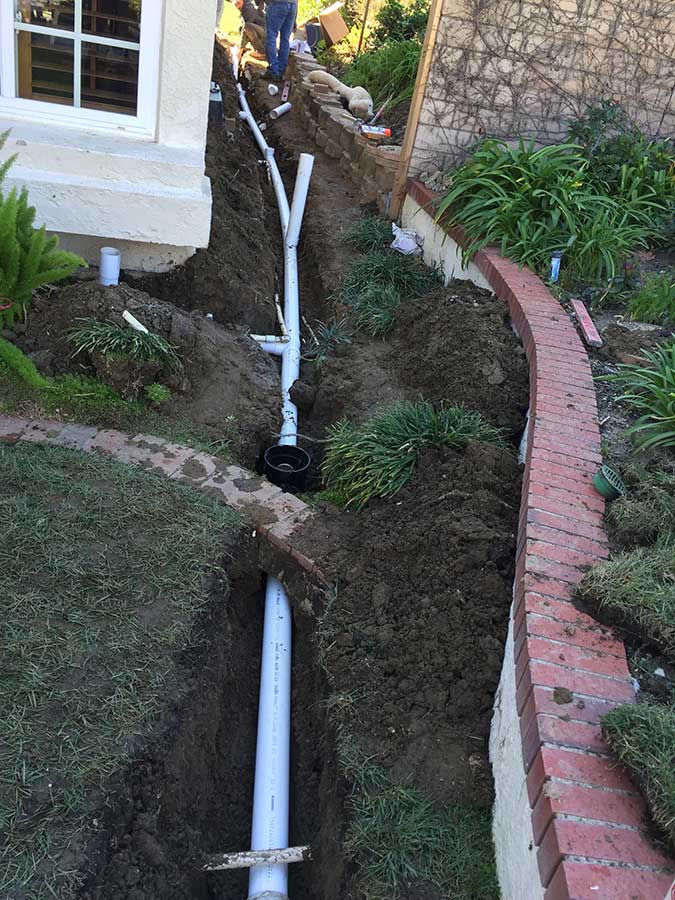
French drains intercept subsurface water and groundwater before they reach foundations. The system uses perforated pipes surrounded by gravel in trenches sloped at minimum 1%—1/8 inch per foot. Water enters pipe perforations, travels downslope by gravity, and discharges away from structures.
Filter fabric wraps pipes and lines trenches, preventing soil migration that clogs systems over time. Without fabric barriers, fine soil particles wash into gravel and eventually into pipes, reducing capacity. Proper installation includes calculating exact slopes, selecting appropriate pipe sizes, and placing discharge points where water won't create new problems.
French drains cost $20 to $30 per linear foot. Professional installation of a 100-foot system runs $2,000 to $3,000, including excavation, materials, slope calculation, and proper discharge placement. Install these around foundation perimeters where water accumulates or where slope directs flow toward your home. Maintenance is minimal—inspect outlets periodically to confirm debris isn't blocking discharge. These systems effectively prevent pooling and protect foundations when properly designed and installed.
Sump pumps actively remove water from basements and crawl spaces when passive drainage fails. Install them in homes with high groundwater tables where gravity drainage can't keep up. The pump sits in a sump pit at the lowest basement point. As water accumulates, a float switch activates the pump, discharging water through pipes to locations away from the structure.
This active system handles conditions passive drainage can't—properties with poor soil permeability, high seasonal water tables, or limited slope for gravity flow. Battery backup ensures operation during power outages that often accompany major storms. Test pumps periodically by pouring water into pits and verifying smooth operation. Check discharge locations to prevent water recirculating back to problem areas.
Gutters and downspouts control roof runoff—thousands of gallons during heavy rain. When improperly managed, this concentrated volume overwhelms surrounding areas and infiltrates foundations. Downspouts should extend 6 to 10 feet from foundations to discharge water safely away from structures. Shorter extensions dump water directly at foundations, creating the exact flooding you're trying to prevent.
Clean gutters and downspouts twice yearly. Professional cleaning costs $150 to $300. Consider gutter guards at $5 to $30 per linear foot installed—they reduce maintenance frequency and prevent overflow. Size gutters and downspouts appropriately for roof area. A 1,500 square foot roof section typically needs 5-inch gutters and 3-inch downspouts. Undersized systems overflow even when clean, defeating their purpose and flooding areas below.
Strategic hardscaping manages water while enhancing property aesthetics and functionality. Material selection determines whether surfaces shed water or allow infiltration. Proper grading directs flow away from vulnerable areas. Integration with landscaping creates comprehensive solutions that handle water effectively while maintaining curb appeal.
Permeable pavers allow water to pass through surfaces into ground, eliminating runoff from hardscaped areas. Install them on gravel beds—typically 6 to 12 inches deep—that provide structural support and drainage capacity. Water filters through joints between pavers, into gravel bases, then into native soil. This distributed infiltration prevents concentrated runoff that causes erosion and flooding.
The gravel base serves multiple functions. It supports pavers under traffic loads while storing water temporarily during heavy rain, releasing it gradually to soil below. This storage capacity prevents overwhelming soil absorption rates. It prevents fine soil particles from migrating upward and clogging paver joints. Proper installation includes landscape fabric between native soil and gravel to maintain separation while allowing water passage.
Permeable pavers cost $10 to $30 per square foot installed. While initial investment exceeds traditional concrete at $4 to $8 per square foot, they eliminate runoff problems and can reduce need for separate drainage systems. These pavers handle foot and vehicle traffic while managing stormwater effectively. They're valuable where impermeable surfaces currently concentrate water or where local regulations require reducing runoff. Consider these for patios, walkways, driveways, and parking areas. Similar principles apply to pool deck materials that need both drainage and heat management.
Retaining walls manage elevation changes and control water flow on sloped properties. Properly designed walls include drainage systems behind them—without this, water pressure builds and causes failure. Install perforated drain pipes at wall bases, wrapped in filter fabric and surrounded by gravel. This collects water moving through soil and directs it to controlled discharge points rather than allowing pressure buildup.
Retaining walls integrated with comprehensive grading reshape landscapes to direct water away from homes. Create minimum slopes of 3% to 10% away from foundations. Concrete surfaces near foundations need 1/4 to 1/2 inch per foot grading within 10 feet. This reshaping ensures gravity moves water toward safe discharge points instead of pooling against structures. Zone-specific solutions address unique site characteristics—steep slopes need different approaches than gradual grades.
Swales are shallow, sloped channels that manage surface water at ground level. They work with natural topography to guide water toward appropriate discharge points. Unlike buried pipes, swales are visible landscape features that move water across surfaces in controlled paths. Design them to follow property contours, directing flow away from foundations toward street drainage or other discharge areas.
Bioswales add vegetation to these channels. Native plants tolerate both wet and dry conditions while conveying stormwater, removing pollutants, and promoting infiltration. Plants slow water velocity, allowing sediment to settle and contaminants to filter before water reaches storm drains. They integrate seamlessly into landscape design as attractive features rather than purely functional elements.
Rain gardens complement swales as shallow depressions planted with adaptive vegetation. They capture runoff, absorb water, and recharge groundwater. Costs run $5 to $15 per square foot. These systems provide drainage function plus environmental benefits like habitat creation and water quality improvement. Many municipalities offer rebates for installing these green infrastructure features.
Regular maintenance preserves system effectiveness and prevents failures. Even best-designed systems degrade without care. Debris accumulates, reducing capacity. Soil shifts, altering slopes. Plant roots intrude into pipes. Scheduled inspections and cleaning prevent small issues from becoming expensive failures.
Regular inspection catches problems when repairs are simple and inexpensive. Check systems for clogs, damage, and deterioration twice yearly—spring and fall are ideal timing. Inspect gutters, downspouts, and drainage pipes for blockages and proper flow. Remove debris from catch basins and French drain outlets. Test systems during rain to verify proper function.
Early detection prevents minor clogs from becoming complete system failures. A $50 gutter cleaning prevents $5,000 foundation repairs. Cleared French drain outlets prevent entire systems from backing up and flooding properties. Periodic French drain outlet inspection ensures they remain clear. The cost-benefit ratio of preventive maintenance far exceeds reactive repairs.
Clean gutters and downspouts twice per year minimum—spring and fall. Spring cleaning removes winter debris and prepares systems for heavy rains. Fall cleaning prevents leaves from clogging gutters before winter precipitation. Properties with overhanging trees need quarterly cleaning to prevent overflow.
Professional gutter cleaning costs $150 to $300 depending on property size. DIY cleaning saves money but requires ladder safety awareness. Gutter guards at $5 to $30 per linear foot reduce maintenance frequency. Seasonal maintenance schedules should include removing debris from all drainage components—surface drains, catch basins, and French drain outlets all need periodic cleaning to maintain capacity.
Warning signs include water pooling where it previously drained, standing water near foundations, and water backing up from drains. If areas that dried within hours after rain now stay wet for days, capacity has declined. This happens gradually as systems clog or settle, making it easy to miss until problems become severe.
Visible settling or sinking of hardscapes reveals base erosion from poor drainage. Water washing away supporting materials compromises structural integrity. Erosion in garden beds or around drainage features indicates improper flow—water should move slowly and evenly, not carve channels. Soggy, saturated lawns that don't dry out indicate system problems. Address these warning signs immediately—waiting allows minor issues to cause major damage.
Professional expertise ensures systems are designed correctly and installed to last. The right contractor saves money long-term through solutions that actually work. Experience, credentials, and communication skills all matter when selecting flood prevention professionals.
Verify experience through completed project portfolios showing similar work. Ask for photos of drainage installations and integrated hardscape projects. Request references from clients with comparable flooding challenges. A contractor experienced in basic landscaping may lack expertise in complex drainage integration.
Complex projects—extensive excavation, integrated systems, significant grading—require professional expertise with heavy equipment, precise calculations, and local soil knowledge. Simple fixes like downspout extensions or minor regrading are DIY-appropriate. French drains, extensive grading, and integrated landscape solutions demand professional design and installation to avoid costly mistakes from improper slopes, inadequate materials, or poor component placement.
Licensed professionals ensure compliance with local building codes and stormwater regulations. Drainage work often requires permits, especially when connecting to municipal systems or significantly altering grading. Licensed contractors handle permit applications and inspections. Unlicensed contractors leave you liable for code violations.
Insurance protects you from liability for workplace injuries and property damage during installation. Worker injuries are covered by employer insurance. Property damage insurance covers accidents like broken utility lines during excavation. Professional contractors understand stormwater ordinances, HOA rules, and neighbor restrictions. You cannot legally divert water onto neighboring properties causing harm—licensed contractors ensure compliance.
Ask about experience with similar properties, licensing and insurance verification, and detailed cost estimates with material specifications. Get timelines and understand warranty policies. Request references you can contact. Questions should cover years in business, annual drainage project volume, and percentage of work involving drainage versus general landscaping.
Understand cost ranges before getting quotes. Minor drainage issues run $500 to $2,000, moderate issues cost $2,000 to $8,000, and extensive problems reach $8,000 to $20,000 or more. Catch basins cost $300 to $800 per unit. Channel drains run $15 to $40 per linear foot. These ranges help identify unrealistically low bids signaling corner-cutting or inflated estimates.
Effective drainage prevents foundation damage costing $10,000 to $30,000 or more to repair. A $5,000 drainage system preventing $20,000 in foundation repairs is excellent value. Get multiple quotes and compare proposed solutions, not just prices. The cheapest bid often uses inferior materials or shortcuts that fail quickly.
Seasonal flooding damages foundations, destroys landscapes, and creates expensive emergency repairs. Proper drainage systems—French drains, appropriate grading, and functional gutters—prevent water accumulation. Strategic hardscaping choices like permeable pavers and swales manage water while enhancing property aesthetics.
Don't wait for foundation cracks or basement flooding to force action. Signature Landscape specializes in comprehensive flood prevention solutions for Orange County properties. Our licensed professionals assess your property's unique challenges, design integrated drainage and hardscape systems, and install solutions built to last. Contact us today to eliminate seasonal flooding risks and protect your most valuable investment with drainage systems that actually work.
 Signature Landscape
Schedule A Consultation