Call our Professional Contractors!
(949) 859-9969
Key Takeaways
Water intrusion around your home's perimeter threatens structural integrity, damages foundations, and creates costly repair bills that escalate the longer problems persist. Most homeowners focus on temporary fixes, patching cracks, applying sealants, or hoping the next storm won't be as severe, but these approaches fail to address the root causes of water infiltration.
This comprehensive guide explains how to permanently fix rain leaks around your perimeter through proper grading, strategic drainage systems, and building envelope protection. You'll learn which solutions match your specific problems, how to implement both DIY and professional fixes, and what maintenance schedules ensure long-term protection. From simple downspout extensions costing $12 per year to comprehensive footing drains protecting your foundation for 50+ years, the right combination of solutions stops water before it ever threatens your home.
Perimeter water intrusion stems from four primary failure points: building envelope gaps, window and door seal failures, roof system deficiencies, and foundation vulnerabilities. Understanding each source helps target repairs effectively and prevents recurring damage. Whether you're dealing with minor seepage or need comprehensive drainage repair, identifying the root cause is essential for permanent solutions.
Building envelope gaps create direct pathways for water entry during wind-driven rain. Common gap locations include wall-to-foundation transitions, penetrations for utilities and vents, and joints between dissimilar materials. These openings bypass your home's primary weather barrier, allowing moisture into wall cavities where it causes hidden damage. Thermal expansion and structural settling create new gaps over time, requiring periodic inspection and maintenance.
Window and door assemblies fail when sealants degrade, flashing deteriorates, or installation defects expose vulnerable joints. Perimeter caulking typically lasts 5-10 years before cracking and pulling away from substrates. Weatherstripping compresses and loses elasticity, creating gaps that admit wind-driven rain.
Poor flashing integration at the head and sill conditions allows water to bypass the window frame entirely, saturating the wall framing before any interior evidence appears.
Roof runoff represents one of three main water sources threatening your foundation perimeter, alongside surface runoff and subsurface groundwater. Missing or damaged shingles, failed flashing, and clogged gutters allow concentrated water flow at vulnerable points. Downspout extensions serve as your first line of defense; they must direct roof water at least 4-6 feet away from the foundation to prevent soil saturation adjacent to foundation walls.
Without proper extensions, thousands of gallons of concentrated roof runoff saturate the soil directly against your home's perimeter during each storm.
Foundation cracks provide entry points when hydrostatic pressure builds in the surrounding soil, the primary driver of water penetration through basement walls. Foundation waterproofing (bituminous coatings or sheet membranes) serves as the first defense line, preventing water contact with the wall surface. Footing drains function as the second defense line, collecting water that bypasses the waterproofing membrane and relieving pressure at the foundation base.
Without both systems working together, even hairline cracks become pathways for persistent water intrusion, requiring foundation drainage repair.
Early detection prevents minor leaks from escalating into structural damage and costly repairs. Systematic inspection during and after rain events reveals active water pathways before interior damage becomes visible. If you notice significant issues, consider scheduling an emergency landscape damage assessment to evaluate the full extent of water intrusion.
Negative grading, where soil slopes toward your foundation, directs water against the building and creates hydrostatic pressure leading to basement or crawlspace flooding. Chronic yard flooding and standing water pools indicate saturated soil and inadequate surface drainage that threatens the foundation perimeter. Water pooling near foundation areas signals immediate danger, this is often the most visible sign that your grading around house needs correction. Basement seepage along walls signals exterior water management failures where soil moisture overwhelms your foundation's defensive systems.
Water Test Steps:
Grading Test Protocol:
Heavy rain reveals actual water flow paths and identifies where water moves toward rather than away from your structure. Active precipitation shows you exactly which areas collect and direct water against your foundation, problems impossible to spot during dry conditions. Rain inspections also reveal soil compaction effects, which severely reduce infiltration rates and force water to run off the surface directly against your perimeter, overwhelming drainage systems.
Homeowners can identify surface issues: negative grading, obvious foundation cracks, failed caulking, and missing downspout extensions. Visual inspection during rain reveals pooling patterns and flow paths requiring correction. However, professional drainage design and sizing is essential for subsurface systems, undersized installations fail when water volume overwhelms capacity during peak flow events. Licensed contractors assess soil conditions, calculate runoff volumes, and engineer systems that handle your property's specific drainage demands.
Effective perimeter leak repair requires a layered approach: seal building envelope gaps, correct grading deficiencies, and install drainage systems where needed. Address the root causes rather than symptoms to prevent recurring problems. To fix rain leaks around home foundations permanently, you must combine surface solutions with proper subsurface drainage.
Remove loose material and old caulk, then clean surfaces so sealant bonds. Use the right sealant for the location, and insert backer rod for gaps over 1/4 inch. Apply a continuous bead and tool it immediately to fully fill the joint.
Regrade so soil slopes away from the foundation at 5% (6 inches over 10 feet) for at least 10 feet where possible. This keeps water from pooling at the base of the home and reduces pressure that forces moisture through foundation walls.
Sealing materials: polyurethane/silicone caulk for windows, doors, and joints; spray foam for appropriate penetrations and larger gaps; weatherstripping for door/threshold leaks (replace every 3–5 years).
Drainage materials (when needed): 4-inch perforated pipe wrapped in geotextile fabric, surrounded by clean gravel; solid smooth-walled pipe for downspout extensions (avoid corrugated).
Cut the nozzle to match the gap, apply steady pressure, and run a continuous bead, then tool it right away. For weatherstripping, clean the frame, measure and cut accurately, press firmly for full contact, and replace when it compresses or gaps appear.
Sealing: caulk gun, exterior-rated caulk, utility knife/scraper, wire brush, smoothing tool, weatherstripping.
Grading/drainage: shovel, rake, wheelbarrow, hand tamper, level/string line, tape measure, and a hose to test flow and discharge.
Prevention costs far less than repair, and proactive maintenance protects your investment and avoids emergency interventions. Systematic attention to grading, drainage, and building envelope integrity eliminates most perimeter water problems before they start. Implementing comprehensive perimeter drainage solutions now prevents expensive foundation repairs later.
Foundation Grading:
Downspouts & Roof Drainage:
Subsurface Drainage Systems:
Hardscapes & Building Envelope:
Annual Maintenance:
Every 2-3 Years:
Every 5-10 Years:
Every 10 Years:
Yes, catching deterioration early prevents minor defects from becoming major failures. Window caulking degrades predictably over 5-10 years; replacing it before complete failure prevents water intrusion into wall cavities. Roof inspections identify missing shingles, failed flashing, and damaged vents before storms exploit these vulnerabilities.
Regular gutter maintenance ensures roof runoff channels properly to downspouts rather than overflowing and saturating soil directly against your foundation. A single clogged gutter dumps concentrated water at the worst possible location, immediately adjacent to foundation walls, creating the exact conditions drainage systems are designed to prevent.
Different leak spots need different fixes: windows/doors = sealing, foundation = grading + drainage.
Foundation leaks usually mean water is pooling or pressurizing soil against the wall, start with surface fixes, then upgrade to drainage if needed.
Immediate fixes
Long-term drainage options
Yard flooding indicates saturated soil and inadequate drainage, water needs a defined exit path away from the property. Professional drainage repair services can design comprehensive solutions for chronic flooding issues.
Surface Drainage Solutions:
Catch Basins/Area Drains: Collect standing water in low spots:
Swales: Natural vegetated channels:
Subsurface Solutions:
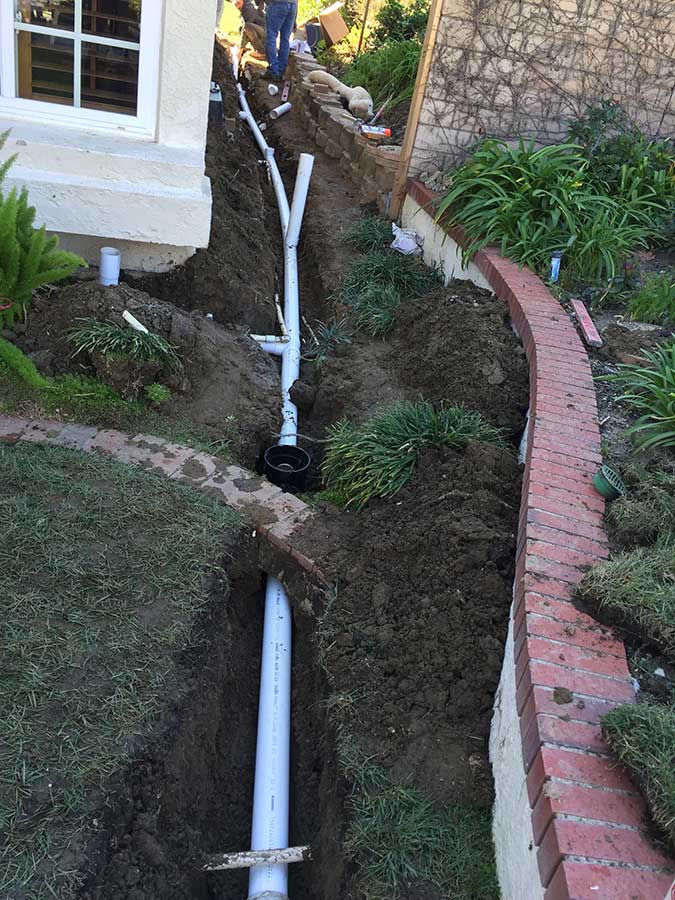
French Drain Networks: Lower water table across entire yard:
Rain Gardens , Eco-friendly filtration systems:
Critical Consideration: Every drainage system requires a safe discharge point, street curb, storm sewer, dry well, or downhill slope. Blocked outlets cause complete system failure; ensure discharge locations never direct water toward neighboring properties.
Inspect roof-to-wall transitions, chimney flashing, and valley intersections for gaps or deterioration. Replace damaged shingles immediately and reseal flashing with roofing cement. Clean gutters twice annually to prevent overflow that saturates foundation perimeter.
Roof runoff concentrates massive water volumes, a 1,000 square foot roof sheds 600 gallons per inch of rain. Properly functioning gutters and downspouts with solid pipe extensions (never corrugated) direct this water safely away. Discharge onto splash blocks or into dedicated drainage systems to prevent soil saturation adjacent to your home.
Driveways collect and concentrate runoff, directing it toward garages and foundations without proper drainage intervention. Well-designed hardscaping incorporates proper slopes and drainage features from the start.
Proper Slope Design:
Trench and Channel Drains:
Storm System Tie-ins:
Hardscape Best Practices:
Some perimeter leaks are DIY-friendly, but subsurface drainage and major grading work aren’t. If you guess on design or slope, you can create failures that cost more to fix later.
Match the job to the specialist:
Before hiring: confirm license/insurance, check references, and ask for a proposal that includes materials, slope plan, and discharge location. Avoid shortcuts like corrugated pipe or installs without filter fabric, they fail early.
DIY-Appropriate Solutions:
Professional Solutions, Best Long-Term Value:
Well-designed grading and drainage can prevent $10,000–$30,000+ foundation repairs, making expert help a smart investment when the problem is bigger than surface water control.
Proper grading is the foundation of perimeter leak prevention, aim for a 5% slope (6 inches over 10 feet) away from your home to keep water from saturating soil next to the foundation. Pair that with the right drainage for your specific problem: downspout extensions, surface grading, waterproofing, and (when needed) footing drains, French drains, catch basins, or trench drains.
Keep systems working with routine maintenance: clean gutters, confirm downspouts discharge 4–6 feet from the house, clear grates, and ensure outlets stay open. DIY upgrades can help fast, but professional design and installation deliver the long-term protection that prevents expensive foundation repairs.
Ready to protect your home with professional drainage solutions? Request a free quote from Signature Landscape and let our experts design a customized system for your property.
 Signature Landscape
Schedule A Consultation