Hydrostatic pressure creates structural failure; groundwater exerts 62.4 lb/ft² per foot of depth, reaching 1,730 lb/ft² forces capable of collapsing foundation walls. Professional drainage eliminates this pressure before damage occurs.
Cost escalation follows an exponential curve. Initial $800 sealing repairs escalate to $80,000+ structural reconstruction within 10-15 years without proper drainage. Early intervention prevents a 100x cost increase.
Exterior drainage is universally recommended; building science experts specify exterior systems as most effective, preventing both water contact and structural pressure. Interior solutions compromise by managing water after foundation penetration.
95% of water problems are resolved with proper drainage. Research shows that surface grading and perimeter drainage eliminate the vast majority of basement water issues. Address drainage before considering foundation repairs.
Professional assessment costs $200-$500 but prevents $40,000-$100,000 in avoidable repairs. An independent engineering evaluation identifies root causes and prevents unnecessary contractor-driven foundation work. Early intervention provides maximum economic benefit.
Foundation leaks threaten structural integrity and home value. Water infiltration causes progressive damage, from minor seepage to catastrophic failure. Professional drainage solutions eliminate 85-95% of foundation water problems by addressing root causes: hydrostatic pressure, negative grading, and groundwater intrusion.
This guide explains leak mechanisms, compares drainage solutions, and outlines professional installation standards.
What Causes Foundation Leaks And Why You Need Professional Solutions
Foundation drainage issues result from water pressure overwhelming structural defenses. Understanding cause mechanisms guides effective solutions.
Primary Causes Of Foundation Leaks
Hydrostatic Pressure: Groundwater exerts 62.4 lb/ft² per foot of water depth on foundation walls. At 3 feet depth, force reaches 187.2 lb/ft², sufficient to bow walls and crack concrete.
Negative Grading: Ground sloping toward the foundation violates IRC/IBC minimum 5% slope requirement (6 inches fall over 10 feet). Water accumulates at the foundation perimeter, creating chronic saturation.
High Groundwater Table: Water table rising above foundation level during wet seasons creates subsurface flooding. FEMA documents numerous flooded basements where surface floods never reached structures; groundwater alone caused failure.
Failed Drain Tile Systems: Deteriorated or improperly installed perimeter drainage systems allow soil saturation. Original systems often lack filter fabric, causing silt clogging and drainage failure within 10-15 years.
Poor Soil Conditions: Clay soils with permeability of 0.00001-0.0001 ft/day retain water indefinitely. Creates chronic moisture exposure and severe hydrostatic pressure risk.
Soil Impact On Foundation Stability
Soil Type
Permeability
Hydrostatic Pressure Risk
Foundation Leak Risk
Clay (Heavy)
Very Low (0.00001-0.0001 ft/day)
HIGH
SEVERE
Silt
Low (0.001-0.01 ft/day)
MODERATE-HIGH
MODERATE-HIGH
Sandy Loam
Moderate (0.1-1 ft/day)
MODERATE
MODERATE
Sandy Soil
High (1-10 ft/day)
LOW-MODERATE (large seepage)
MODERATE
Stratified: Clay over Sand
Mixed
CRITICAL (Safety Factor = 1.0)
SEVERE
Critical Finding: When impervious clay thickness equals hydraulic head, safety factor approaches 1.0, indicating imminent uplift failure per FEMA TB10-01. Stratified soils present the highest failure risk; contact between strata above the basement floor creates large seepage quantities and excessive uplift.
Why Professional Solutions Are Essential
Factor
DIY Solutions
Professional Systems
Effectiveness
30-50%
85-95%
Lifespan
2-5 years
30-50 years
Cost
$300-$2,000
$5,000-$35,000
Addresses Root Cause
No
Yes
Cost Escalation Prevention
None
Prevents 100x cost increase
Professional systems eliminate water contact with foundations through engineered foundation waterproofing and drainage. DIY solutions treat symptoms without addressing pressure mechanisms.
Key Insight: Research shows 90% of contractor-driven foundation repairs are unnecessary without first addressing drainage. Professional drainage solutions can eliminate up to 95% of basement water problems by managing water before it reaches foundations.
Most Effective Drainage Systems For Foundation Leaks
Drainage systems prevent foundation leaks by intercepting and redirecting water before pressure builds. System selection depends on groundwater table depth, soil type, and foundation configuration.
Drainage System Comparison
System Type
Cost Range
Effectiveness
Lifespan
Best Application
Surface Grading
$800-$3,000
90-95%
Permanent
Primary defense for all properties
French Drain
$3,000-$10,000
90-95%
30-50 years
High water table, perimeter management
Exterior Drain Tile + Waterproofing
$10,000-$25,000
95%
40-50 years
Below water table, new construction
Sump Pump System
$1,500-$5,000
85-90%
10-15 years
Interior drainage, backup system
Interior Drain Tile
$4,000-$8,000
70-80%
20-30 years
Retrofit, limited exterior access
How Each System Fixes Foundation Leaks
Surface Grading: Minimum 6-inch drop over 10 feet (5% slope) diverts rainwater before soil infiltration. Eliminates 95% of water problems when properly executed per IRC/IBC requirements. Most cost-effective first defense for foundation leak prevention.
French Drains: Perforated pipe in a gravel trench intercepts groundwater using gravity flow. Prevents soil saturation around the foundation perimeter before pressure builds. Effective for properties above the groundwater table with perimeter access.
Exterior Drain Tile: Most effective per building science experts, places drainage at the footing level with a waterproof membrane. Prevents both water contact and structural pressure (1,730 lb/ft² at high water tables). Building Science Corporation recommends exterior systems as a universal standard.
Sump Pump Systems: FEMA requires 4x calculated seepage rate capacity (minimum ¼ HP) with battery backup. Mechanically removes water from the collection pit. Critical for properties below the groundwater table. Battery backup addresses power outage vulnerability during severe weather.
Interior Drain Tile: Retrofit solution when exterior excavation is impossible. Manages water after foundation penetration, but does not prevent hydrostatic pressure on walls. Considered a compromise solution by engineers.
Professional Drainage Installation Process
Professional installation follows engineering principles for long-term effectiveness. Process varies by system type but shares critical quality standards.
Installation Steps
Site Assessment: Soil testing determines permeability and groundwater table depth. Hydraulic calculations use the FEMA Dupuit equation (q = k(a² - b²)/2L) to size drainage systems and pump capacity.
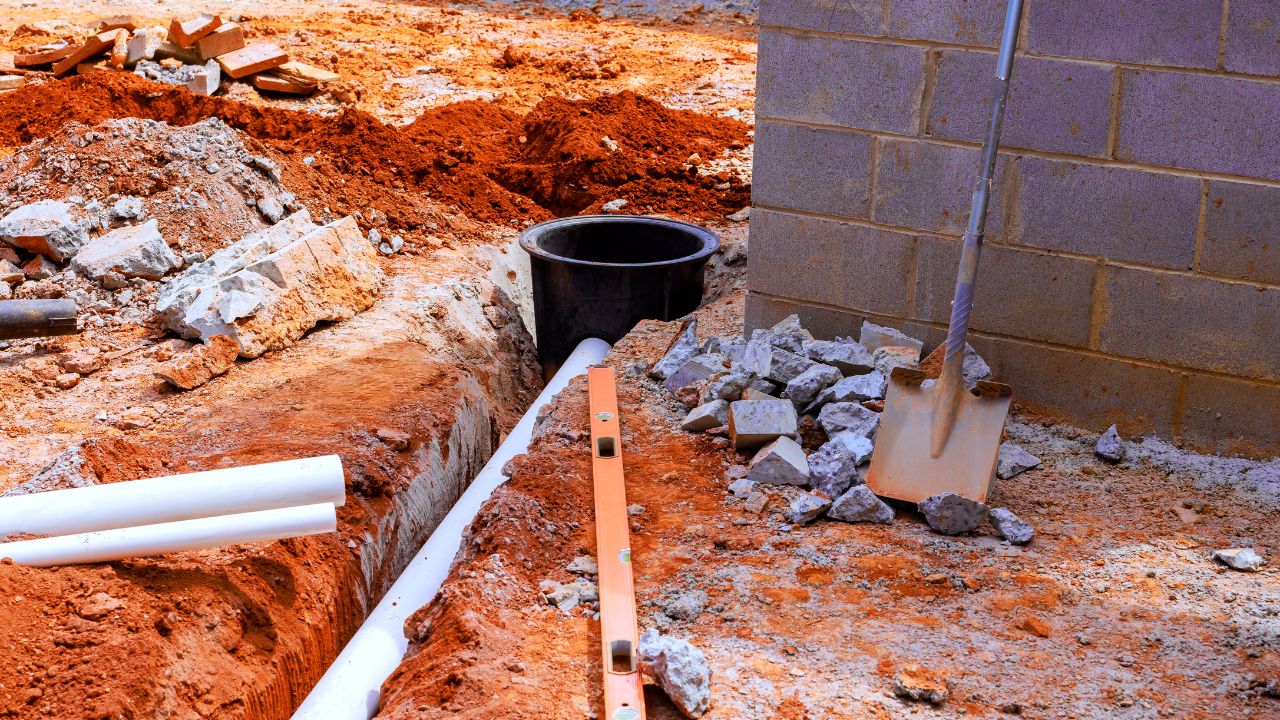
Excavation: Perimeter trench to footing level (typically 4-8 feet deep). Width maintains waterproofing access, minimum 24 inches from the wall face. Excavation in 2-foot lifts prevents soil collapse.
Waterproofing: Rubberized membrane application on foundation walls creates an impermeable barrier. Drainage mat overlay provides a flow path to the perimeter drain. Critical for below-grade assemblies experiencing water damage foundation issues.
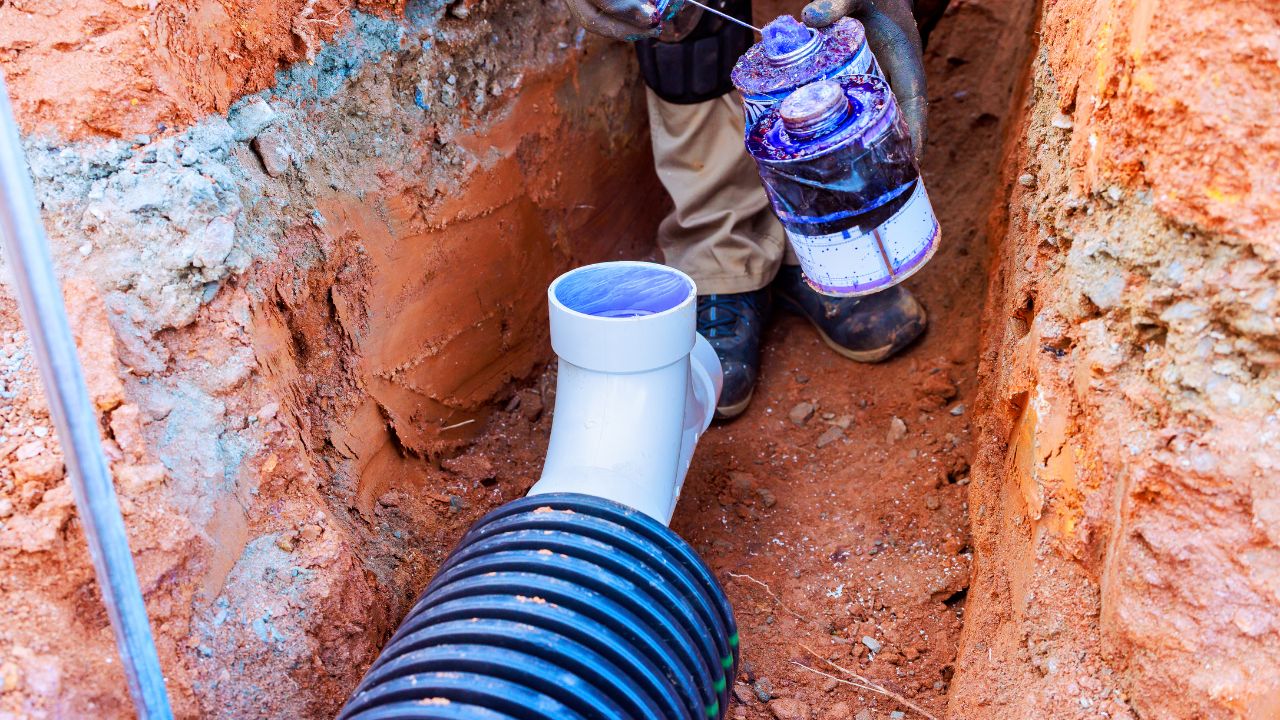
Drainage Pipe Installation: 4-6 inch perforated pipe at footing base, surrounded by washed gravel and filter fabric. Pipe sloped 1% minimum toward the discharge point. Filter fabric prevents silt migration into the gravel bed.
Sump System: Pit installation with a pump sized to 4x seepage rate per FEMA TB10-01. A check valve prevents backflow. Battery backup maintains operation during power outages. Discharge line extends 10+ feet from foundation to daylight or storm sewer.
Backfilling: Compacted engineered fill in 12-inch lifts to 90-95% density. Prevents settlement voids that create water pooling. Final grade achieves 5% positive slope away from the foundation, similar to water-efficient landscape grading.
Key Technology And Materials
Perforated Drainage Pipe: 4-6 inch diameter corrugated HDPE with perforations at the pipe bottom. Collects groundwater at the footing level where the hydrostatic pressure originates.
Washed Gravel: ¾ to 1½ inch crushed stone provides filtration and flow path. Angular geometry prevents compaction while maintaining 35-40% void space for water passage.
Geotextile Filter Fabric: Non-woven polypropylene prevents soil migration into the gravel bed. Maintains long-term drainage capacity by preventing silt clogging.
Waterproof Membrane: Rubberized asphalt or polymer-modified bitumen creates an impermeable barrier on the foundation exterior. Applied in continuous sheets with sealed seams, no penetrations.
Sump Pump with Battery Backup: Submersible pump with ¼ HP minimum capacity. The battery backup system provides 4-8 hours of runtime during power outages. Float switch activation at 6-8 inches of water depth in the pit.
Cost Analysis And Long-Term Value
Professional drainage systems require upfront investment but prevent exponentially higher repair costs. Understanding cost factors and damage progression economics reveals true financial protection value.
Cost Breakdown Factors
Cost Factor
Impact
Range
Labor
50-60% of total
$75-$150/hour
Materials
20-30% of total
Pipe: $8-$15/ft, Membrane: $2-$5/ft²
Excavation Depth
High impact
Add $1,500-$4,000 per foot beyond 4 ft
Foundation Perimeter
Linear multiplier
$50-$150 per linear foot
Geographic Location
Regional variation
Coastal/Urban: +30-50%
Labor dominates costs due to excavation intensity and technical skill requirements. Deeper excavations exponentially increase cost; a foundation 8 feet deep costs $6,000-$16,000 more than a 4-foot depth. Urban locations face access restrictions and disposal fees, driving 30-50% premiums.
Cost vs. Repair Escalation
Foundation Damage Progression Without Drainage:
Stage
Timeline
Symptoms
Repair Cost
Escalation Factor
Stage 1: Minor
Year 0-1
Hairline cracks, dampness
$300-$800
1x (baseline)
Stage 2: Developing
Year 1-3
¼ inch cracks, seepage
$2,000-$5,000
4x
Stage 3: Moderate
Year 3-7
Wall bowing, wider cracks
$8,000-$15,000
15x
Stage 4: Advanced
Year 7-12
Severe displacement
$15,000-$35,000
30x
Stage 5: Critical
Year 12+
Structural failure
$40,000-$100,000+
100x
Damage progression follows an exponential curve. Initial $800 sealing repair escalates to $80,000+ structural reconstruction within 10-15 years when the root cause remains unaddressed. Each stage compounds previous damage, cracks allow more water, creating higher pressure, causing wider cracks.
Return On Investment
Prevention Economics: $10,000-$25,000 drainage installation prevents $40,000-$80,000 in structural repairs. Net savings of $15,000-$55,000 over system lifespan represent 150-220% return on investment.
Home Value Protection: Homes with water problems sell for 10-20% less, resulting in a loss of $30,000-$60,000 on a $300,000 home. Professional drainage systems eliminate this discount, recovering installation costs through preserved resale value.
Energy Savings: Dry foundations save $200-$500 annually in heating/cooling costs. Moisture increases the thermal conductivity of foundation materials, forcing HVAC systems to compensate, similar to how cool deck materials reduce heat absorption. Cumulative savings reach $6,000-$25,000 over a 30-50 year system lifespan.
Insurance Claim Avoidance: Average water damage claims cost $15,000-$30,000. Many insurers exclude gradual damage from coverage; foundation leaks are classified as maintenance issues rather than sudden accidents. Professional drainage prevents claims and policy cancellations.
Consequences Of Delaying Professional Drainage
Delaying drainage installation allows progressive structural deterioration and health hazards. Understanding consequence timelines motivates early intervention.
Structural And Financial Risks
Wall Failure: Hydrostatic pressure of 1,730 lb/ft² at high water tables exceeds unreinforced concrete capacity. Foundation walls bow inward, develop structural cracks, and potentially collapse. FEMA documents numerous basement wall failures from groundwater pressure alone, and surface flooding is unnecessary for catastrophic damage.
Rebar Corrosion: Water infiltration causes steel reinforcement oxidation. Rust occupies six times the volume of original steel, generating expansive forces that fracture concrete from within. Spalling exposes additional rebar, accelerating deterioration in a self-reinforcing cycle.
Cost Escalation: 100x increase from initial $800 repair to $80,000+ critical failure over 10-15 years. Early intervention at Stage 1 costs $10,000-$15,000 for a complete drainage repair system. Delaying to Stage 5 requires $40,000-$100,000 for structural reconstruction plus the original $15,000 drainage, for a total of $55,000-$115,000.
Home Value Loss: 10-20% reduction in resale value when moisture issues are discovered during inspection. Buyers demand repairs or price reductions. Severe cases make homes unmarketable, and lenders refuse mortgages on structurally compromised properties.
Health Hazards
Mold Growth: Moisture above 60% relative humidity enables mold colonization within 24-48 hours. Foundation leaks create ideal conditions, constant moisture, organic materials (wood framing, drywall), and moderate temperatures.
Respiratory Issues: Mold exposure causes asthma exacerbation, allergic reactions, chronic coughing, and sinus infections. Children and immunocompromised individuals face heightened vulnerability. Symptoms persist while the moisture source remains active.
Toxic Mold: Stachybotrys chartarum (black mold) produces mycotoxins, causing headaches, cognitive impairment, chronic fatigue, and immune system suppression. Prolonged exposure is linked to neurological damage in severe cases.
Remediation Costs: $2,000-$6,000 per incident for professional mold removal. Without drainage correction, mold returns within months, requiring repeated remediation cycles. Total costs exceed drainage installation while health risks persist.
When To Call A Professional Drainage Expert
Certain conditions demand professional assessment; DIY solutions prove inadequate or dangerous. Recognizing these thresholds prevents escalation to structural failure.
Warning Signs Requiring Professional Assessment
Water pooling within 5 feet of foundation lasting >24 hours after rain indicates inadequate site drainage or a high groundwater table. Persistent saturation creates chronic hydrostatic pressure exceeding structural design limits.
Foundation cracks wider than ¼ inch or showing active water seepage signal structural movement or groundwater infiltration. Hairline cracks represent normal settling, ¼ inch threshold indicates loss of structural integrity requiring engineering evaluation.
Wall bowing measured with straightedge (>½ inch displacement) confirms hydrostatic pressure overcoming wall capacity. Progressive bowing precedes catastrophic failure; immediate professional intervention is essential.
Continuous sump pump operation indicates the system is overwhelmed by seepage volume or undersized for actual groundwater conditions. FEMA requires 4x calculated seepage capacity; continuous operation suggests original calculations underestimated water infiltration.
Musty odors or visible mold growth in basement areas confirm moisture levels exceeding 60% humidity. Indicates a water source requiring professional identification and drainage correction before remediation effectiveness.
Doors/windows sticking suggest foundation settlement from soil erosion or differential movement. Structural distortion affects the entire building frame and requires immediate assessment to prevent progression.
When DIY Fixes Are Insufficient
Recurring flooding despite DIY attempts (sealants, dehumidifiers) confirms surface treatments fail to address the root cause. Water pressure overwhelms interior barriers; exterior drainage is required.
Active structural movement (crack progression, wall displacement) demands engineering intervention. Further DIY attempts waste time while damage accelerates; professional solutions are mandatory at this stage.
Contractor quotes >$10,000 for foundation repairs without drainage installation indicate misdiagnosis. Research shows 90% of contractor-driven foundation repairs are unnecessary without first addressing the water source. Independent engineering assessment prevents $10,000-$30,000 in avoidable structural work.
Water table above foundation floor requires professional dewatering design using the FEMA Dupuit equation for pump capacity and perimeter drainage specifications. Exceeds DIY capability; civil engineering judgment is essential.
Widespread mold (>10 square feet) classified as Category 3 requiring professional remediation per IICRC standards. Without drainage correction, remediation provides temporary relief before recurrence; a combined professional approach is necessary.
Critical Timing: Professional assessment costs $200-$500 but prevents $40,000-$100,000 in avoidable repairs. Early intervention at the first moisture signs provides maximum economic benefit; delay transforms a manageable drainage project into a structural reconstruction emergency.
Professional Drainage Solves Foundation Leaks Permanently
Professional drainage systems address foundation leaks at the source, preventing structural damage and protecting both your home’s value and your family’s health. By eliminating hydrostatic pressure, these systems prevent issues like wall cracking, bowing, and collapse. Compared to DIY solutions, professional systems last 6-25 times longer, providing decades of maintenance-free protection. This long-term reliability also boosts your home’s value by 5-8%, as buyers are willing to pay a premium for homes with professional water management.
Additionally, proper drainage prevents mold growth by maintaining basement humidity levels, which safeguards your family from respiratory issues and costly remediation. A $15,000 investment in drainage can save you $25,000-$85,000 by avoiding expensive foundation repairs. Delaying installation only escalates costs, as the price for repairs rises from $5,000 for drainage alone to $50,000 or more for full reconstruction.
Addressing drainage issues early can prevent most basement water problems and avoid the need for costly foundation repairs altogether. Investing in a professional drainage system is the most effective way to protect your home, health, and finances for decades to come.
Moe has remained committed to excellence in both design and customer service ever since day one. Today, seeing clients from many years back who are still enthusiastic and appreciative fuels his fire. Knowing he has such a positive effect on his clients and the beauty of the city he lives in drives Moe daily to strive for excellence.
Interested in transforming your outdoor space into a lush oasis? Fill out the form below to schedule a consultation with our Hardscaping & Landscaping Experts and bring your vision to life!


 Signature Landscape