Call our Professional Contractors!
(949) 859-9969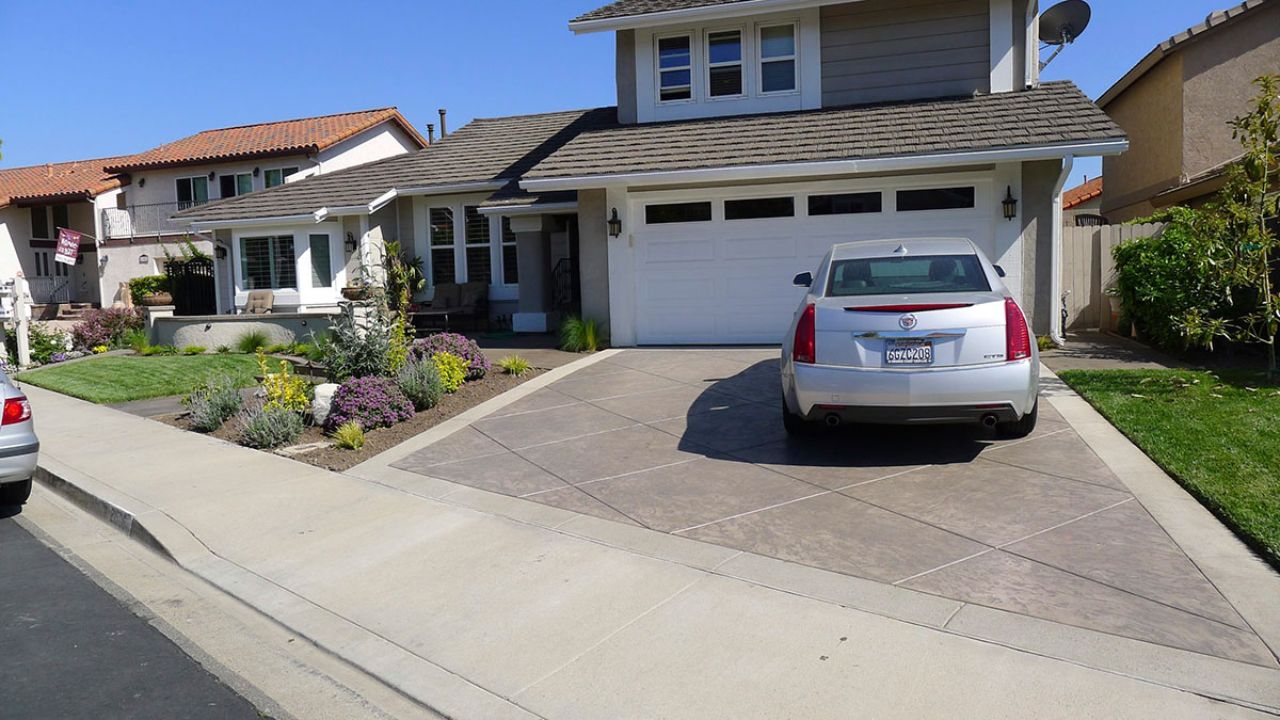
Key Takeaways:
Guest parking challenges plague Orange County homeowners. Limited driveway space, neighborhood restrictions, and frequent visitors create real problems when hosting. Driveway extensions offer practical solutions that add vehicle capacity without sacrificing curb appeal or property functionality.
These projects expand existing driveways through strategic additions—widening, lengthening, or creating separate parking pads. With proper planning and execution, homeowners gain dedicated guest spaces while enhancing property value and avoiding street parking conflicts.
Parking constraints frustrate homeowners and guests alike. Understanding common problems helps identify whether a driveway extension makes sense for your property.
Standard single-car driveways measure 9-12 feet wide—enough for one vehicle but nothing more. Guests parking behind the homeowner block exit access. Older OC neighborhoods frequently feature these narrow configurations built when households owned fewer vehicles. Tight driveways force guests to street parking, often blocks away.
Many Orange County neighborhoods prohibit overnight street parking or limit parking duration to 2-4 hours. HOAs enforce strict rules about street parking aesthetics. Citation costs add up quickly—typically $50-75 per ticket. Private solutions eliminate dependency on street availability and avoid enforcement issues.
Modern households average 2-3 vehicles. Adult children living at home add cars. Remote work means vehicles stay parked during traditional work hours. Single-car driveways can't accommodate these realities. Frequent entertainers need reliable guest parking for family visits, gatherings, and holiday events.
Driveway extensions add new parking capacity through various configurations. These projects expand usable vehicle space without full driveway replacement. Understanding typical components helps homeowners envision possibilities for their property.
Extensions connect to existing driveways through seamless integration. New sections add width or length while preserving the original approach. This strategy saves money by avoiding unnecessary demolition. Typical additions provide 1-3 additional parking spaces depending on available property dimensions.
Side-by-side layouts widen driveways for parallel parking. L-shaped or T-shaped extensions create dedicated guest zones offset from main entry paths. Pull-through designs allow forward exit without backing into streets. The best layouts account for door swing clearances and walking paths.
Property dimensions dictate feasible options. Wider lots support side expansions. Deeper lots accommodate lengthening. Limited space may require separate pads positioned strategically. Widening suits properties with adequate side yard setback. Lengthening works when front setbacks allow deeper paving.
Location determines extension feasibility and design. Each placement option presents unique advantages based on lot configuration and regulations.
Side-yard extensions add width parallel to the main driveway. This approach requires minimum 5-foot side setback compliance in most OC jurisdictions. Side expansions work best on lots 50+ feet wide. These extensions maintain direct street access and simplify guest arrival.
Front pads work when side expansion violates setbacks or conflicts with utilities. These separate parking areas sit forward of the main structure, typically near the street. They suit narrow lots under 40 feet where widening isn't possible. Landscaping borders and quality materials maintain residential character.
Corner lots offer expanded options through dual street frontage. Secondary street access may allow curb cut additions and separate guest entrances. Properties over 60 feet wide can design custom layouts with dedicated guest zones. These premium lots justify larger investments due to flexibility and enhanced visitor access.
Material selection impacts durability, appearance, maintenance, and cost. Orange County's climate and aesthetic standards influence optimal choices. Understanding material characteristics helps homeowners make informed decisions aligned with budget and preferences.
Pavers are manufactured to be three to four times stronger than standard concrete slabs, making them highly resistant to cracking, breaking, and heavy traffic rigors. Individual units distribute vehicle weight across the base system. This design prevents the catastrophic cracking common in monolithic concrete.
Pavers provide endless design possibilities with a wide array of colors, shapes, and patterns customized to complement any architectural style. Installation flexibility allows future modifications or repairs without complete surface replacement. Load-bearing capacity easily handles vehicles up to full-size trucks and SUVs.
Concrete costs less initially—$6-12 per square foot installed versus $15-30 for pavers. The uniform surface suits minimalist aesthetics. Stamped or colored concrete narrows the visual gap but adds expense.
Pavers are incredibly low-maintenance—if one becomes stained or damaged, it can be individually replaced without redoing the entire surface, a significant advantage over monolithic concrete surfaces. Concrete cracks require full section replacement. Repairs create obvious patches that rarely match original appearance. Over 20-year lifespans, repair costs often favor pavers despite higher upfront investment.
Permeable pavers are designed with small gaps between them, allowing rainwater to filter through into the ground below. This system helps manage stormwater runoff, prevents flooding, and supports local water conservation efforts by replenishing groundwater levels—critical in drought-prone Southern California. Permeable paver systems can reduce peak water discharge by as much as 60-75% during storms.
Turf strips between concrete or paver ribbons reduce impervious coverage while maintaining vehicle support. Gravel works for secondary parking areas with light use. These alternatives help properties meet stormwater management requirements without sacrificing functionality.
Proper design ensures functional, safe, and attractive parking additions. Dimensional standards and vehicle movement patterns require careful attention.
Standard parking spaces measure 9 feet wide minimum. Comfortable guest parking uses 10-12 feet per space to allow door opening without vehicle contact. Parallel spaces need 8-10 feet width and 20-24 feet length per vehicle. Add 12-18 feet of maneuvering aisle width for comfortable backing and turning.
Vehicles need adequate turning radius for entry and exit. Minimum 20-foot turning diameter accommodates most passenger vehicles. Placement near property corners improves maneuverability. Avoid positioning guest parking against walls or fences with inadequate clearance.
Direct pathways from parking to entries prevent guests from crossing lawns. Minimum 4-foot-wide walkways accommodate comfortable traffic. Integrate walkways during extension design rather than adding afterward. Consider lighting along paths for nighttime safety.
Regulatory compliance determines project feasibility. Early research prevents expensive redesigns or violations.
Orange County has specific requirements regarding paved surfaces, setbacks, and curb cuts. Working with a professional contractor familiar with these local codes ensures project compliance and avoids potential legal issues. Side setbacks typically require 5 feet minimum clearance. Front setbacks vary by zone—residential areas commonly mandate 15-25 feet. Maximum impervious surface coverage limits total paving area at 40-60% of lot area.
HOAs frequently mandate specific materials matching neighborhood standards. Color palettes may require approval. Architectural review committees often require submission packages with renderings and material samples. Processing takes 30-90 days typically. Non-compliance risks forced removal at owner expense.
Properties exceeding impervious coverage thresholds must incorporate drainage mitigation. New impervious surfaces over 500 square feet may trigger full property drainage review. Permeable materials often satisfy requirements while providing necessary vehicle support.
Understanding the construction sequence helps homeowners anticipate project phases. Professional installations follow systematic processes ensuring quality and longevity. Each step builds on previous work to create stable, durable parking surfaces.
Contractors assess existing conditions including soil type, drainage patterns, and underground utilities. Property surveys confirm boundaries and setback compliance. Measurements establish available space and design constraints.
Site evaluation identifies obstacles like mature trees, irrigation lines, or utility easements. Slope calculations determine grading needs. Contractors mark utility locations through USA/DigAlert services. This phase typically takes 1-2 site visits over a week.
Designers create scaled drawings showing parking positions, dimensions, and material layouts. Multiple options present tradeoffs between cost, aesthetics, and functionality. 3D renderings help visualize final appearance.
Material selections balance budget with performance requirements. Designers specify paver styles, concrete finishes, or hybrid approaches. Drainage integration gets planned. Lighting and landscaping coordinate with hardscape design. Final design approval locks in project scope and pricing.
Permit applications submit after final design approval. Processing times vary by municipality—typically 2-6 weeks. HOA submissions may run concurrently. Some projects require both approvals before construction starts.
Expedited processing costs more but accelerates timelines. Permit fees range $200-800 depending on project scope and jurisdiction. Approved permits must be posted on-site during construction. Final inspections verify code compliance before official project closure.
Professional installation ensures proper base preparation and drainage, crucial for longevity and preventing issues like shifting or water pooling. Excavation removes 8-12 inches of material depending on soil conditions and vehicle loads. Subgrade gets compacted to 95% density using plate compactors or rollers.
Base material consists of 4-6 inches of crushed aggregate—typically ¾-inch minus rock. Material spreads in lifts and compacts between layers. Proper slope establishes drainage away from structures. Inadequate base preparation causes 90% of extension failures.
Paver installations add 1 inch of bedding sand over compacted base. Units place tight together following approved pattern. Edge restraints prevent lateral spreading. Plate compaction vibrates pavers into sand. Polymeric sand swept into joints locks the system.
Concrete pours require forms, reinforcement, and proper curing. Minimum 4-inch thickness for vehicle loads. Control joints prevent random cracking. Finishing creates desired texture and appearance. Concrete needs 7 days curing before vehicle traffic.
Inspectors verify drainage function, surface uniformity, and code compliance. Measurements confirm setback adherence. Edge details and transitions get examined. Any deficiencies require correction before approval.
Final grading around the extension prevents water intrusion. Landscaping restoration completes disturbed areas. The homeowner receives maintenance instructions and warranty documentation. Most extensions are guest-ready immediately after final approval, though concrete requires additional curing time.
Budget planning requires understanding cost variables. Orange County pricing reflects local labor rates and regulatory requirements.
Basic concrete runs $8-15 per square foot installed. Quality pavers cost $15-30 per square foot. Natural stone exceeds $30-50 per square foot. Layout complexity affects labor costs. A typical 400-square-foot extension costs $6,000-12,000 for concrete, $10,000-18,000 for pavers.
Poor soil requires additional excavation and imported fill. Unstable ground may require geotextile fabric reinforcement—adding $1-2 per square foot. Retaining walls for slope management run $50-150 per linear foot. Drainage system installation adds $1,500-4,000. Soil tests cost $200-500 but prevent expensive surprises.
Using high-quality materials like pavers for a driveway extension can enhance curb appeal and contribute to stronger first impressions. The combination of increased functionality, enhanced aesthetics, and ready-to-use spaces makes these enhancements wise investments. Factor in property value increases—quality extensions return 50-75% of cost at resale.
Site topography influences design complexity and costs. Proper execution prevents structural failures and water damage.
Slopes exceeding 5% gradient typically need retaining structures for level parking. Heights over 30 inches require engineering stamps in most jurisdictions. Retaining walls allow multi-level parking on challenging terrain. Budget $8,000-15,000 for typical residential walls supporting parking areas.
Minimum 2% slope moves water off surfaces effectively. Drainage systems collect and redirect water away from structures. Standing water deteriorates paver bases and causes concrete cracking. Poor drainage voids warranties and necessitates expensive repairs within 2-5 years.
Existing structures may need removal, relocation, or integration into new designs. Irrigation systems require rerouting around new paving. Factor modification costs into budgets—typically $1,000-3,000 for minor adjustments.
Thoughtful landscaping integration maintains residential character while adding function. Design choices significantly impact property aesthetics and value.
Border plantings frame paving edges with greenery. Low-maintenance natives like California lilac or manzanita provide year-round interest. Drought-tolerant designs suit Orange County's climate and water restrictions. Landscaping costs $2,000-6,000 for typical extension borders.
A thoughtfully designed driveway extension not only solves parking challenges but also significantly boosts home curb appeal and overall value. Pattern variations create visual interest—herringbone, basket weave, or running bond each offer distinct character. Matching or coordinating with existing hardscaping maintains design continuity.
Low-voltage LED lighting enhances safety and ambiance. Lighting installation costs $1,200-3,000 for parking area coverage. Clean edge details prevent grass encroachment and maintain crisp appearance. Integrated lighting and landscaping transform functional parking into attractive property features.
Regular maintenance preserves appearance and prevents expensive repairs. Simple upkeep extends surface lifespan significantly.
Orange County enjoys over 280 sunny days a year with mild evening temperatures, creating favorable conditions for year-round maintenance. Sweep weekly to remove debris. Pressure wash annually using appropriate pressure settings. Seal pavers every 3-5 years. Concrete sealing every 2-3 years prevents moisture penetration.
Check quarterly for settling or shifted pavers. Oil stains need prompt treatment. Joint sand settles over time—add polymeric sand as needed, typically every 1-2 years. Monitor drainage performance during rains. Small issues cost under $200 to fix; ignored problems become thousand-dollar repairs.
Use pH-neutral cleaners designed for paving materials. Prompt spill cleanup prevents staining. Keep landscaping trimmed away from paving to prevent root damage. Budget $200-400 annually for maintenance supplies or $500-800 for professional service.
Contractor selection determines project success. Qualified professionals deliver quality results on schedule and budget.
Verify active California contractor's license—C-27 for landscaping or B for general contracting. Require proof of liability insurance and workers' compensation coverage. Request portfolios showing completed driveway extensions with similar scope. Ask for recent references—contact at least three previous clients.
Single-source contractors coordinate all project elements seamlessly. They design cohesive solutions integrating parking, drainage, and landscaping. Unified warranties cover entire project scope. Bundled services often cost less than hiring multiple specialists.
Ask about specific material sources and grades. Inquire about base preparation methods. Request detailed timelines with milestones. Understand payment schedules—never pay full amount upfront. Clarify warranty coverage duration and exclusions. Request written contracts specifying all terms before work begins.
Active participation during design ensures results match expectations. Site visits during construction allow immediate course corrections. However, balance involvement with allowing professionals to work. Schedule regular check-ins rather than constant presence.
Driveway extensions solve real parking problems while boosting property value and curb appeal. The right design accommodates guests comfortably, complies with regulations, and enhances your home's appearance for years to come.
Signature Landscape specializes in custom driveway extensions throughout Orange County. Our team handles everything from permitting and design to installation and final inspection. Contact Signature Landscape today to discuss your guest parking needs and receive a detailed project proposal tailored to your property.
 Signature Landscape
Schedule A Consultation