Call our Professional Contractors!
(949) 859-9969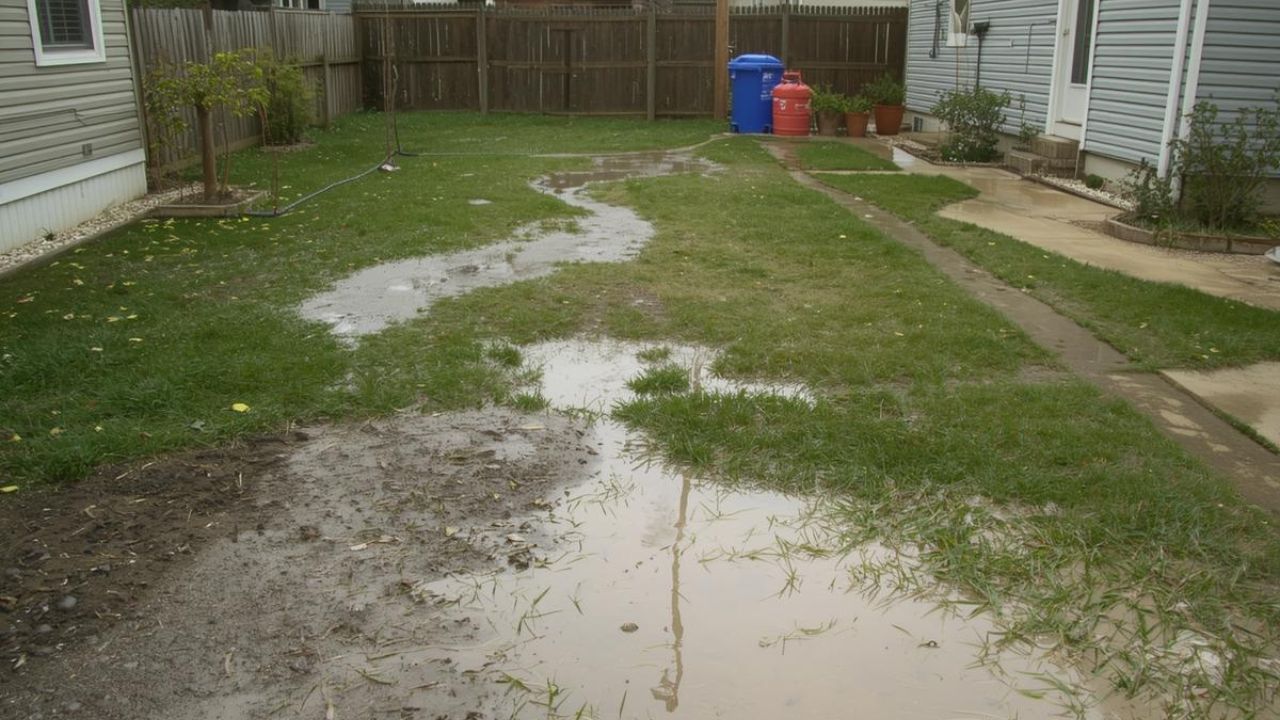
Key Takeaways:
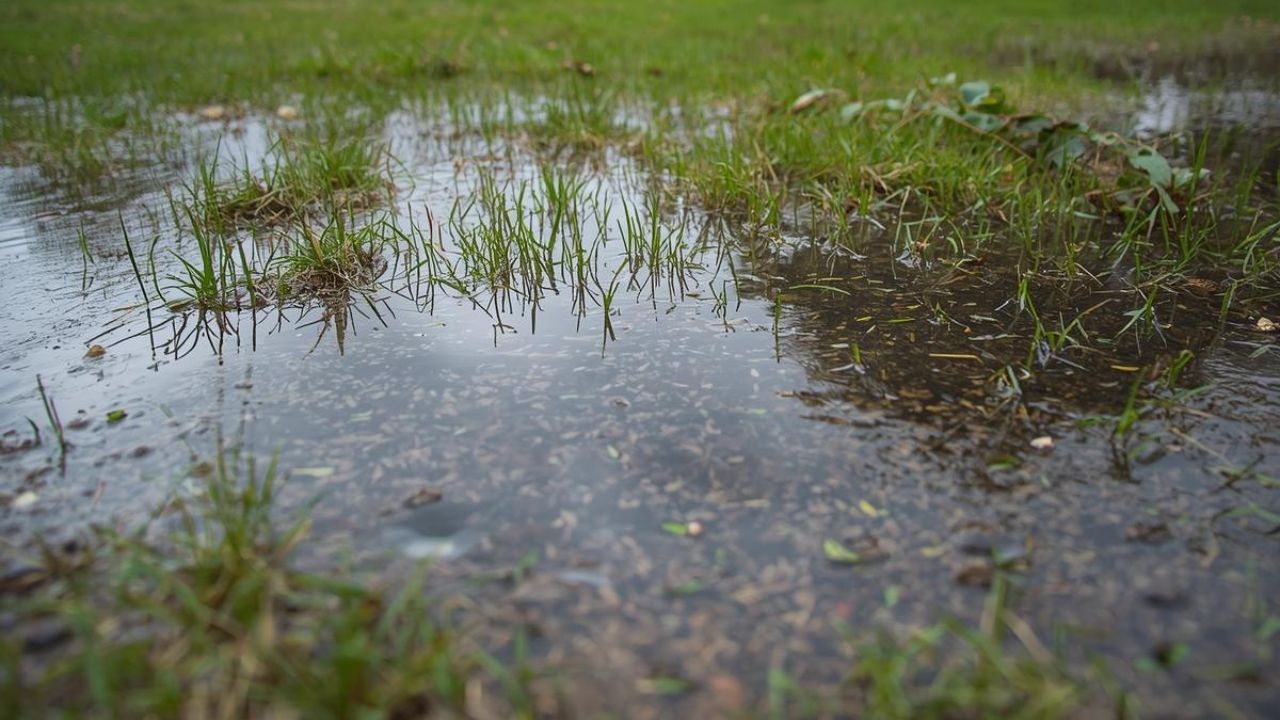
Standing water signals drainage failure requiring immediate intervention. Persistent puddles escalate into foundation damage costing $15,000 to $50,000. Waterlogged soil suffocates grass roots, promotes fungi, and creates mosquito breeding grounds. Professional solutions protect property investments and prevent emergency repairs.
Water accumulation results from inadequate drainage infrastructure, improper grading, and soil conditions blocking infiltration. Multiple factors—compacted soil, absent drainage systems, slopes directing water toward foundations—converge to create persistent pooling. Identifying specific causes guides solution selection and prevents recurring problems.
Absent or inadequate drainage systems leave water nowhere to go. Waterlogged soil suffocates grass roots by depleting oxygen. Wet conditions promote harmful fungi like Pythium and brown patch while washing away essential nutrients. Saturated soil compacts easily, further reducing pore space. This self-perpetuating cycle worsens without intervention.
Professional drainage repair addresses infrastructure deficiencies with properly designed systems eliminating root causes rather than managing symptoms.
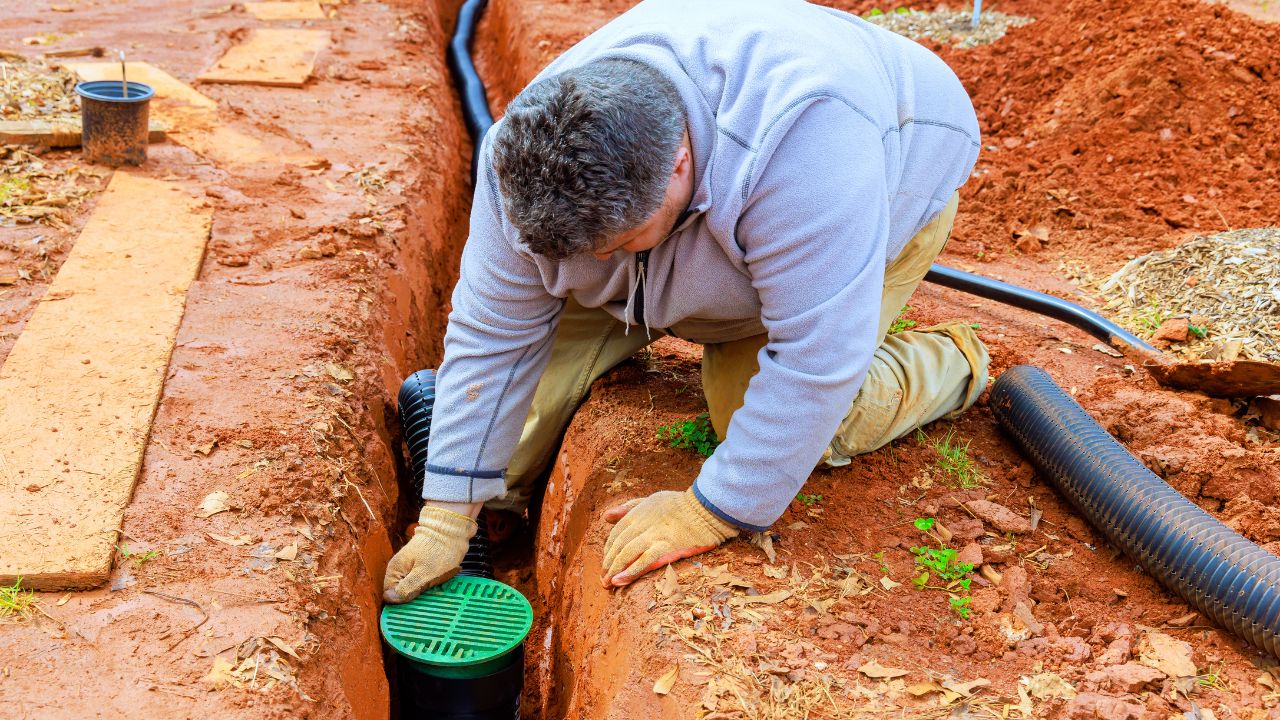
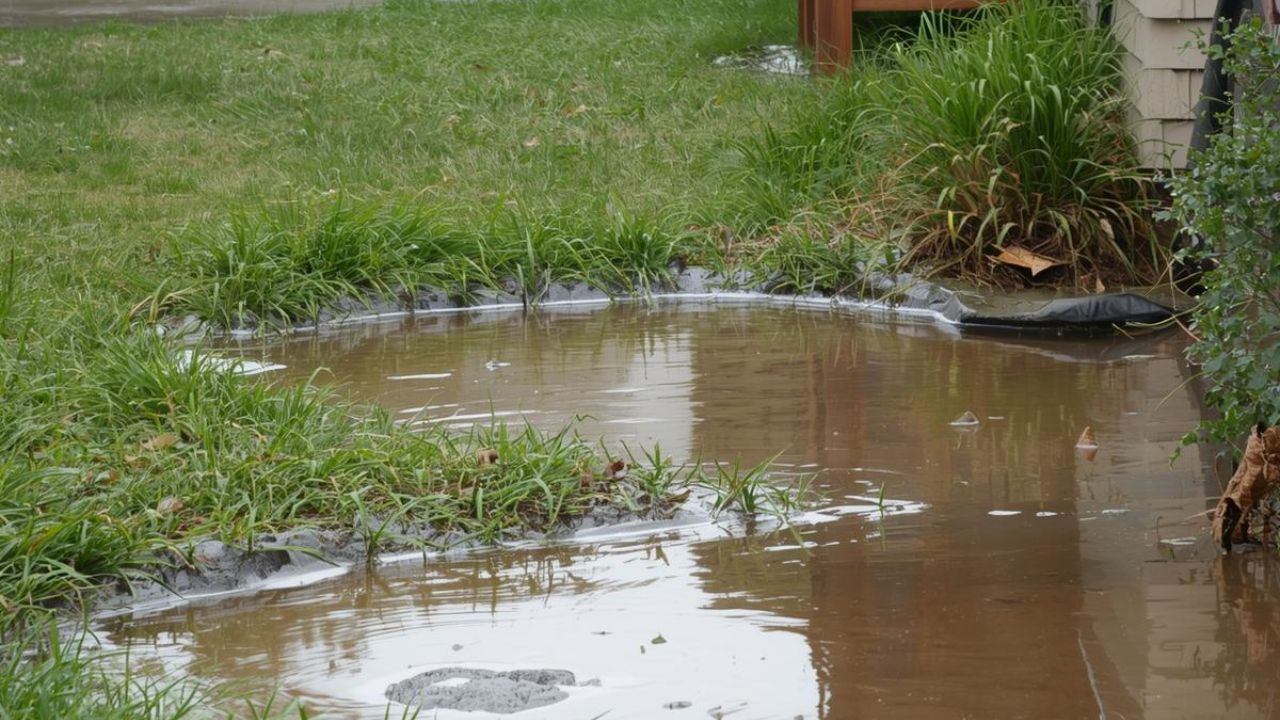
Recurring puddles appearing in identical locations reveal localized low spots or compacted soil where water naturally collects. Without active drainage systems, gravity concentrates water in depressions. Catch basins—grated inlets channeling surface water into underground pipes—provide optimal solutions for surface pooling in any soil type. These systems cost $300 to $800 per basin and achieve 90% effectiveness.
For surface pooling, catch basins combined with grading provide best results. Channel drains serve as alternatives. Dry wells should be avoided for surface pooling—they're ineffective where water already accumulates. Active collection systems removing water work better than passive infiltration systems that become saturated.
Improper grading—ground sloping toward foundations instead of away—directs water exactly where it causes maximum damage. Grading reshapes landscapes creating 2-5% slopes away from foundations, costing $1,000 to $5,000 with 80-85% effectiveness as permanent solutions. This investment achieves perfect scores (10 out of 10) for foundation protection and near-perfect scores (9 out of 10) for surface pooling elimination.
Grading proves moderately effective for subsurface saturation (7 out of 10) and basement flooding prevention (6 out of 10). It's less suitable for hardscape drainage (4 out of 10) where channel drains work better. Proper slopes direct surface water toward safe discharge points rather than allowing accumulation near structures.
Systematic assessment reveals problem severity and guides intervention decisions. Seven professional warning signs carry specific severity ratings, action timelines, and cost implications. Understanding these indicators prevents minor issues from escalating into foundation failures requiring tens of thousands in emergency repairs.
Water pooling 24+ hours after rain indicates HIGH severity requiring immediate professional attention costing $2,000 to $8,000. Recurring puddles suggest MEDIUM severity issues requiring action within 1-2 weeks at $500 to $5,000. Soggy lawns signal HIGH severity conditions requiring immediate professional assessment costing $2,000 to $10,000.
Foundation stains—white, chalky efflorescence—represent CRITICAL severity requiring urgent intervention at $5,000 to $20,000. Basement moisture carries CRITICAL severity with costs reaching $5,000 to $50,000. Dying plants indicate MEDIUM severity at $500 to $3,000. Erosion channels, mold odors, sinking pavement, and mosquito breeding reveal varying severity levels requiring specific interventions.
Soil erosion reveals concentrated flow paths. Sinking pavement indicates water undermining base materials. Moldy odors signal active moisture accumulation. Increased mosquito populations confirm breeding sites—single females lay 100-300 eggs completing lifecycles in 7-10 days. Document problem areas during rain events showing contractors where intervention is needed.
Single clogged downspouts suit DIY approaches costing $100 to $500. Persistent problems require professional assessment. Contractors diagnose water sources, assess soil conditions, and recommend effective solutions. Delaying intervention escalates costs: initial signs cost $500, 1-6 months $2,000, 6-12 months $8,000, 1-2 years $20,000, and beyond 2 years $50,000. Early professional involvement prevents this escalation.
Multiple drainage solutions address different water sources and site conditions. Effectiveness ratings range from 75% to 98%. Cost ranges span $100 to $50,000+ depending on problem severity. Understanding each system's strengths, limitations, and best applications ensures proper matching to specific problems. Quality hardscaping integrates drainage during installation, preventing problems before they start.
French drains—perforated pipes in gravel-filled trenches—collect and redirect subsurface water at $20 to $30 per linear foot with 95% effectiveness as permanent solutions. They excel at subsurface saturation in clay or heavy soil (effectiveness score 10 out of 10), foundation threat prevention (9 out of 10), and basement flooding prevention (8 out of 10). Combined with sump pumps, they handle high water tables effectively.
For subsurface saturation in clay or heavy soil, French drains provide optimal solutions. Alternatives include grading plus dry wells. Avoid surface-only solutions ignoring underground water movement. For foundation threats in clay soil, perimeter French drains offer best protection. Alternative grading plus waterproofing helps, but delay invites catastrophic failure. Prevention through $3,000 to $8,000 French drain installation beats $15,000 to $50,000 foundation repairs.
Sump pumps actively remove water from basements and crawl spaces when passive drainage fails, costing $800 to $2,000 with 98% effectiveness—the highest rating among all drainage solutions. They excel at basement flooding prevention (effectiveness score 10 out of 10) and high water table management (7 out of 10 when combined with French drains). Sump pumps handle poor soil permeability and areas lacking slope for gravity drainage.
For high water table conditions in any soil type, sump pumps combined with French drains provide best solutions. Grading serves as an alternative, but dry wells should be avoided where water tables stay elevated. Active pumping removes water faster than soil can absorb it. Battery backup ensures operation during power outages accompanying major storms. Prevention costs of $800 to $2,000 beat basement flooding damage of $5,000 to $20,000 per event.
Clean gutters prevent overflow cascading down siding to pool at foundations. Professional cleaning costs $100 to $300 with 75% effectiveness through seasonal maintenance managing roof runoff. Thousands of gallons during heavy rain require proper handling. Clogged gutters defeat entire drainage systems by concentrating water exactly where it causes maximum damage.
Downspouts should extend 6-10 feet from foundations discharging water to safe areas. Shorter extensions dump water directly at foundations. Gutter maintenance represents lowest-cost prevention with significant impact. Regular cleaning twice yearly prevents overflow while catch basins and French drains handle ground-level water. Integrated approaches combining multiple systems achieve best results.
Strategic hardscaping manages water while maintaining aesthetics and functionality. Material selection determines whether surfaces shed or infiltrate water. Proper integration with drainage infrastructure creates comprehensive solutions handling multiple water sources. Channel drains, permeable surfaces, and proper slopes work together eliminating pooling.
Permeable surfaces allow water infiltrating into ground rather than creating concentrated runoff. This distributed infiltration prevents erosion and flooding downstream. Combined with catch basins, channel drains, and French drains, permeable hardscaping reduces total runoff volume requiring management. Integration during initial installation prevents problems versus correcting them later.
Modern xeriscaping trends often incorporate permeable materials reducing water needs while managing drainage. Desert-modern landscapes balance aesthetics with water management—critical in Orange County conditions where rainfall patterns create periodic flooding despite overall dry climate.
Retaining walls manage elevation changes while controlling water flow. Properly designed walls include drainage systems preventing water pressure buildup causing failure. Without drainage, hydrostatic pressure cracks and bows walls. Maintaining 6-10 foot dry zones around foundations proves critical for preventing damage. This buffer allows proper drainage system installation and prevents water-saturated soil from contacting foundations.
Foundation protection requires multiple approaches working together—perimeter French drains, waterproofing, proper grading, and functional gutters. No single solution addresses all water sources. Integrated systems handling surface runoff, subsurface water, and roof discharge provide comprehensive protection. Professional design ensures components work together rather than creating conflicts.
Channel drains—linear drains in paved surfaces like driveways and patios—cost $15 to $40 per linear foot with 85% effectiveness permanently. They excel for hardscape areas (effectiveness score 10 out of 10) and work well for surface pooling (8 out of 10). For hardscape drainage in any soil type, channel drains provide optimal solutions with catch basins as alternatives. Avoid French drains in hardscapes due to difficult installation.
Dry wells—underground structures collecting and slowly releasing water—cost $1,000 to $3,000 with 75% effectiveness. They work best for large area drainage in sandy or loam soil where absorption rates support gradual release. Avoid dry wells for surface pooling and high water table conditions where soil can't absorb released water. For large drainage areas in sandy or loam soil, dry wells combined with French drains work well. Grading serves as an alternative. Avoid multiple small systems lacking coordination.
Professional expertise ensures systems are designed correctly and installed to last. The right contractor saves money long-term through solutions actually working versus DIY attempts requiring repeated fixes. Proper assessment, design, installation, and warranties protect investments. Licensed contractors provide code-compliant work avoiding violations complicating property sales.
Professional contractors distinguish surface runoff from groundwater, identify slope deficiencies, and design integrated systems addressing multiple failure points. They assess soil conditions properly—clay versus sand requires different approaches. Calculations for proper slopes, system sizing, and discharge locations require precision. Professionals understand local regulations, permit requirements, and HOA restrictions affecting installations.
DIY approaches work for minor issues—single clogged downspouts, basic grading improvements. Complex problems—subsurface saturation, foundation threats, high water tables—demand professional expertise. Without proper assessment, incorrect solutions waste money while damage worsens. A professional identifying problems DIY assessments miss prevents escalating costs.
Professional installation follows assessment (1-2 days), design and planning (1-2 days), installation (3-10 days), and testing and cleanup (1 day). Total projects typically span 5-14 days. Properly installed systems eliminate over 95% of standing water, redirecting it 50-100 feet from structures. Professional work includes 5+ year warranties protecting investments. This 95%+ effectiveness rating vastly exceeds DIY attempts addressing symptoms without fixing root causes.
Systems achieve permanent solutions with proper maintenance. Contractors select appropriate materials, calculate exact slopes, and place discharge points where water won't create new problems. Professional work meets code requirements, passes inspections, and comes with warranties ensuring free repairs if systems fail prematurely.
Licensed professionals ensure compliance with local building codes and drainage regulations. Drainage work often requires permits—especially when connecting to municipal systems or significantly altering grading. Licensed contractors handle permit applications and inspections. Unlicensed contractors expose you to code violation liability complicating future property sales and creating legal exposure.
Insurance protects homeowners from liability during installation. Worker injuries get covered by employer insurance—without it, you face potential lawsuits. Property damage insurance covers accidents like broken utility lines during excavation. Professional contractors provide 5+ year warranties standard. Proper installation proves critical for achieving advertised effectiveness ratings. Warranty coverage ensures free repairs if systems fail, eliminating out-of-pocket costs for defective workmanship or materials.
Systematic maintenance preserves effectiveness and prevents failures. Seasonal tasks address specific challenges. Spring focuses on critical prevention. Summer emphasizes peak monitoring. Fall prepares systems for winter. Winter protects infrastructure from freeze-thaw damage. Regular maintenance prevents minor $500 repairs from becoming $50,000 foundation failures.
Annual inspection minimum catches problems when repairs are simple and inexpensive. Ideally inspect twice yearly—spring and fall. Spring inspection after winter damage assessment prepares systems for heavy spring rains. Fall inspection before winter precipitation clears debris and identifies issues before freeze-thaw cycles worsen them. Professional systems include 5+ year warranties but require maintenance for optimal performance.
Small clogs clear easily when caught early. Settled soil can be regraded quickly before major problems develop. Minor cracks get sealed before expansion. This preventive approach preserves both systems and structures they protect. Document inspections photographically showing system conditions over time. This record helps identify gradual degradation requiring intervention.
Spring maintenance focuses on critical prevention. Inspect all drains and clear debris—a HIGH priority 2-4 hour annual task. Test sump pumps and check batteries—a CRITICAL priority 1-hour annual task preventing emergency failures. Aerate lawns and check grading—a MEDIUM priority 3-5 hour annual task maintaining proper slope. Apply mosquito larvicide and repair winter damage.
Summer maintenance emphasizes monitoring. Check systems after storms weekly—a HIGH priority 30-minute task catching problems early. Control mosquitoes weekly through breeding site elimination. Clean gutters monthly—a MEDIUM priority 1-2 hour task preventing overflow. Check catch basins monthly to maintain capacity. Water lawns properly avoid oversaturation. Watch for fungal diseases requiring immediate treatment. Maintain 6-10 foot dry zones around foundations. Strategic use of appropriate ground covers in drainage paths slows water velocity while filtering sediments.
Fall maintenance prepares for winter. Final gutter cleaning is a HIGH priority 2-3 hour annual task removing leaves before winter precipitation. Remove leaves from drains preventing clogs. Inspect foundations—a HIGH priority 1-2 hour annual task identifying issues before freeze-thaw damage. Test drainage flow verifying all systems work. Winterize systems for freeze-thaw cycles. Document problem areas for spring repairs.
Winter maintenance protects systems. Check basements monthly—a MEDIUM priority 30-minute task monitoring freeze-thaw impacts. Clear snow from drains prevents ice dams. Plan spring projects and review warranties. Budget for repairs ensuring funds available when needed.
Early detection prevents escalation from minor problems to catastrophic failures. Hydrostatic pressure cracks foundation walls within 6-24 months requiring $15,000 to $50,000 repairs versus $3,000 to $8,000 French drain prevention. Clay soil expansion causes foundation shifts over 1-3 years requiring $10,000 to $40,000 repairs versus $1,000 to $5,000 grading prevention. Basement flooding creates $5,000 to $20,000 per-event damage versus $800 to $2,000 sump pump prevention.
Lawn damage progresses predictably. Within 48 hours, oxygen depletion causes 25% damage costing $500 to $2,000 to reverse. After 3-7 days, 60% damage costs $1,000 to $4,000. Beyond 2 weeks, 90% damage costs $3,000 to $8,000. After one month, 100% damage requires $5,000 to $12,000 complete restoration.
Contractor selection determines solution quality and longevity. Experience, licensing, insurance, and warranties separate qualified professionals from inadequate contractors. Proper questions reveal expertise and ensure code-compliant installations. Multiple quotes allow comparison of proposed solutions and costs.
Request portfolios showing completed drainage installations matching your problems. Ask for references from clients with comparable flooding challenges you can contact directly. Verify experience with your specific soil type—clay, sand, loam—since solutions differ significantly. Check track records with professional system installations achieving 95%+ effectiveness ratings.
Contractors comfortable with French drains, catch basins, sump pumps, and integrated systems demonstrate comprehensive expertise. Avoid contractors limited to single solution types who force-fit specialties regardless of actual needs. A contractor only installing French drains will recommend French drains even when catch basins or grading would work better. Comprehensive knowledge ensures solutions match problems rather than matching contractor capabilities.
Ask about assessment processes—typically requiring 1-2 days for thorough evaluation. Inquire about installation timelines—typically 3-10 days for installation phase. Request detailed cost breakdowns including assessment and design costs, material costs, labor costs, and warranty terms. Verify licensing and insurance coverage with certificate copies. Ask about warranty coverage—standard is 5+ years for professional installations.
Request references from similar projects you can verify. Confirm they achieve 95%+ effectiveness in standing water elimination, not just improvement. Ask about ongoing maintenance requirements—what you must do versus what they'll service. Verify ability to redirect water 50-100 feet from structures safely. Understand total timeline from initial contact to completed, warranted installation. These questions reveal professionalism and expertise separating qualified contractors from inadequate ones.
Multiple quotes allow comparison of proposed solutions, not just prices. Minor issues with single clogged downspouts cost $100 to $500 for DIY approaches. Minor drainage problems cost $500 to $2,000. Moderate problems with recurring patterns and visible lawn damage cost $2,000 to $8,000. Severe issues involving foundation concerns, basement moisture, or structural signs cost $5,000 to $50,000+.
Understanding these ranges helps identify unrealistically low bids signaling corner-cutting or inflated estimates padding profit margins. Verify all quotes include similar scope and materials. Cheapest bids often use inferior materials or shortcuts failing quickly. Most expensive doesn't guarantee best quality. Get 3-5 quotes for major projects. Verify all quotes include warranties and maintenance requirements. Compare total cost of ownership—not just installation price.
Preventive drainage installation typically costs $5,000. Minor repairs if delayed cost $2,000. Major repairs if delayed further cost $15,000. Foundation repairs if not addressed cost $35,000+. Potential savings from prevention exceed $30,000. This cost-benefit analysis shows why proper solutions—even expensive ones—prove less costly than delayed intervention.
Standing water escalates from nuisance to catastrophe without intervention. Professional drainage solutions—French drains at $20 to $30 per linear foot achieving 95% effectiveness, sump pumps at $800 to $2,000 delivering 98% effectiveness, catch basins at $300 to $800 providing 90% effectiveness—eliminate pooling permanently with proper maintenance. Delaying intervention escalates costs from $500 initial signs to $50,000 foundation failures.
Don't wait for basement flooding or foundation cracks forcing emergency action costing five to ten times preventive installation. Signature Landscape specializes in comprehensive drainage solutions for Orange County properties. Our licensed professionals diagnose drainage failures, design integrated systems, and install warranted solutions eliminating standing water permanently. Contact us today to protect your property investment with drainage systems proven to work.
 Signature Landscape
Schedule A Consultation