Call our Professional Contractors!
(949) 859-9969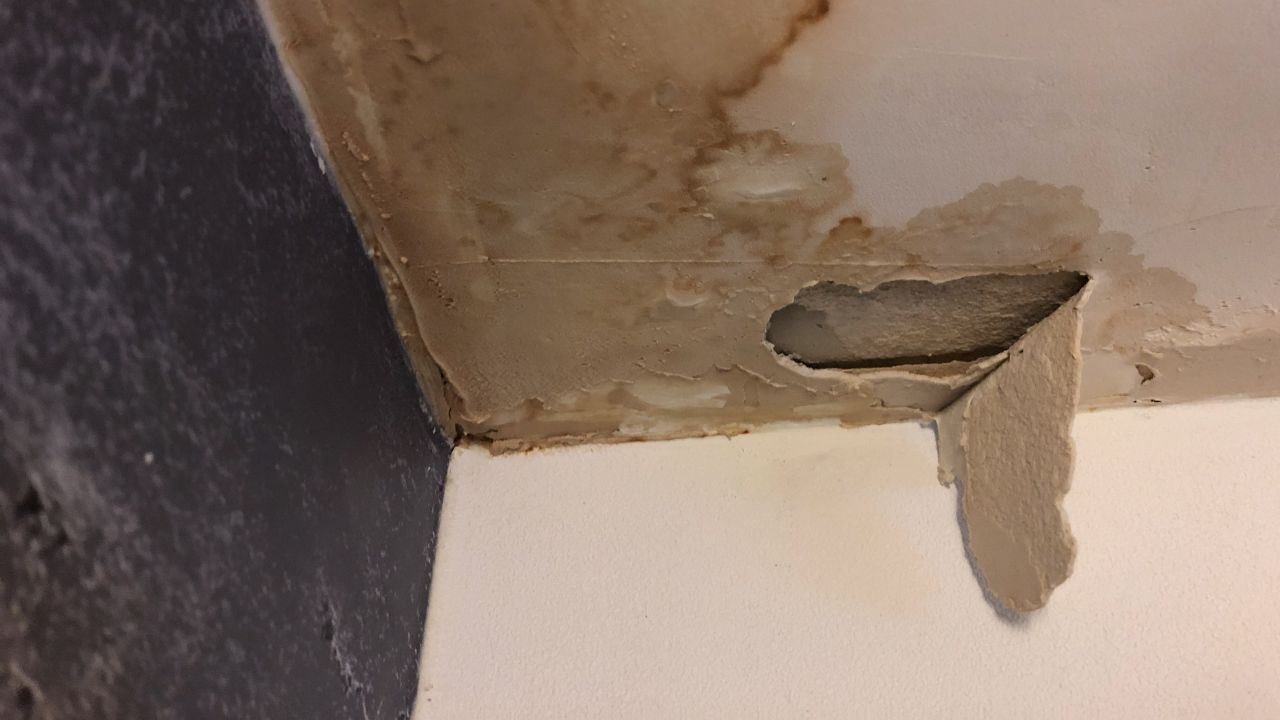
Key Takeaways
When rain leaks compromise your foundation, emergency drainage services provide critical intervention to stop water intrusion and prevent catastrophic structural failure. Professional response within the first 24 hours prevents 65% of potential damage and stops the exponential cost escalation that begins immediately after water contact.
This guide explains how emergency drainage works, why immediate action protects your investment, and when professional intervention becomes mandatory.
Emergency drainage services deploy rapid-response techniques to halt active water intrusion through foundation cracks and stabilize threatened structures. These interventions bridge the gap between crisis and permanent repair, preventing damage from escalating during the critical first 24-48 hours.
Emergency drainage services stop active water intrusion and prevent structural damage to foundations. These are temporary stabilization measures designed to manage the situation until permanent repairs can be made, typically involving temporary pumping, surface diversion, emergency trenching, and crack stabilization with hydraulic cement that sets in minutes even underwater.
Professional mitigation achieves 98% effectiveness for foundation crack scenarios versus 25% DIY effectiveness. Foundation cracks account for 18% of all flooding incidents, making them the second most common water intrusion source after heavy rain and poor grading, which represents 28% of cases.
Rain leaks exploit and accelerate foundation vulnerabilities through hydrostatic pressure buildup and soil saturation. Understanding this mechanism reveals why drainage failures quickly escalate from surface problems to structural crises.
Just one inch of rain on a typical roof produces over 600 gallons of water that must be managed by drainage systems. Water accumulating in soil exerts hydrostatic pressure on foundation walls, causing them to bow, crack, and allow water entry, creating a self-reinforcing cycle where initial cracks widen under continued pressure.
Heavy rain and poor grading account for 28% of all flooding incidents, making them the most common source. Downspout discharge problems contribute 11% of flooding incidents when water deposits too close to foundations. Groundwater seepage accounts for 8% of flooding incidents, typically indicating inadequate perimeter drainage or high water tables.
Cracks wider than 1/8 inch indicate structural stress from hydrostatic pressure requiring immediate professional assessment. Common warning signs include standing water near the foundation, visible cracks in foundation walls, sagging or uneven floors, moisture on basement walls, bowing foundation walls, and active water leaks through cracks.
Damage severity follows an exponential curve where every hour of delay compounds structural compromise and repair costs. The difference between immediate response and a 24-hour delay determines whether you face minor repairs or major reconstruction.
A 24-hour delay causes damage severity scores to jump from 42 to 65 as mold colonization begins. A 48-hour delay reaches the critical damage point with a severity score of 85, while after 72 hours, catastrophic damage becomes likely with severity scores exceeding 95. Beyond 96 hours, near-total loss scenarios emerge with severity scores of 98-100.
First 24-hour response window prevents 65% of potential damage by interrupting the water intrusion cycle before secondary damage cascades. Mold can begin growing within 24-48 hours of water damage foundation scenarios, creating health risks and additional remediation costs that often exceed the original structural repair expenses.
Recognition of critical thresholds determines whether you attempt temporary DIY measures or immediately activate professional emergency services. Specific damage signatures dictate response urgency and intervention type, making emergency damage assessment essential for proper response coordination.
| Damage Type | Severity Level | Damage Score | DIY Feasible? | Urgency |
| Hairline Cracks (<1/8") | Minor | 12-25 | Yes (monitoring) | Monitor closely |
| Deep Cracks (>1/8") | Significant-Severe | 42-65 | No - Professional Required | Immediate action |
| Dry Foundation | Preventable | 5-12 | Yes | Preventive maintenance |
| Wet Foundation | Active Damage | 65-95 | No - Professional Required | Within 1 hour |
| Immediate Issues | Damage Score: 5-12 | - | Possibly | Within 24 hours |
| Delayed Issues (24+ hrs) | Already critical | - | No - Professional Required | Already critical |
| Detection Method | DIY Effectiveness | Professional Effectiveness | Time Required | Cost Range | Best For |
| Visual Inspection | 50% | 88% | 30-60 min | Free | Surface issues, obvious cracks |
| Moisture Meters | 55% | 90% | 1-2 hours | $50-200 | Hidden moisture, wall dampness |
| Flooding Signs Check | 75% | 95% | 15-30 min | Free | Grading problems, water pooling |
| Professional Inspection | N/A | 98% | 2-4 hours | $200-500 | Structural assessment, crack analysis |
IICRC standards require professional remediation for any water damage involving contaminated water (Category 2 or 3) or water present for more than 24-48 hours. Professional assessment becomes mandatory for cracks wider than 1/8 inch, where DIY effectiveness drops to 25% versus 98% professional intervention. Sewer backup scenarios demonstrate the starkest contrast: DIY achieves only 10% effectiveness versus 99% professional effectiveness, making amateur attempts both futile and potentially hazardous.
When storm damage affects your property's drainage systems, professional evaluation prevents misdiagnosis that worsens structural compromise.
Emergency drainage services follow a systematic protocol that prioritizes safety assessment, immediate stabilization, and water control. Professional intervention begins with comprehensive evaluation and progresses through graduated response measures designed to halt damage progression within the first critical hours.
Professionals execute a six-stage emergency response protocol:
Professional Assessment First:
Temporary Pumping Deployment: Utility, submersible, or trash pumps rapidly dewater affected areas, reducing immediate damage and hydrostatic pressure.
Surface Diversion: Sandbags, water-activated flood bags, or temporary berms redirect surface water flow away from compromised foundation areas.
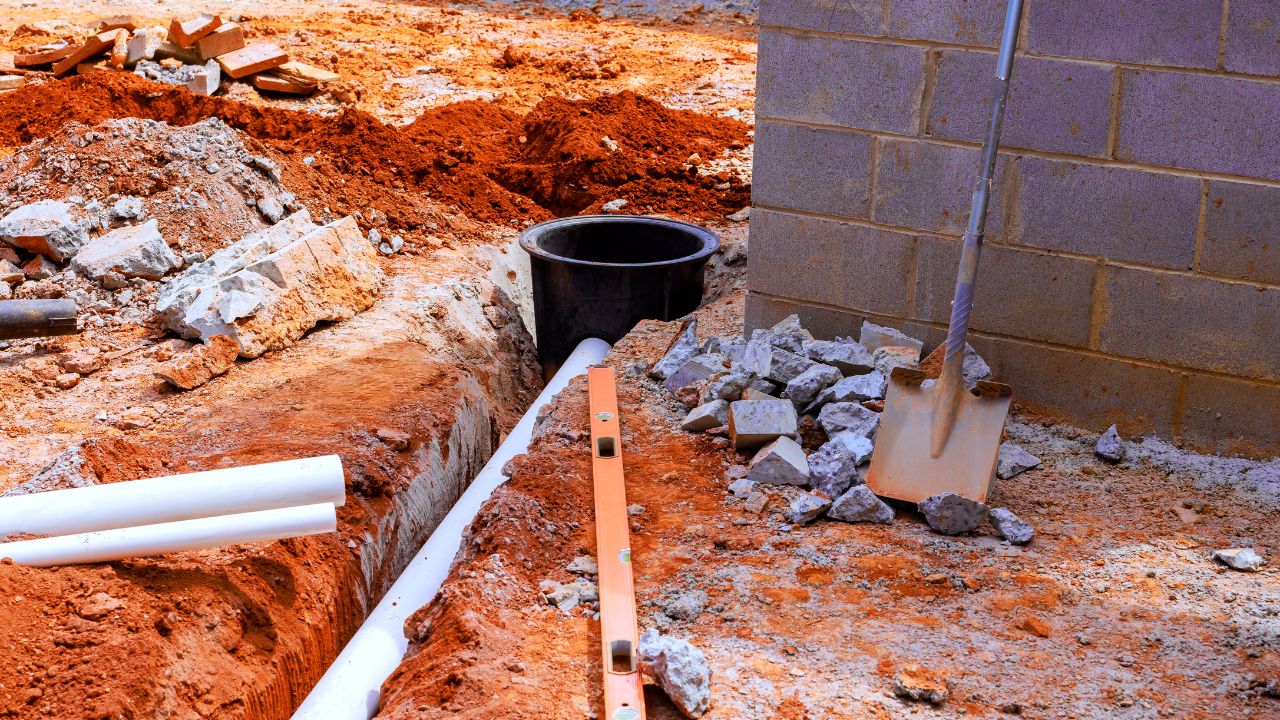
Emergency Trenching: Creates temporary relief for saturated soil with minimum slope of 6 inches over first 10 feet to intercept and redirect groundwater.
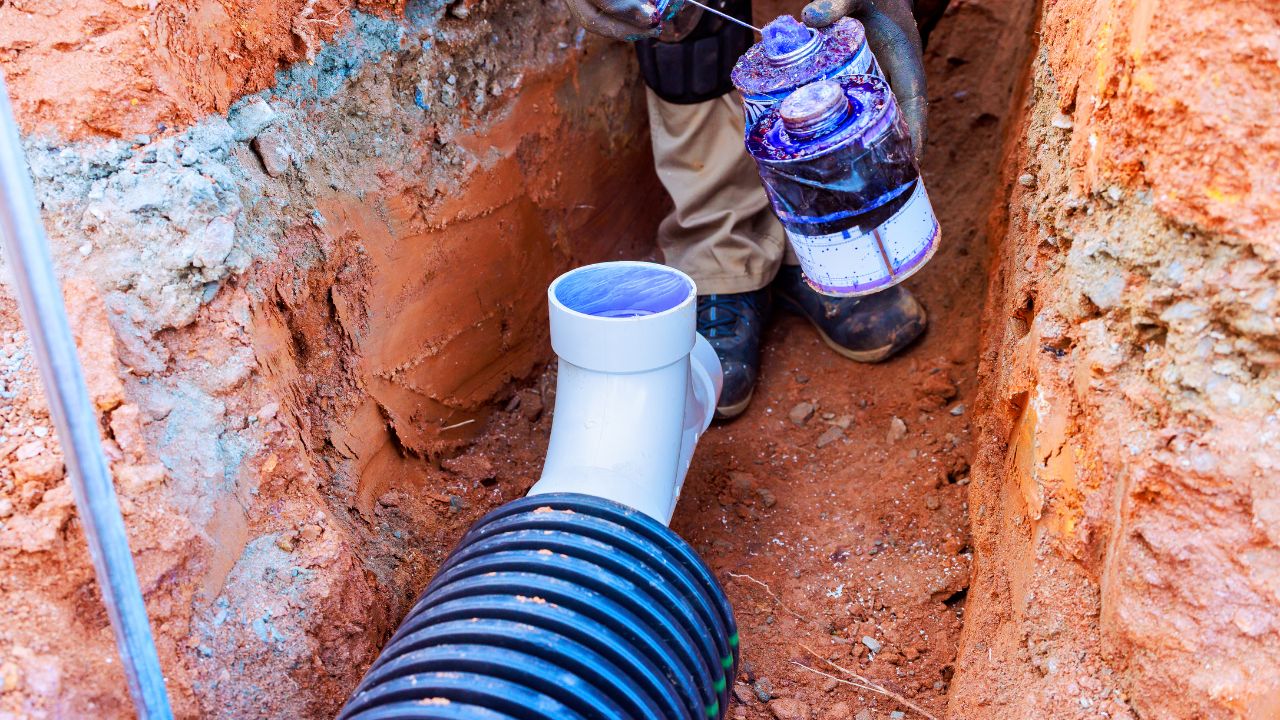
Crack Stabilization: Hydraulic cement application sets in minutes even underwater, providing quick seal to stop immediate water flow.
Foundation Stability Monitoring: Ongoing assessment for bowing, shifting, or structural compromise throughout emergency intervention period.
| Equipment/Technique | Application | Effectiveness | Typical Timeline | Professional Required? |
| Sump Pumps | Failed pump scenarios (12% of incidents) | DIY: 60% / Pro: 98% | 2-4 hours installation | Recommended |
| French Drains | Groundwater seepage (8% of incidents) | DIY: 20% / Pro: 92% | 1-3 days installation | Yes |
| Emergency Trenching | Surface water diversion | Pro: 95%+ | 4-8 hours | Yes |
| Water Barriers (sandbags) | Temporary flood prevention | DIY: 45-75% / Pro: 95% | 1-2 hours deployment | DIY possible |
| Hydraulic Cement | Active crack sealing | Sets in minutes underwater | 30 minutes-1 hour | DIY possible for <1/8" cracks |
| Portable Pumps | Standing water removal | DIY: 45% / Pro: 95% | Immediate deployment | DIY possible |
| Service Stage | Estimated Duration | Damage Severity at Start | Cumulative Damage if Delayed |
| Initial Consultation | 0.5-2 hours | Minimal (Score: 5-12) | Minor damage begins |
| Professional Inspection | 2-4 hours | Minor-Moderate (Score: 12-25) | Significant damage risk |
| Emergency Action (pumping, diversion, stabilization) | 6-12 hours | Moderate-Significant (Score: 25-42) | Severe damage threshold approaching |
| Crack Sealing & Trenching | 1-3 days | Controlled (temporary stabilization active) | Prevented by emergency measures |
| Post-Service Monitoring | 1 day-1 week | Stable | Follow-up verification |
Immediate professional intervention transforms potential catastrophic loss into manageable repair costs while preserving structural integrity. The effectiveness differential between professional and DIY approaches widens dramatically as complexity increases, with the greatest return on investment occurring within the first 24-hour response window.
Professional drainage repair services achieve 95% effectiveness for heavy rain and poor grading scenarios versus 45% DIY effectiveness, while groundwater seepage interventions reach 92% professional effectiveness compared to only 20% DIY success. Optimal response within the first 24 hours prevents damage progression from "Significant" (score 42) to "Severe" (score 65), interrupting the exponential damage curve before mold colonization begins and structural compromise accelerates.
Cost escalation follows a ruthless exponential curve where every hour of delay multiplies repair expenses. Immediate response within one hour averages $850 total cost with $350 out-of-pocket, while a 24-hour delay escalates to $5,200 total ($4,200 out-of-pocket), representing a 6.1x cost multiplier. A 48-hour delay reaches $12,500 total ($10,000 out-of-pocket) for a 14.7x multiplier, while seven-day delays average $45,000 total ($40,000 out-of-pocket), a devastating 52.9x cost increase driven by compounding structural damage, mold remediation requirements, and reduced insurance coverage.
Early intervention prevents mold colonization at the 24-hour threshold, stops progression to the critical damage point at 48 hours (severity score 85), and prevents catastrophic structural failure in 72+ hour scenarios where severity scores exceed 95. Professional stabilization eliminates the recurring wet-dry cycles that accelerate foundation deterioration, protecting against progressive cracking that compounds over decades.
Emergency drainage costs correlate directly with response timing, water contamination level, and structural damage severity. Insurance coverage decreases proportionally as response delays suggest maintenance negligence rather than emergency circumstances.
| Response Delay | Average Repair Cost | Primary Damage Type | Service Scope |
| 1 hour | $850 | Minimal water intrusion | Pumping, temporary barriers, minor sealing |
| 6 hours | $1,500 | Minor structural impact | Pumping, crack assessment, surface diversion |
| 12 hours | $2,800 | Moderate damage beginning | Emergency trenching, crack stabilization, water extraction |
| 24 hours | $5,200 | Severe (mold onset) | Full water damage restoration, mold prevention, drainage installation |
| 48 hours | $12,500 | Critical structural damage | Structural repairs, comprehensive drainage system, mold remediation |
| 72+ hours | $22,000-$45,000 | Catastrophic | Foundation reconstruction, extensive mold removal, permanent drainage |
| Response Delay | Average Repair Cost | Typical Deductible | Out-of-Pocket Cost | Coverage Likelihood |
| 1 hour | $850 | $500 | $350 | High (emergency water damage) |
| 6 hours | $1,500 | $500 | $1,000 | High (active intrusion) |
| 12 hours | $2,800 | $1,000 | $1,800 | Moderate (depends on policy) |
| 24 hours | $5,200 | $1,000 | $4,200 | Moderate (mold may be excluded) |
| 48 hours | $12,500 | $2,500 | $10,000 | Low (delayed response, mold) |
| 72 hours | $22,000 | $2,500 | $19,500 | Very Low (negligence concern) |
| 7 days | $45,000 | $5,000 | $40,000 | Very Low (maintenance neglect) |
Responding within the first hour maintains average costs at $850 versus $5,200+ for a delayed response, representing the single most effective cost control measure. Early DIY mitigation achieves 75% effectiveness for downspout discharge problems, preventing 11% of flooding incidents before professional intervention becomes necessary. Preventive maintenance on sump pumps prevents 12% of flooding incidents, though professional installation and monitoring (98% effectiveness) significantly outperforms DIY approaches (60% effectiveness) for critical basement protection systems.
Provider selection determines whether emergency intervention achieves professional-grade 98% effectiveness or amateur-level failure that accelerates damage progression. Certification, response capability, and demonstrated expertise in foundation-specific scenarios separate qualified professionals from contractors who worsen structural compromise through improper technique.
IICRC certification for water damage restoration remains mandatory for Category 2 and 3 water scenarios where contamination creates health hazards beyond structural concerns. Qualified providers demonstrate expertise in foundation waterproofing and drainage systems, maintain 24/7 emergency availability for response within the critical first 24 hours, and document experience achieving 90-99% effectiveness rates across all flooding scenarios including foundation cracks, sewer backup, and groundwater seepage.
Verify experience with emergency trenching meeting the 6-inch slope over 10 feet industry standard for effective groundwater interception. Confirm expertise in crack stabilization using hydraulic cement with proper underwater application technique, as improper placement fails within hours. Check documented track record with foundation crack repairs where professional intervention achieves 98% effectiveness versus 25% DIY success, ensuring the contractor can demonstrate specific case outcomes rather than generic claims.
Response time becomes the dominant selection criterion because every hour of delay increases damage severity exponentially along the documented progression curve. A qualified landscape drainage contractor offering local response typically delivers faster service within the critical 24-hour window that prevents 65% of potential damage, while national providers may possess greater equipment resources but potentially slower deployment logistics.
Emergency scenarios prioritize speed over brand recognition, making local providers with verified 1-2 hour response times preferable to national chains promising next-day service.
Inadequate emergency drainage intervention converts manageable incidents into catastrophic failures requiring foundation reconstruction rather than crack stabilization. Amateur contractors lacking proper certification and technique frequently worsen hydrostatic pressure problems, misdiagnose water sources, and deploy temporary measures that collapse under load.
Failed sump pump scenarios representing 12% of incidents demonstrate stark effectiveness gaps: inexperienced DIY-level work achieves only 60% success versus 98% professional intervention. Sewer backup scenarios accounting for 15% of incidents reveal even wider differentials where improper handling achieves only 10% effectiveness compared to 99% professional remediation due to contamination protocols.
Foundation crack repairs comprising 18% of incidents suffer from amateur work, achieving merely 25% effectiveness versus 98% professional success, often due to incorrect hydraulic cement application or failure to address underlying hydrostatic pressure.
Verify IICRC certification specifically for emergency water damage restoration, not generic contractor licensing. Confirm documented experience with Category 2 and 3 water damage scenarios requiring specialized decontamination protocols beyond simple water extraction. Check guaranteed availability for response within the first 24 hours when damage severity crosses the threshold from "Significant" (score 42) to "Severe" (score 65), as providers lacking 24/7 emergency dispatch cannot prevent mold colonization.
Delaying provider selection beyond the 24-hour window when damage severity jumps from 42 to 65 as mold colonization begins represents the most costly error. Choosing providers without proper certification for contaminated water handling exposes occupants to Category 2 and 3 water health hazards, including sewage bacteria and chemical contamination. Not verifying emergency response capabilities, including 24/7 availability and documented 1-2 hour response times, eliminates the primary advantage of professional intervention.
Accepting bids without checking effectiveness track records allows contractors claiming expertise to deliver sub-90% success rates that fall below professional standards.
Systematic preventive maintenance intercepts the failure progression that leads to emergency scenarios, addressing the 28% of incidents caused by poor grading and the 11% from downspout discharge before water reaches foundation walls. Quarterly inspections cost hundreds of dollars annually compared to thousands for emergency repairs, shifting investment from crisis response to proactive protection.
Quarterly (Every 3 Months): Gutter cleaning and debris removal, downspout discharge verification ensuring 10+ feet distance from foundation, and visual foundation inspection identifying new cracks before they reach the critical 1/8-inch threshold.
Semi-Annually (Every 6 Months): Grading verification confirming proper slope away from foundation, sump pump testing preventing 12% of flooding incidents from pump failure, and window well drainage check eliminating the 3% of incidents from overflow scenarios.
Annually: Professional foundation inspection assessing cracks exceeding 1/8 inch indicating structural stress, French drain system flushing maintaining the 92% effectiveness that prevents groundwater seepage (8% of incidents), comprehensive drainage system evaluation identifying emerging vulnerabilities, and waterproofing integrity assessment preventing degradation that reduces effectiveness below 98%.
Clean gutters and ensure downspouts discharge 10+ feet from the foundation, preventing 11% of incidents from downspout discharge failures. Verify grading slopes away from the foundation by a minimum 6 inches over first 10 feet, addressing the 28% of incidents from heavy rain and poor grading. Apply waterproofing combined with drainage solutions, achieving 98% professional effectiveness. Test sump pumps regularly with battery backup systems, preventing 12% of incidents from failed pumps during power outages accompanying severe weather. Inspect drainage systems for blockages compromising function.
Monitor for cracks exceeding 1/8 inch, requiring professional assessment due to structural stress indicators. Install French drains for groundwater management, preventing 8% of incidents from groundwater seepage in high water table areas. Properties with terrain elevation changes may also benefit from retaining walls that manage soil pressure and water flow patterns around foundations.
Waterproofing must be combined with proper drainage systems for maximum effectiveness, as membrane protection alone cannot manage the volume challenge where one inch of rain produces over 600 gallons, requiring active diversion. Professional waterproofing achieves 98% effectiveness when paired with drainage solution,s including grading, downspout management, and perimeter systems, but waterproofing alone fails to address surface water diversion or grading issues responsible for 28% of flooding incidents.
The integrated approach addresses both penetration (waterproofing) and volume management (drainage), preventing the hydrostatic pressure buildup that overwhelms even properly sealed foundations.
Foundation protection demands immediate emergency response combined with systematic preventive maintenance to interrupt the damage progression curve before catastrophic failure occurs. The documented cost escalation from $850 at one hour to $45,000 at seven days proves that every decision point, from recognizing the 1/8-inch crack threshold to activating professional intervention within 24 hours, directly determines whether you face minor repairs or major reconstruction.
Understanding the relationship between rain leaks foundation cracks, and implementing fast drainage repair protocols protects your most valuable asset from preventable destruction.
Execute quarterly inspections focusing on gutter maintenance and downspout discharge verification, preventing 11% of incidents from discharge failures. Maintain proper grading with a 6-inch slope over the first 10 feet, addressing the 28% of heavy rain incidents caused by poor surface water management. Test sump pumps semi-annually with battery backup verification, preventing 12% of incidents from pump failures during power outages. Request a professional evaluation for any cracks exceeding 1/8 inch, indicating structural stress requiring intervention before progression.
Maintain emergency contact information for IICRC-certified providers offering 24/7 response to preserve the critical first-hour cost range. Schedule annual comprehensive drainage system assessment by professionals, identifying emerging vulnerabilities. Follow immediate response protocol: Contact professionals within the first hour to maintain a $850 cost range versus $5,200+ delayed response expenses.
Protect your foundation from costly water damage. Request a free drainage assessment to evaluate your property's vulnerability and receive expert recommendations for emergency and preventive solutions.
 Signature Landscape
Schedule A Consultation