Call our Professional Contractors!
(949) 859-9969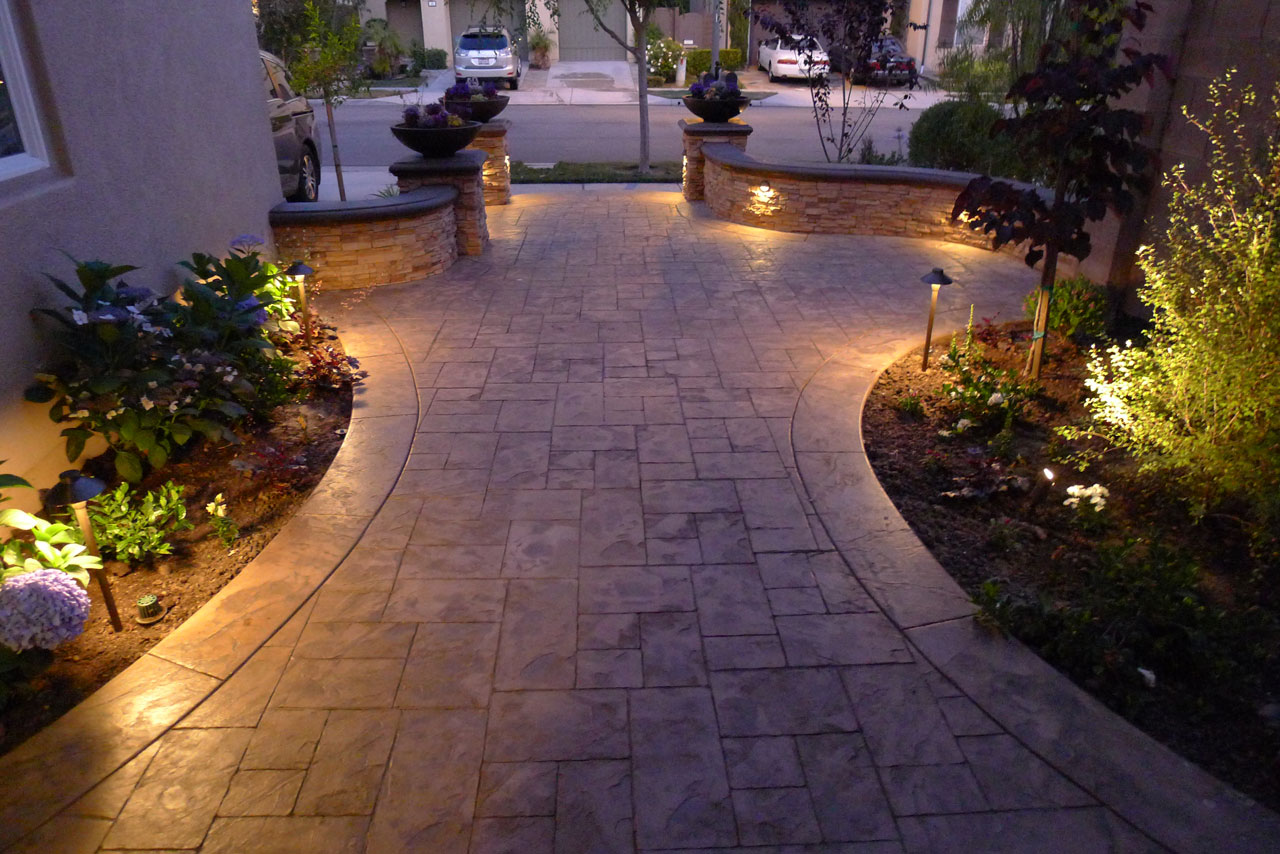
A good patio has to do more than look nice. In Orange County, outdoor paving faces strong sun, long dry spells, and winter rain. No one material works for every yard. Concrete pavers can be easy to repair in small areas. Poured concrete gives a smooth, open look. Natural stone offers varied color and texture. Yet the right choice also depends on what sits below the surface. A sound hardscaping plan looks at the whole yard.
Hardscape Materials, Color Selection, and Design Concepts should start with daily use. Will kids run across the patio? Will guests gather near a grill? Do you need a path to the pool or a place to park? The answers will guide the surface, its color, its finish, and its drainage plan. Here is how to compare common choices for Southern California homes.
The weather changes from one part of the county to another. A cool patio in a beach town may face a different test than a sunny yard inland. Slopes, shade, salt air, and soil also play a part.
The NOAA climate normals for Fullerton Municipal Airport show a normal August high of 86.7°F. The airport also has an average of 9.4 August days with highs above 90°F. These figures are for one inland weather station, not all of the county.
A paving surface in full sun can get much hotter than the air. This matters for bare feet, children, and pets. Put full-size samples outside where you plan to build. Touch them with care at the hottest part of the day. A color that looks right in a store may not feel right next to a pool.
At the same Fullerton station, normal rain is just 0.02 inches in each of July and August. Yet January has 2.85 inches and February has 3.02 inches. The monthly normals add up to 11.86 inches in a year. Most rain comes during the cooler season.
That is why engineered drainage matters as much as a pretty surface. A patio needs a plan for slope, runoff, and low spots. Water should not flow toward the house or collect at doorways. Orange County Watersheds explains how stormwater practices help manage water flow and quality. Not every home patio needs the same stormwater plan or permit. The rules depend on the site and the work.
Homes in coastal communities may face salt air and damp surfaces. Hillside homes may have steep grades and harder access. Inland yards may see more sun and heat. These conditions can change which product or finish makes sense.
Ask how a material handles the exact spot where it will go. A stone that works well on a garden wall may not suit a wet deck. On a slope, base preparation, edge support, and water flow need close review. No paving type can fix a weak base on its own.
Each material brings a different mix of look, comfort, care, and repair needs. Compare the full paving system, not just a sample of the top layer.
| Material or system | Good places to consider it | Main advantage | Main point to check |
| Concrete pavers | Patios, walks, rated driveways | Many sizes and replaceable pieces | Base, edges, joints, and load rating |
| Poured or stamped concrete | Patios, entries, broad paved areas | Clean lines and flexible shapes | Joints, cracking, finish, and wet grip |
| Natural stone | Patios, paths, suitable pool areas | Natural color and surface variation | Exact stone, thickness, and finish |
| Outdoor-rated porcelain | Selected patios and wet areas | Even sizing and controlled color | Outdoor rating, support, and traction |
| Gravel or decomposed granite | Secondary paths and garden areas | Informal look and simple changes | Loose stones, movement, and access |
| Permeable paving system | Suitable drainage-sensitive sites | Can help manage runoff | Soil, base design, clogging, and outlet |
Interlocking Pavers work well where you want clear lines, color blends, or a layout with many small units. They are worth a look for patios and walks. With the correct product and paving system, they can also work for paving stone driveways. If one piece gets stained or damaged, it may be possible to lift and replace that piece.
The American Society for Testing and Materials specification ASTM C936/C936M covers concrete pavers. It makes clear why texture, finish, color, and product needs matter. A good paver installation also needs a compacted base, sound edge restraint, and well-kept joints. Regular sand-jointed pavers are not always permeable. For more on the material, read about interlocking paving stones.
Poured concrete can make one broad patio or a gently curved path. Its open look suits many modern homes. A scored slab can add a simple grid. Stamped concrete adds surface patterns that can look like stone or brick.
Concrete still needs sound ground work, the right joints, and proper curing. Cracks can form as the slab shrinks or the ground moves. A glossy sealer may also affect grip when wet. When looking at stamped concrete finishes, ask to see the color and texture in real sunlight. A patterned finish does not make concrete act like real stone.
Natural stone can add rich color to an outdoor space. Flagstone may suit a garden path. Granite or other suitable dense stones may work in areas that see more use. Travertine pavers can give a patio a soft, warm look, but the exact type and finish matter.
Stone varies from piece to piece. Some types absorb more water or stain more easily. Some have uneven edges that can catch a shoe or chair leg. Before placing stone near a pool, ask for product data on wet grip, pool chemicals, and cleaning. Do not assume every stone stays cool or grips well when wet.
Outdoor-rated porcelain can make a patio look neat and even. Large pieces can suit a simple yard with straight lines. Some products have a stone-like look with less color change from piece to piece.
But not all porcelain tile is made for outdoor ground use. The unit must fit its base, support system, and planned loads. Ask for the maker's data on outdoor use and wet traction. A smooth indoor tile should not be used outside just because it looks the same.
Gravel and decomposed granite are common choices for garden paths and areas between planting beds. They can look softer than a broad slab. Edging can help keep loose material in place.
The tradeoff is movement. Loose stones can spread onto a patio, get caught in shoes, or make wheels hard to move. Stabilized material may be a better fit for some paths. It still needs care, and it is not a full stormwater plan on its own.
Permeable paving may help at a site where the soil and grade allow it. The U.S. EPA's guide to permeable pavement describes systems that let rain pass through the surface into stone layers below. These can include pervious concrete and special interlocking paver systems. The EPA notes that this page is no longer updated, so local design rules still need checking.
The gaps in a paver pattern do not prove that the whole surface will drain well. The soil, gravel base, overflow route, and ongoing care all matter. Open joints can clog with dirt over time. See this pavers guide for more context on paving choices.
Start with what happens on each part of the yard. A driveway takes turning cars. A pool edge gets wet. A dining area needs steady chairs. Those needs should guide the finish.
| Area | Materials to compare | First detail to check |
| Dining patio | Pavers, concrete, suitable stone | Heat, level seating, and spill cleanup |
| Pool surround | Textured pavers, tested stone, suitable concrete | Wet grip and comfort for bare feet |
| Driveway | Vehicle-rated pavers or proper concrete | Load, base, turning forces, and oil |
| Front walk | Pavers, concrete, suitable stone | Smooth joints, safe edges, and lighting |
| Outdoor kitchen | Concrete, rated pavers, suitable stone | Appliance support and grease cleanup |
| Area near a wall | Site-rated paving | Wall drainage and ground movement |
For Outdoor Living, think about the furniture first. A dining chair needs a steady surface. A table should not wobble on rough joints. Food and grease may fall near a BBQ island, so cleaning matters too.
Leave room to walk around chairs and cooking areas. Check appliance weight and heat clearance with the maker and installer. A patio surface should also meet the door at a safe height. Good outdoor kitchen planning puts use before looks.
Pool decks need careful thought. The surface gets wet, may be walked on with bare feet, and must shed water in the right direction. Pale stone may look cool, but that alone does not prove it stays cool in the sun. A textured finish may offer better grip, yet a rough surface can feel hard on feet.
Compare samples in sun and shade. Ask about pool water and salt exposure, along with the fit between paving, coping, and pool tile. A raised spa wall or a pool edge can also change how the paving meets other parts of the yard. The exact product needs to be rated for its use.
Cars put more force on a surface than people walking. Vehicle weight, turning wheels, and repeated tire tracks can test both the paving units and the base. A driveway product must be rated for that use. The same applies to joints and edge restraint.
For a front path, safe movement comes first. The U.S. Access Board states that accessible surfaces must be stable, firm, and slip resistant. Its guidance limits surface openings so a 1/2-inch ball cannot pass through. Changes in height over 1/4 inch need edge treatment; certain changes up to 1/2 inch can be beveled. These are access standards, not a claim that each private path is governed in the same way. Still, they are useful guides for trips, wheels, and walking safety.
Hard surfaces can play a part in fire-aware Landscape Design. CAL FIRE puts special focus on the first five feet next to a home. It recommends nonburning materials such as gravel, pavers, and concrete in that area.
CAL FIRE also cites 100 feet of defensible space under state law for covered properties, with some local rules being stricter. A paved strip alone does not make a home safe from wildfire. Check the local fire authority's current rules, plants, walls, gates, and other parts of the site.
Color selection is more than a style choice. It may change how hot a surface gets and how bright it looks at noon. It can also change how much dust or food marks stand out.
The EPA's cool pavement guide explains how some paving surfaces reflect more sun or use other ways to reduce heat. In one Arizona pilot cited by the EPA, dark asphalt reached 152°F at midday. The cool pavement surfaces were 10–16°F cooler. That is an example from Arizona, not a promise about any Orange County patio.
Mid-tone sand and soft gray may be worth testing before dark charcoal. But very pale finishes can give off glare. Shade, time of day, surface texture, and the exact product also matter. The smart step is to set samples outside and see how they feel and look.
Look past names like tan or gray. Two gray pavers may have very different blue or brown tones. Bring samples near the house wall, roof, entry floor, and pool finish. Compare them when wet and dry.
Earth tones often work with warm stucco and clay roofs. Muted gray may work with simpler modern lines. If the house has STONE VENEER, use one of its soft background tones to link the yard to the building. A calm color family often works better than many strong contrasts.
A driveway may show oil marks. A dining patio may catch spills. Dust, fallen leaves, and shaded damp spots can all change how a surface looks from day to day.
Ask how the product should be cleaned and which sealer choices are safe for its finish. Some sealers can change the color or wet grip. With pavers, ask whether spare units from the same batch can be kept for future repairs. Color and care should be part of the choice at the start.
A yard looks more settled when paving, walls, plants, and the house share a clear plan. You do not need a new material in every corner. Small changes in pattern or direction can be enough.
Paver patterns can shape how a yard feels. Straight rows suit long, modern lines. A running bond can add light movement. A herringbone layout creates a busier look and may suit some rated driveways. Irregular stone can feel right in a more natural garden.
Choose paver styles that fit the size of the area. Large units may look calm on a wide terrace, while a small entry may need a simpler layout. Keep borders modest. Good paver placement also limits awkward cuts and raised edges. For ideas, compare hardscaping designs for local backyards.
Too much paving can make a small yard feel bare. Planting beds break up hard lines. Trees, where site conditions allow, can add shade to seating areas. Drought-aware plants can also sit beside a patio without the look of a large lawn.
Consider Low Voltage lighting along paths or steps so people can move through the yard after dark. Keep lights aimed away from eyes and windows. Shade and planting help with comfort, but they do not take the place of good surface and drainage plans.
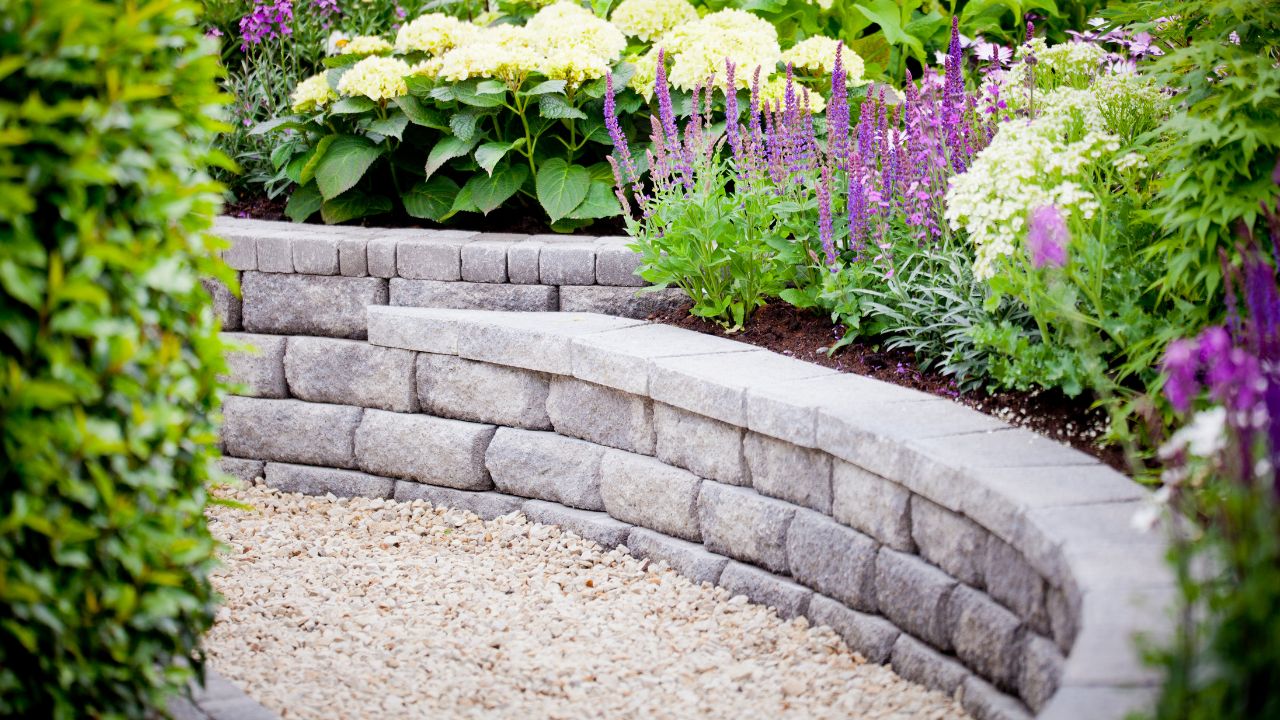
Retaining Walls can help manage a change in height, but water behind the wall needs a way out. Nearby paving should account for wall movement, slope, and runoff. Block walls and sitting walls also need neat joints and safe edges where people walk.
Think about how steps meet the patio and how a path meets a door. These joins matter just as much as the main paving field. Read more about retaining walls in Orange County yards before planning work on a sloped site.
The surface is the part you see. The work below it can make the difference between a stable patio and one with low spots or loose edges. Ask for a clear plan before work starts.
Ask what load the surface must take, how deep the base will be, where water will drain, and how edges will stay in place. Check the paver or stone grade, joint material, surface finish, and care needs. For paving services, the written scope should spell out site work, materials, and how changes will be handled.
It also helps to ask about a product warranty and a workmanship warranty. They cover different things. Find out what happens if a small area settles or a stained paver needs to be replaced. No standard price or warranty term can be assumed from the type of material alone.
Rules can change by city, lot, and project type. A slope, pool, wall, or drainage change may bring extra review. An HOA may also have rules for color or finish. Check permit needs and any stormwater conditions before you order materials.
Orange County's water quality requirements for land development cover certain kinds of new work and major changes. They do not mean that every simple home patio needs the same formal plan. Ask the local office when the scope is not clear.
A sound plan weighs daily use, sun, rain, access, and the look of the home. The final result should feel good to walk on, fit the yard, and be simple enough to care for. These checks help narrow Hardscape Materials, Color Selection, and Design Concepts before anyone breaks ground.
For an Orange County project, Signature Landscape can help plan and build patios, Interlocking Pavers, stamped concrete, walkways, Retaining Walls, outdoor kitchens, and drainage work. Our consultation-led approach starts with your site and how you want to use it. Contact us to request an estimate and discuss a plan that fits your home.
Both can work well. Pavers let you replace a small damaged area without taking out the full patio. Poured concrete gives a more open look and can form curves with ease. Your choice should depend on the base, finish, budget, and look you want.
Light or mid-tone colors are worth testing because some reflect more sunlight than dark colors. But color alone cannot tell you how hot a surface will get. Shade, texture, and the exact finish play a part. Set samples outdoors before picking a final color.
No. Standard pavers often use sand-filled joints and are not built as a full permeable system. A true permeable design needs the right joints, base layers, and water outlet or soil conditions. It also needs upkeep to limit clogging.
Start with finishes made for wet outdoor use. Look at suitable pavers, tested stone, textured concrete, and rated porcelain products. Ask about wet grip, bare-foot comfort, pool water, and drainage. The exact product and finish matter more than the broad material name.
Look for puddles that last, mud near doors, or water that flows toward the house in rain. Note low spots and any soil that washes down a slope. These signs call for a site review, though they do not prove one single cause. Set the drainage route before choosing the finished paving surface.
Schedule A Consultation