Call our Professional Contractors!
(949) 859-9969
A small backyard does not need a long list of features. It needs a plan that fits daily life. In Orange County, even a narrow patio can hold a place to eat, a path to the gate, and room to relax. But each new wall or counter takes up space. The trick is to choose what matters and give each part of the yard a clear job.
These 10 ideas bring Hardscape Materials, Color Selection, and Design Concepts together in one simple plan. You will see ways to use pavers, concrete, sitting walls, paths, and lights in compact outdoor living spaces. If you are comparing options, start with the basics of hardscaping design and installation and think about how you want to use the space each week.
Good Outdoor Living Design starts with the people who use the yard. A family that eats outside may need a firm dining patio more than a fire pit. Someone who likes to host friends may prefer a long bench rather than six extra chairs. A dog owner may want a patch of artificial turf or another soft surface instead of paving every inch.
Walk through the yard before you pick a finish. Note each door, gate, drain, tree, and sunny spot. Measure the table and chairs you own, then leave room to pull out a chair and walk past it. A sketch that looks open can feel tight once the furniture is in place.
Color matters, too. Start with the house. A warm stucco wall may work with sand or taupe paving. A gray home may look good with soft gray stone and one dark edge. You do not need a new color for each area. One main tone, one accent, and plants can create a calm look.
The EPA WaterSense landscape guide advises planning around how you use the space, local weather, sun, shade, and upkeep. Those are sound starting points for sustainable landscaping, even when the yard has little room for plants.
The same material will not suit every part of a yard. A dining area needs a firm place for chairs. A path needs safe footing. A grill area needs a surface that you can clean. Here is a quick way to compare common choices.
| Material | Where it fits | Color direction | What to check |
| Concrete pavers | Patios and walkways | Sand, taupe, soft gray | Base, edges, joints, heat |
| Stamped concrete | Open patios and paths | Gray, tan, earth tones | Cracks, traction, drainage |
| Natural stone | Patios, caps, accents | Cream, beige, mixed stone | Texture, stains, stone care |
| Permeable paver system | Paths and some patios | Neutral blends | Soil, base, water outlet |
| Stabilized gravel | Side paths and planted strips | Tan or warm gray | Loose stones, edging, access |
| Concrete or masonry walls | Seats and planter edges | Match the patio or house | Support, comfort, drainage |
Natural stone also needs the right cleaning method. The Natural Stone Institute warns that some stones react to acidic cleaners. It also notes that a sealer can help resist stains but cannot stop every stain. Ask how a finish should be cleaned before you buy it.
Each idea below pairs a layout choice with a material and color plan. You can use one idea on its own or mix a few that serve the same goal. Keep the main walking route open as you plan.
Many small patios look busy because the ground has too many lines or colors. Large concrete pavers can create a calmer field with fewer visible joints. Choose a soft sand, taupe, or warm gray. Then let the table, chairs, and plants add contrast.
This idea works well outside sliding doors. A single patio surface can link the indoor view to the space outdoors. Large pavers can also suit a classic home when the finish has a warm stone look. The size does not have to feel stark or modern.
A larger paver is not a shortcut around good site work. The base, slope, joints, and edges still need care. Before choosing a unit size, ask how many cuts will be needed around drains and borders. Browse paver stone options for material ideas.
A small yard may have a nice tree, planter, or quiet corner. Use the direction of the paving to draw the eye toward it. A running-bond pattern with long rows may suit a narrow patio. A diagonal pattern can add motion to a square one.
Let the shape carry the style. Keep the field color simple, then add a border just a little darker if the edge needs more detail. For example, light tan pavers with a muted brown band may sit well beside a cream house.
Patterns can change how a space feels, but no pattern makes it larger in real terms. A diagonal layout can also need more cuts at the edges. Test the pattern on a scaled plan before you order interlocking pavers.
A low sitting wall can provide seats without filling the patio with chairs. It also gives the yard a clear border. This works well by a dining spot or next to a fire feature, where guests may want extra places to sit for a short time.
Poured concrete or finished block can work. Match the wall face to the patio, then use a darker cap for contrast. A smooth cap may also make the seat look more finished. Add loose cushions when needed, but plan where you will store them.
Not every wall is built for the same job. A seat wall that stands on its own is not the same as a wall that holds back soil. Check seat comfort, foot space, drainage, and support before work begins. A concrete sitting wall can be a useful part of a compact patio plan.
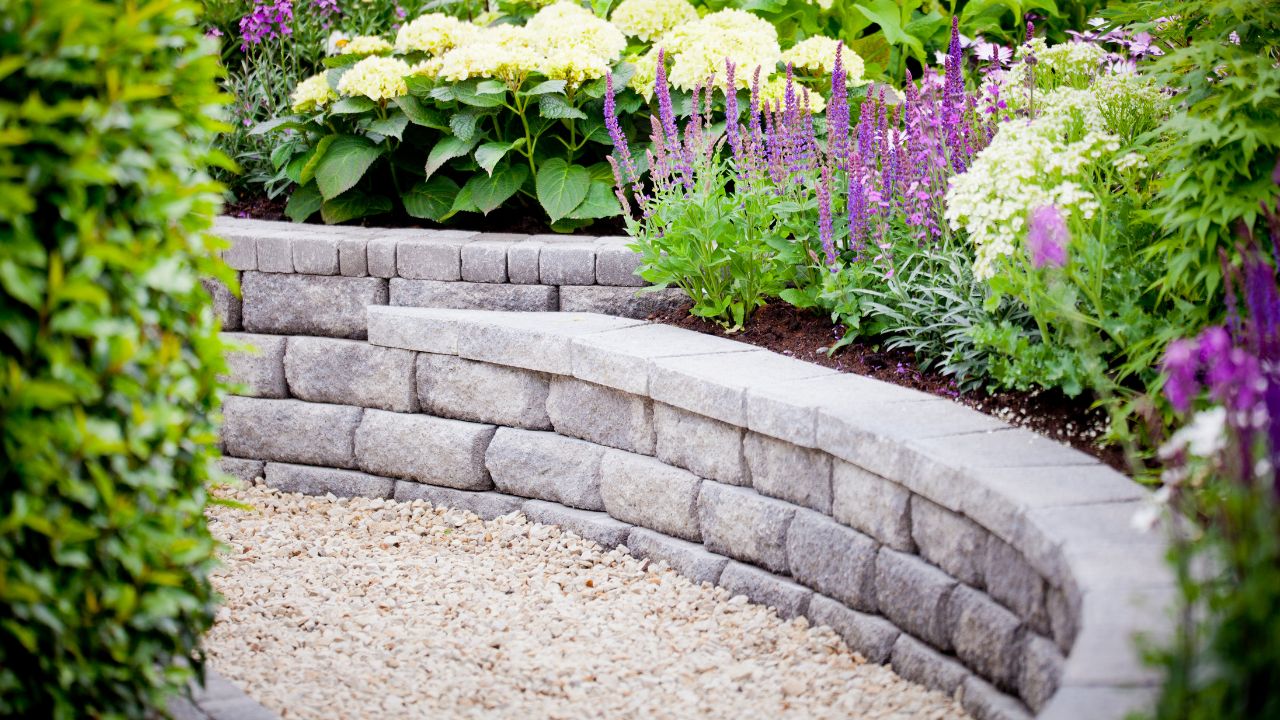
Plants can soften stone and concrete. Yet a row of pots can take up floor space and block paths. A raised planter at the edge can keep flowers or shrubs in one place. A wide, safe cap may also serve as a short-term seat, where the structure allows it.
Choose a wall color close to the patio tone. Let green leaves supply the stronger color. This keeps the yard from looking like a patchwork of separate parts. Low-water plants can make sense in sunny areas, but each plant still needs the right soil and water.
If the planter holds back a slope, it may count as a retaining structure. Retaining walls need design that suits the load, soil, and drainage. A decorative edge should never be treated as a fix for a slope without a site check.
A narrow side yard does not always need a full concrete slab. Spaced paving stones with gravel between them can mark a route without making the whole ground look hard. Warm gravel and cream pavers create a soft look. Gray stones with charcoal edging can feel more modern.
For a busier path, a true permeable paver system may be easier to walk on than loose gravel. But ordinary pavers with sand joints are not always permeable. Water flow depends on the units, joints, base, soil, and where excess water goes.
The EPA WaterSense guide shows western yards that mix permeable patio areas with low-water planting. It is a useful example of mixing paved areas with plants, though each yard still needs its own drainage review. Gravel may not suit all mobility needs, pets, or play areas.
Large islands can crowd a short patio. A slim counter set along a boundary leaves the center open for eating and walking. In compact outdoor kitchens, a grill, a small prep area, and storage may be enough. A built-in outdoor sink is an option only if plumbing and space make sense.
Choose a light base that ties into the patio. A dark counter can add a clear line without covering the whole yard in dark material. An L-shaped layout may work where a corner has room, but keep the gate and dining route clear.
BBQ Areas also need safe space around hot equipment. If you are considering outdoor gas griddles, check the appliance guide, fuel supply, ventilation, and nearby surfaces. Electrical work, plumbing, and covered areas may need added review. A compact outdoor kitchen should fit the household's real cooking habits.
A yard can feel crowded when it has a fountain, fire pit, statue, and large planter in the same view. Choose one main feature instead. A small fire pit can frame a sitting area. A simple planted bed can be the focus when open flames do not suit the site.
Use stronger color at the feature and quieter paving around it. A dark fire feature on a soft gray patio can stand out without another patterned floor. Keep seats and paths clear of the feature's working area.
Do not choose a fire pit by size alone. Fuel type, overhead cover, nearby materials, and city rules all matter. A small space is not always a safe space for fire. Set the layout first and confirm the local requirements before buying equipment.
A border can make a plain patio feel finished. It can also show where the paved area stops or a new path starts. You might pair warm gray pavers with charcoal at the edge, or tan paving with muted brown.
Use contrast in small doses. A broad dark field may feel heavy in a sunny yard, while a thin dark band gives the eye a clear line. Stamped concrete can also create bands or scored details where the finish suits the space.
Near steps, a change in tone may make an edge easier to see. Yet color cannot fix unsafe step height or missing lighting. Shape, footing, and visibility must be checked as one plan.
A small patio can be useful long after sunset. Low-voltage lights set under wall caps or along paths can show where to walk. They also help reveal stone and concrete texture without filling the yard with large fixtures.
Warm light tends to sit well with tan paving and natural stone. Dark fixture faces may blend into charcoal caps. Pick light output based on what the area needs. A bright beam pointed at chairs or a neighbor's window is rarely pleasant.
Plan outdoor lighting while the patio and walls are still on paper. Wires, power, wet-location fixtures, and later access are harder to address after the surface is in place. A small, calm lighting plan may serve outdoor living spaces better than many bright fittings.
You can divide a yard without putting a barrier between each activity. Set a dining table on the main paver field. Turn the same pavers in a new direction near the lounge chairs. Add a narrow planted strip where one area meets the next.
This works for media entertainment areas, too. A screen or speaker may call for power and weather-rated outdoor electronics, but the space should still be comfortable when the equipment is off. Keep sightlines, seating, and walking space at the center of the plan.
Use two or three related finishes at most. A yard with a new floor for every task may feel broken into small pieces. Measure furniture and mark each spot on the ground before setting permanent bands or power lines.
Hardscape Materials, Color Selection, and Design Concepts all affect how a patio looks and feels. A photo cannot tell you how hot paving will feel on a sunny day. Color, material, finish, moisture, and shade all play a part. Light tones may reflect more sunlight than dark tones, but some bright finishes also cause glare. Ask to view full-size samples outdoors at different times.
The U.S. EPA's cool pavement research cites a Phoenix pilot in which standard asphalt reached 152°F at midday. Cool pavement areas were 10–16°F cooler. That study does not mean a light paver in Orange County will see the same change. It shows why heat should be part of the material choice, not an afterthought.
Shade can help, as can plants and less solid paving. If you want a soft play patch, artificial turf may be worth comparing with planting and other groundcovers, but synthetic surfaces also need a heat and drainage check. Never judge barefoot comfort from a color sample alone.
A good plan must work below the surface as well as above it. Look at where rain runs now, where drains lead, and whether the ground slopes toward the house. Find utility lines before digging. Check gate access for tools and materials, too. Small yards can be hard to reach, which may shape the work plan.
Rules can vary from one city to another. No one permit rule covers all backyard jobs. Your city's local government may need to review some structural, gas, or electrical work. A homeowners association may have its own review process. Check the right city office rather than relying on a general county rule.
For help checking contractor status and planning a written scope, use the California Contractors State License Board homeowner resources. You can also ask a design-build contractor how drainage, utility work, and permits will be handled. If the project uses 3D renderings, compare the images with real furniture sizes and site measurements. A clear drawing is helpful, but it still needs a sound plan for the ground.
Concrete pavers are a flexible choice for patios and paths. Stamped concrete can work when you want one smooth-looking field with a pattern. Natural stone adds varied color, but care needs can change by stone type. The right choice depends on how you use the yard, sun exposure, drainage, and upkeep.
Soft gray, sand, and taupe can make the floor look calm. A single main tone often feels less busy than several strong contrasts. Match the patio to a color already on the home. View samples outdoors because shade and direct sun can change how they look.
A true permeable system can let some rainwater pass through its surface. But the base, soil, and overflow route must also be planned. It is not enough to use standard pavers and assume water will soak in. A site check can show whether this option makes sense.
Sometimes it can, but not every layout should have both. Each feature needs clear space for people to move and use it safely. Fuel, heat, ventilation, and nearby surfaces matter as much as size. Test both areas on a measured plan before making a choice.
Choose finishes based on stains, cleaning, and daily use. Sweep joints and keep drains clear. Clean stone with a product suited to its type, and ask whether sealing is advised. Check walls, lights, and paved edges as part of routine yard care.
At Signature Landscape, we plan and install patios, pavers, sitting walls, retaining walls, outdoor kitchens, and lighting for homeowners in Orange County. Our outdoor remodeling work starts with how you want to use your yard, then looks at materials, color, paths, and site needs. If you are planning a compact patio or a full backyard update, request a free quote and share your ideas, photos, and goals with our team.
Schedule A Consultation