Proper grading is the foundation: Establishing a minimum 1-2% slope away from the garage reduces water volume by 88% on average (from 393 gallons/hour to 46 gallons/hour), making it the most effective permanent solution before considering mechanical systems.
Trench drains provide garage entrance protection: Linear drains installed across driveway aprons achieve 95% effectiveness for driveway ponding, intercepting water before it reaches structures, even on slopes that cannot be corrected through regrading.
System selection depends on specific failure mode: Negative slopes require regrading ($1,800-$4,500), concentrated flow needs trench drains ($2,500-$6,000), and low-spot pooling demands catch basins ($300-$500 per unit). Identifying the root cause prevents wasting money on inappropriate solutions.
Professional installation ensures longevity: Properly installed drainage systems last 30-50+ years when designed with correct slopes (minimum 1% for pipes), smooth-walled materials (PVC/HDPE instead of corrugated), filter fabric on subsurface components, and reliable discharge outlets.
Preventive maintenance preserves effectiveness: Annual debris clearing, catch basin cleaning every 2-3 years, and professional subsurface inspections every 5-10 years maintain system performance and protect the investment in permanent drainage infrastructure.
Driveway flooding happens when water cannot flow away from paved surfaces due to improper slope, blocked drainage systems, or inadequate outlets. Grading and drainage upgrades fix it permanently by establishing positive slopes (1-2% minimum away from structures), installing collection systems like trench drains at critical points, and providing reliable discharge pathways to storm sewers or safe outlets.
This guide covers everything from identifying drainage failures to selecting cost-effective systems that protect your property for decades.
What Causes Driveway Flooding?
Driveway flooding results from identifiable grading and drainage failures that prevent water from escaping paved surfaces. These problems range from simple slope deficiencies to complex system failures, but all share a common characteristic: water has nowhere to go. Understanding the specific cause on your property determines which driveway flooding solutions will work.
Common drainage problems causing driveway flooding:
Negative or insufficient slope: Driveways sloped toward the garage instead of away, or slopes less than the minimum 1-2% grade required for effective drainage
Undersized or blocked drainage systems: Existing drains overwhelmed by water volume or clogged with debris, preventing proper flow
Concentrated roof runoff: Downspouts discharging directly onto driveway surfaces without extensions (minimum 4-6 feet away from structures required)
Inadequate surface drainage collection: No catch basins or trench drains installed at low points where water naturally accumulates
Soil compaction: Compacted soil from construction preventing water infiltration, forcing all water to run across surfaces
Failed or missing discharge outlets: Drainage pipes with blocked exits, frozen outlets, or no connection to storm systems
How Does Driveway Grading Prevent Flooding?
Proper grading for drainage establishes the foundation for all effective driveway drainage by creating gravitational flow paths that move water away from structures. This involves correcting slopes, eliminating low points at building entrances, and integrating surface grades with subsurface drainage systems. Grading alone can resolve many flooding problems without additional infrastructure.
How proper driveway grading directs water flow:
Establishes minimum 1-2% slope away from garage: Creates gravitational flow directing water toward street or designated drainage points
Converts negative slopes to positive drainage: Proper grading transforms problematic slopes (water flowing toward house, typically -1.6% to -2.5%) into ideal positive slopes (+2.0% to +3.0% away from structures)
Achieves 88% average water volume reduction: Grading corrections consistently reduce water volumes from an average of 393 gallons/hour to just 46 gallons/hour across typical residential locations
Creates defined water pathways: Grading establishes clear channels and flow patterns, preventing random pooling and directing runoff to collection points
Eliminates ponding at garage entrance: Proper crown or cross-slope prevents the low point from occurring at the structure's entry
Integrates with subsurface drainage: Surface grading works with underground systems by directing water to catch basin locations and drainage inlets
What Are The Different Types Of Drainage Systems For Driveways?
When grading alone cannot resolve driveway flooding, mechanical drainage systems collect and remove water from problematic areas. The choice between surface drains (trench drains, catch basins) and subsurface systems (French drains) depends on water volume, slope constraints, and discharge options. Combining multiple system types often provides the most reliable long-term solution for runoff control driveway applications.
Drainage system types for driveways:
Trench Drains: Linear channels installed across driveway width (typically at garage entrance) with grated covers; optimal effectiveness rating of 95 for driveway ponding; intercepting sheet flow before it reaches structures
Channel Drains: Similar to trench drains but often used along driveway edges; HDPE channels with rebar support and concrete bedding; collecting water running parallel to pavement
Catch Basins: Grated surface inlets with debris-trapping boxes; cost $300-$500 per unit plus pipe installation; installed at low points to collect pooled water
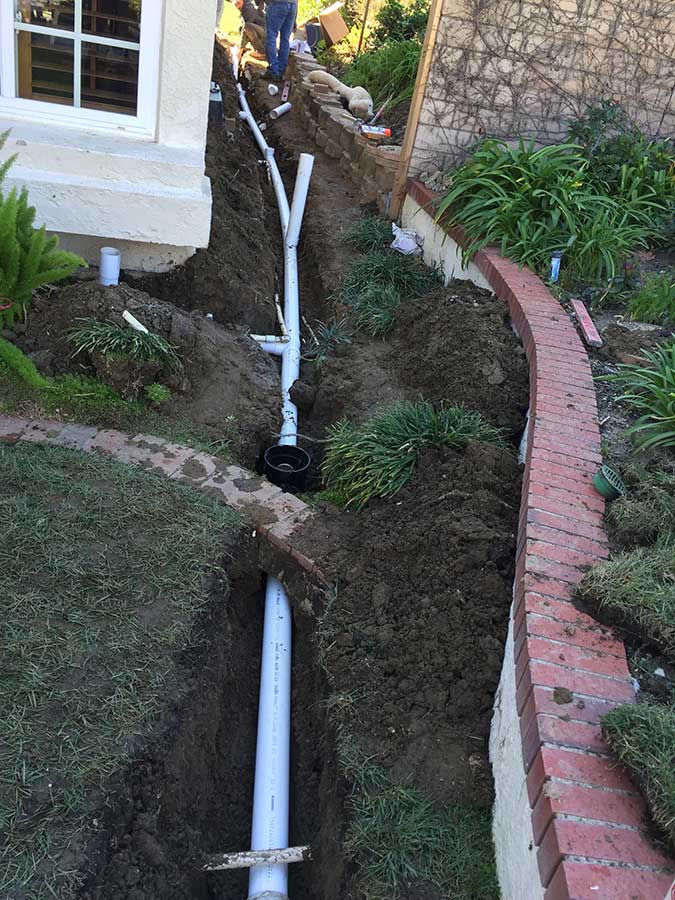
French Drains: Subsurface gravel-filled trenches with perforated pipe; effective for managing both surface and shallow groundwater around driveway perimeters; cost $10-$100 per linear foot
Area Drains: Surface collection points with grates; require solid non-perforated pipe connection; minimum 1% slope (1/8 inch per foot) for gravity drainage to discharge point
Comparison Of Surface Drain Options For Driveways
Type of Drain
Pros
Cons
Best Use Cases
Trench Drain
• 95% effectiveness for driveway ponding• Intercepts water across entire width• High capacity for concentrated flow• Longevity: 30-50+ years
• Requires concrete encasement• Higher installation complexity• Needs maintenance every 5 years
• Garage entrance protection• Sloped driveways directing water toward structure• High-volume runoff areas
Channel Drain
• Linear collection along edges• Clean aesthetic integration• Effective for sheet flow management
• Must be flush with pavement• Can collect debris requiring cleaning
• Driveway perimeter drainage• Alongside retaining walls• Paved areas adjacent to landscaping
Catch Basin
• Collects water at specific low points• Traps debris preventing pipe clogs• Cost-effective ($300-$500/unit)
• Requires multiple units for large areas• Needs cleaning every 2-3 years• Limited to point collection
• Natural low spots in driveway• Intersection of multiple slopes• Supplementing other drainage systems
French Drain
• Manages surface and subsurface water• Versatile placement options• Long lifespan (30-40 years)
• Hidden system, harder to inspect• Can experience root intrusion• Costs $3,000-$7,500 for typical installation
• Driveway perimeter where water accumulates• Properties with high water table• Intercepting water on sloped lots
How Can You Improve Your Driveway's Drainage System?
Effective driveway drainage improvement combines grading corrections with targeted collection systems and reliable discharge pathways. The best approach addresses the specific failure causing flooding, whether improper slope, inadequate collection, or blocked outlets. Most successful solutions integrate multiple components working together to manage water from initial contact through final discharge.
Best drainage solutions for driveways:
Install trench drain at garage entrance: Heavy-duty linear drain installed across the driveway apron intercepts all water before it reaches the garage; prevents flooding even on slopes that cannot be regraded
Regrade to achieve 1-2% positive slope: Professional regrading establishes proper slope away from garage and toward street or drainage collection points; most effective permanent solution
Add catch basins in low spots: Strategic placement of catch basins ($300-$500 per unit) at natural collection points captures pooled water and directs it to storm sewers or safe discharge areas
Extend downspouts minimum 4-6 feet away: Redirects concentrated roof runoff away from driveway surfaces using solid smooth-walled pipe rather than corrugated alternatives that clog easily
Connect to municipal storm sewer system: Direct tie-in provides reliable high-capacity outlet for driveway runoff; eliminates concerns about on-property discharge saturation
Install permeable pavers in appropriate areas: Allows rainwater to percolate through the surface into the gravel base below; reduces overall runoff volume, requiring management
How To Assess Your Driveway's Drainage Needs?
Accurate assessment identifies the specific drainage failures requiring correction before implementing solutions. This involves observing water behavior during rain events, measuring actual slopes, and evaluating existing system capacity. Proper assessment prevents wasting money on solutions that don't address the root cause ofhardscape drainage repair needs.
Signs of poor drainage in driveways:
Standing water or puddles lasting more than 24 hours after rainfall events
Water flowing toward the garage or home instead of away from structures
Water entering the garage during rain indicates inadequate protection at the entry point
Negative slope measurements (water flowing toward the house instead of a minimum 1-2% away)
Erosion along driveway edges showing uncontrolled water flow paths
Ice formation at the garage entrance in winter from the pooled water freezing
Common mistakes to avoid when assessing drainage:
Failing to measure actual slope: Assuming slope is adequate without verification; proper minimum is 1-2% grade away from structures
Overlooking discharge point capacity: Installing drainage systems without ensuring outlets can handle volume; blocked or frozen outlets cause entire system failure
Ignoring upstream water sources: Not accounting for concentrated roof runoff from downspouts depositing water onto driveway surfaces
Using corrugated pipe: Selecting corrugated pipe prone to clogging and crushing instead of smooth-walled PVC or HDPE professional standard
Skipping filter fabric on subsurface systems: Installing perforated pipe directly in soil without geotextile fabric allowing fine particles to clog system (called silting)
Undersizing the drainage system: Installing systems too small for water volume; requires professional design and sizing to prevent overwhelming
What Are The Benefits Of Proper Grading And Drainage For Your Driveway?
Investing in proper driveway drainage delivers immediate flood prevention and long-term structural protection that far exceeds installation costs. Well-designed systems eliminate water-related damage, extend pavement life, and require minimal maintenance over decades of service. The combination of functional and aesthetic improvements protects property value while preventing expensive repairs.
Aesthetic and functional benefits:
88% average water volume reduction: Proper grading corrections consistently reduce water threatening structures from 393 gallons/hour to just 46 gallons/hour
Complete garage flood prevention: Trench drains and proper grading eliminate water entry into garages even during heavy storms
Extended driveway lifespan: Properly installed drainage systems last 30-50+ years; preventing water damage that accelerates pavement deterioration
Prevented structural damage: Eliminating hydrostatic pressure against garage foundations and home perimeters; avoiding costly repairs far exceeding drainage system costs
Improved property curb appeal: Dry, clean driveways without standing water, staining, or erosion patterns; maintaining property value
Reduced ice hazard risk: Eliminating pooled water that freezes into dangerous ice sheets at garage entrances during winter months
Lower maintenance requirements: Well-designed systems require minimal intervention; catch basins need cleaning every 2-3 years, subsurface systems every 5-10 years
What Should You Do If Your Driveway Floods?
Active flooding requires both immediate mitigation and permanent solution planning. Start by identifying the specific failure, improper slope, blocked drains, inadequate capacity, or failed outlets, then implement temporary diversions while designing permanent fixes. Some situations demand professional intervention, particularly when grading is complex or infrastructure connections are required.
Steps to repair flooded driveway:
Inspect current slope and grading: Verify if driveway has minimum 1-2% slope away from garage; identify negative slopes flowing toward structure
Clear all debris from existing drains: Remove leaves, sediment, and blockages from grates, catch basins, and visible drainage components
Check discharge outlets for blockages: Ensure drainage pipe exits are clear of debris, snow, ice, and not creating problems for neighboring properties
Assess if system is undersized: Determine if existing drainage capacity is overwhelmed by water volume; may require additional collection points or larger pipes
Remove standing water temporarily: Use pumps or manual methods to clear immediate flooding while planning permanent solution
Implement temporary diversions: Create temporary berms or channels to redirect water away from garage until permanent fixes installed
Document flooding patterns: Take photos during rain events showing water flow, pooling locations, and entry points to guide professional assessment
When to call a professional for driveway flooding:
Complex grading requirements: Property topography makes achieving proper slope difficult; it requires professional design and equipment
Trench drain installation needed: Installing linear drains across the driveway requires excavation, concrete work, and precise slope calculations
Storm sewer tie-in required: Connecting drainage systems to municipal storm sewers needs permits, proper connections, and code compliance
Severe or ongoing flooding: Persistent problems despite attempted fixes; indicates need for comprehensive drainage repair design
Foundation concerns: Water threatening garage or home foundation integrity; professional assessment prevents costly structural damage
Multiple interconnected issues: A combination of poor grading, inadequate systems, and no discharge outlet requiring integrated solution
How Much Does It Cost To Fix Driveway Flooding Issues?
Professional driveway drainage solutions range from simple downspout extensions ($180-$400) to comprehensive regrading and storm sewer connections ($4,000-$8,000+). Costs vary based on driveway size, slope correction severity, soil conditions, and whether municipal tie-ins are required. Most homeowners spend $2,500-$6,000 for effective permanent solutions combining grading corrections with targeted collection systems.
Average Costs For Common Drainage Fixes
Type of Service
Average Cost
Factors Affecting Cost
Driveway Regrading
$1,800 - $4,500
• Driveway size and square footage• Extent of slope correction needed• Soil type and compaction• Equipment access and site constraints
Trench/Channel Drain Installation
$2,500 - $6,000
• Linear feet of drain required• Concrete cutting and removal• Drain capacity and material quality• Connection to discharge point
Catch Basin Installation
$300 - $500 per unit+ $10 - $100/ft for pipe
• Number of basins needed• Excavation depth required• Pipe length to discharge point• Basin size and capacity
French Drain Perimeter System
$3,000 - $7,500
• Total linear footage• Excavation depth and soil conditions• Pipe and gravel material costs• Filter fabric and installation complexity
Downspout Extensions
$180 - $400
• Number of downspouts• Extension length needed (min 4-6 ft)• Solid pipe vs. flexible materials• Discharge point preparation
Storm Sewer Connection
$1,500 - $4,000
• Distance to municipal system• Permit and inspection fees• Pipe sizing and material• Roadway or sidewalk restoration
Cost Breakdown Of Professional Driveway Regrading
Cost Component
Typical Range
Description
Site Assessment & Design
$200 - $500
Professional evaluation of drainage needs, slope calculations, and design specifications
Equipment Rental/Operation
$500 - $1,200
Excavators, graders, compaction equipment for reshaping driveway surface and base
Material Costs
$400 - $1,500
Base aggregate, compaction materials, topsoil for surrounding areas, surface restoration materials
Labor Costs
$800 - $2,000
Skilled operators for grading equipment, installation crew, finishing work (2-3 day project typical)
Permits & Inspections
$100 - $300
Local permits for grading modifications, final inspection fees if required by municipality
Total Project Cost
$1,800 - $4,500
Complete regrading establishing proper 1-2% slope away from garage with professional installation
Note: Costs based on typical residential driveway (400-600 sq ft). Larger driveways or severe grading issues increase costs proportionally. Regional labor rates vary significantly.
How To Keep Your Driveway Flood-Free?
Permanent driveway drainage solutions require ongoing maintenance to preserve their effectiveness over decades of service. Most systems need minimal intervention, annual debris clearing, periodic inspections, and prompt repairs when problems emerge. This proactive approach protects your investment and prevents minor issues from becoming expensive failures.
Key steps to maintain proper grading and drainage year-round:
Annual inspection and grate clearing: Inspect driveway slope and drainage systems each spring; clear all debris from trench drains, catch basins, and area drains to maintain flow capacity
Downspout extension verification: Check that all extensions remain connected and discharge minimum 4-6 feet from driveway; repair or replace damaged components
Every 2-3 years catch basin cleaning: Inspect and remove accumulated sediment from catch basins preventing reduced collection capacity
Monitor grading and add material as needed: Check for settling around the driveway perimeter that creates negative slopes; add soil to maintain a positive 1-2% grade away from the garage
Every 5-10 years, professional subsurface inspection: Have French drains and underground systems professionally inspected and flushed to prevent sediment buildup and ensure longevity of 30-50+ year expected lifespan
Keep discharge outlets clear: Ensure all drainage pipe exits remain unobstructed by debris, snow, ice, or vegetation, preventing system backups
Address problems immediately: Fix drainage issues when first noticed rather than waiting; this prevents expensive foundation repairs that far exceed drainage system installation costs
Driveway flooding threatens your garage, foundation, and property value, but professional grading and drainage solutions eliminate these risks permanently.Get a free drainage assessment and quote from Signature Landscape to protect your property investment.
Interested in transforming your outdoor space into a lush oasis? Fill out the form below to schedule a consultation with our Hardscaping & Landscaping Experts and bring your vision to life!