The 24-72 Hour Response Window Is Critical: Water damage progresses from surface saturation to mold establishment within 72 hours, with repair costs increasing 300-500% when response is delayed beyond this threshold.
Electrical Safety Comes First in Any Water Emergency: Shut off power at the main breaker before entering flooded areas; 6 inches of moving water can knock adults off their feet, and energized water creates a lethal electrocution risk.
Most Residential Water Damage Stems from Plumbing Failures, Not Storms: Clogged gutters, sump pump failures, and HVAC drainage issues cause more damage than direct roof penetration, making systematic maintenance critical.
Proper Documentation Determines Insurance Claim Success: Take extensive photos and videos before cleanup, maintain detailed damage inventories, and report damage within 24-48 hours to achieve approval rates above 90%.
Prevention Costs Dramatically Less Than Emergency Repair: The average water damage claim costs $13,954, while preventative measures represent fraction-of-a-percent investments that prevent catastrophic losses.
Water intrusion during heavy storms creates cascading damage that escalates exponentially with each passing hour. Homeowners face a critical decision window: respond immediately and contain damage to thousands of dollars, or delay and risk structural failure exceeding $100,000.
This guide provides the actionable framework homeowners need to protect their most valuable asset.
Why Is My House Leaking After Heavy Rain?
Water enters homes through predictable failure points during heavy rain. Most damage stems from plumbing system failures and compromised building envelope components rather than direct storm exposure. Understanding where water penetrates and which systems commonly fail enables rapid diagnosis and targeted response, particularly critical when dealing with awater damage emergency that requires immediate professional assessment.
The 2023-2025 period saw dramatically increased storm frequency, 27 billion-dollar disasters in 2024 alone, versus a 9.0 historical average.
Common Causes Of Leaks During Heavy Rain (Ranked By Frequency)
Leaky roof - Most common cause
Clogged gutters - Prevents proper water drainage
Blocked drains - Causes water backup
Bad plumbing - General plumbing system failures
Faulty HVAC - AC condensation and drainage issues
Corroded pipes - Age-related deterioration
Sump pump failure - Basement flooding risk
Sewage backup - Contaminated water intrusion
Key Finding: Most water damage comes from plumbing failures rather than storms themselves.
Typical Water Entry Paths During Storms
Roof penetration - Through damaged shingles, flashing, or valleys
Foundation seepage - Via cracks or porous concrete under hydrostatic pressure
Window and door frames - Through compromised seals or flashing
Basement walls - Through foundation cracks, especially horizontal cracks, indicating structural stress
Plumbing system backups - Through overwhelmed drainage systems
Most Critical Problem Areas To Inspect
Roof components - Shingles, flashing, valleys, and penetrations
Foundation walls - Look for horizontal cracks (serious structural concern) vs. vertical cracks (often minor)
Basement floor and walls - Check for pooling water, dampness, or efflorescence
Gutters and downspouts - Verify they're clear and directing water away from the foundation
Sump pump system - Test pump function and battery backup
Grading around foundation - Ensure soil slopes away from the house
Critical Stat: 99% of all 3,144 counties in the United States experienced a flood event between 1996 and 2022.
How Do I Stop A Leak Immediately To Prevent Further Damage?
Immediate containment determines the total damage scope. The first 24 hours represent the critical intervention window, during which water begins saturating structural materials immediately, compromising drywall, wood framing, and insulation. For situations requiring professional assistance with emergency plumbing and drainage, contacting drainage repair specialists can prevent minor issues from becoming catastrophic failures.
Immediate Actions To Block Water Entry Temporarily
Deploy sandbags or water-activated flood barriers to redirect water away from entry points
Apply emergency roof tarping for active roof leaks (only if safe to do so)
Use the controlled ceiling puncture technique, puncture the bulging ceiling to channel water into a bucket, preventing a larger ceiling collapse
Install plastic sheeting over compromised windows or doors
Close the main water shutoff valve if the source is internal plumbing (turn clockwise until fully closed)
Critical Safety Threshold: Just 6 inches of moving water can knock an adult off their feet; 1 foot of moving water can sweep a vehicle away.
Ways To Contain Water And Prevent Spreading
Place towel barriers at doorways to prevent water migration between rooms
Use buckets strategically positioned under active leak points
Deploy plastic sheets on floors to protect the flooring and create containment zones
Remove area rugs and move furniture from the water's path to prevent absorption and secondary damage
Create drainage pathways directing water toward floor drains or exterior exits
Damage Threshold: Just 1 inch of water in a home can cause up to $25,000 in damage.
What Are The 5 Emergency Steps To Take Right Now For A Leaking House?
Follow this prioritized sequence: electrical safety first, source control second, documentation third, extraction fourth, drying fifth. The 72-hour window between initial water contact and mold establishment drives urgency. Homeowners experiencing severe house leaks after heavy rain should consider professional storm damage assessment to identify hidden structural compromises.
The 5 Critical Emergency Steps
Step #
Emergency Action
Immediate Actions Required
Critical Timeline
1
Prioritize Electrical Safety
• Shut off power at main breaker if accessible from dry location• If breaker is in flooded area, evacuate and call utility company• NEVER enter flooded area with power on
Immediate (0-5 minutes)
2
Stop the Water Source
• Close main water shutoff for internal leaks• Deploy sandbags/barriers for external water• Use controlled ceiling puncture for roof leaks
Immediate (5-15 minutes)
3
Document for Insurance
• Take extensive photos and videos of water levels• Document source of leak and all affected areas• Contact insurance agent immediately
Within 1 hour
4
Begin Water Removal
• Use wet/dry vacuum for <2 inches of water• Call professionals for larger volumes• Remove wet carpets, furniture, saturated materials
Within 24 hours
5
Dehumidify and Air Circulation
• Install commercial-grade dehumidifiers• Deploy high-volume fans throughout affected areas• Continue until materials reach normal moisture levels
Within 24-72 hours
Critical Stat: The average cost of a water damage insurance claim between 2018 and 2022 was $13,954.
Essential Tools And Materials
First Response Tools:
Wet/dry shop vacuum, heavy-duty flashlight, extension ladder (use only if safe), heavy work gloves and rubber boots, plastic tarps (minimum 10' × 12'), buckets, battery-powered radio
Temporary Sealing Materials:
Waterproof plastic sheeting (6 mil thickness minimum), duct tape and waterproof tape, emergency roof sealant, sandbags or water-activated barriers, caulking gun and waterproof caulk
Safety Warning: Underground or downed power lines can electrically charge water. Never touch electrical equipment if wet or standing in water.
What Are The Risks Of Ignoring Water Leaks In My Home?
Delayed response triggers cascading structural failure. Water damage progression follows predictable timelines; each delay phase multiplies repair costs and introduces new hazard categories.
Structural Impacts of Unaddressed Water Damage
Within First 24 Hours: Water begins to saturate drywall, insulation, and wood framing. Saturation compromises the structural strength of flooring, walls, and ceilings.
24-48 Hours: Wooden elements and drywall begin to warp and swell. Paint begins bubbling and peeling. The wallpaper starts separating from the walls.
After 72 Hours: Metal fasteners start to rust and corrode. Foundation water infiltration accelerates. Spalling (concrete surface flaking) may begin. Wood rot initiates in saturated structural members.
After 1 Week: Extreme structural damage is likely. Foundation cracks worsen from hydrostatic pressure. Structural beams weaken significantly. Property becomes a significant safety hazard. Electrical systems are severely compromised.
Critical Timeline Finding: The first 24-72 hours are the most critical window to prevent the worst outcomes.
Mold And Mildew Growth Potential
24-48 Hour Window: Mold growth can begin in ideal conditions. Musty odor becomes noticeable. Spores start colonizing damp surfaces.
72 Hours+: Mold infestation becomes widespread. Health risks escalate (respiratory issues, allergic reactions). Furniture, carpets, and walls become contaminated. Remediation becomes significantly more complex and expensive.
After 1 Week: Insulation, ventilation, and air conditioning systems contaminated. The entire HVAC system may require cleaning or replacement.
Critical Finding: 72 hours is the critical window to prevent mold growth through proper water extraction and dehumidification.
How Do I Handle Mold And Mildew After Water Damage?
Mold prevention depends entirely on rapid moisture elimination. The 72-hour window represents the threshold between preventable surface colonization and extensive remediation requiring professional hazmat protocols.
Steps To Prevent Mold/Mildew Growth After Water Damage
Dry the affected area within 24-72 hours; this is the critical prevention window
Use commercial-grade dehumidifiers running continuously until moisture levels normalize
Deploy high-volume air movers to circulate air and accelerate drying
Remove all water-soaked porous materials, including carpets, padding, insulation, and saturated drywall
Cut out and discard wet drywall at least 12" above the visible water line
Clean all hard surfaces with antimicrobial solutions
Monitor moisture levels with moisture meters until readings return to normal
Safety Protocol: People with asthma, lung conditions, or immune suppression should not enter buildings with mold growth.
Common Signs Of Mold And Mildew Presence
Musty, earthy odor - Often the first indicator, even before visible growth
Visible mold spots - Can be black, green, white, or orange in color
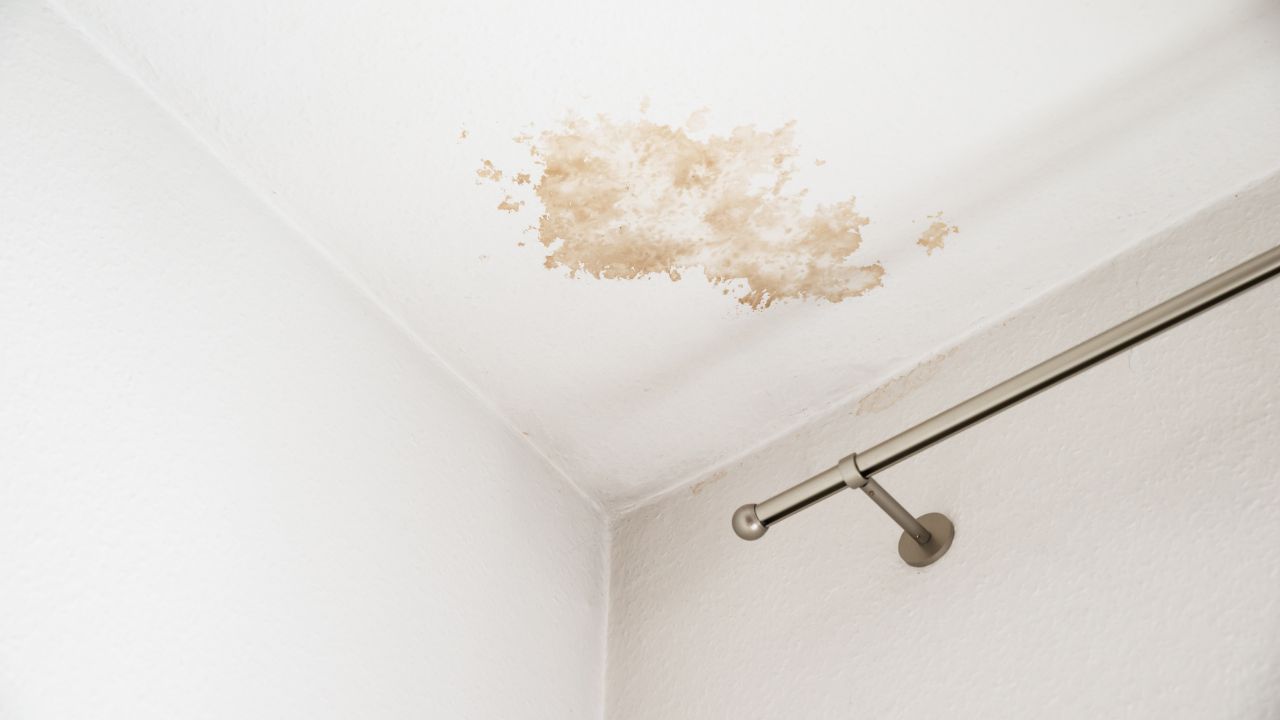
Discoloration on walls and ceilings - Brown, yellow, or dark staining
Peeling or bubbling paint and wallpaper - Indicates moisture trapped behind surfaces
Warped or sagging surfaces - Ceilings and walls showing structural changes
How Can I Prevent Future Leaks From Heavy Rain?
Prevention requires systematic maintenance of building envelope components and drainage infrastructure. The 2020-2024 period averaged 23.0 billion-dollar disasters annually versus 9.0 historically. This new threat baseline demands proactive inspection protocols and preemptive system upgrades, including consultation with emergency drainage services for comprehensive leak prevention strategies. Homeowners can also explore water-smart landscaping solutions that improve drainage while reducing water consumption.
Preventative Maintenance For Roof And Gutters
Clean gutters and downspouts at a minimum twice yearly (spring and fall)
Inspect roof shingles for missing, cracked, or curled shingles after each storm season
Check roof flashing around chimneys, vents, and valleys for deterioration
Seal visible cracks in roof penetrations and flashing
Ensure downspouts extend 5-10 feet away from the foundation
Verify attic ventilation is adequate to prevent moisture buildup
Climate Context: In 2024, the U.S. experienced 27 billion-dollar weather disasters vs. the 9.0 historical average, a 200% increase.
Products And Services For Leak Prevention
Gutter guards - Prevent debris accumulation and clogging
Professional waterproofing services - Foundation sealing and drainage solutions
Sump pump with battery backup - Ensures operation during power outages
French drain installation - Manages groundwater around the foundation
Check valves - Prevent sewage backup into the home
Foundation crack injection - Permanent sealing of existing cracks
Areas To Inspect Regularly
Attic - Check for roof leaks, proper insulation, and ventilation
Foundation and basement - Monitor for new cracks, dampness, or efflorescence
Grading around home - Ensure slope directs water away from foundation
Sump pump basin - Test pump operation quarterly
Drainage systems - Verify French drains and drain tiles are functioning
Risk Assessment: Recent 5-year average shows 23.0 disasters annually, 2.6× higher than the long-term average.
How Much Does It Cost To Fix Water Damage From A Leak?
Water damage repair costs scale exponentially with response delay. Immediate intervention within 24 hours typically limits expenses to $2,000-$8,000, while week-long delays can exceed $100,000.
Average Water Damage Repair Costs By Type And Timeline
Type of Damage
Response Timing
Average Repair Cost
Cost Range
Insurance Coverage Likelihood
Minor Water Damage (<1 inch)
Immediate (0-24 hrs)
$3,000 - $5,000
$2,000 - $8,000
90-95% if sudden/accidental
Moderate Damage (1-2 inches)
Delayed (24-48 hrs)
$8,000 - $15,000
$6,000 - $20,000
70-85% if properly documented
Significant Damage (2+ inches)
Delayed (48-72 hrs)
$15,000 - $30,000
$12,000 - $45,000
60-75% depending on cause
Severe + Mold (Week+ delay)
Critical delay
$30,000 - $75,000+
$25,000 - $100,000+
40-60% (may deny due to negligence)
Foundation Repair
Storm-related
$5,000 - $25,000
$3,000 - $50,000+
Variable (often excluded)
Sump Pump Failure
Basement flooding
$2,000 - $10,000
$1,500 - $15,000
Requires supplemental coverage
Sewage Backup (Cat 3)
Contaminated water
$7,000 - $20,000+
$5,000 - $35,000+
Requires supplemental coverage
National Average: The average water damage insurance claim cost (2018-2022) is $13,954.
Single Inch Impact: According to FEMA, just 1 inch of water can cause up to $25,000 worth of damage.
Take mitigation steps to prevent further damage - Insurance requires you to minimize losses
Keep all receipts for emergency repairs and mitigation services
Document everything before cleanup - Extensive photos/videos before removing any items
Do not dispose of damaged items until the adjuster has inspected them.
Get repair estimates before beginning work - Adjuster must approve scope
Review settlement offer carefully - Ensure all damages are included before accepting
Follow up persistently - Claims can stall without regular contact
Coverage Reality: Standard homeowners insurance covers most sudden and accidental water damage, but excludes flooding and gradual damage.
Common Mistakes To Avoid When Filing
Waiting too long to report can result in claim denial for "failure to mitigate."
Throwing away damaged items prematurely - The adjuster needs to verify the damages
Accepting the first settlement offer without review - Initial offers often undervalue damages
Beginning major repairs before adjuster inspection - Can void coverage
Not reading policy exclusions - Understand what's NOT covered (flooding, neglect, wear and tear)
Missing deadlines for submitting documentation
Coverage Gap Warning: Flooding requires a separate flood insurance policy. 40% of NFIP claims come from areas NOT considered high-risk.
Protecting Your Home From Future Storm Damage
Water emergencies demand immediate action following the five critical emergency steps: electrical safety, source control, insurance documentation, water removal, and dehumidification. The 24-72 hour window determines whether homeowners face minor repairs or catastrophic structural damage.
Long-term home protection requires systematic maintenance: biannual roof and gutter inspections, quarterly sump pump testing, foundation crack monitoring, and proper drainage system maintenance. Proactive measures cost a fraction of emergency repairs, which average $13,954 per claim and can exceed $100,000 when response delays permit mold establishment.
Immediate action items include scheduling a professional home inspection, reviewing insurance coverage (including flood insurance, which requires 30-day activation periods), creating an emergency action plan, and establishing a maintenance calendar. The recent 5-year average shows 23.0 disasters annually, 155% above long-term averages, making home protection more critical than ever.
Need professional help protecting your property from water damage?Contact Signature Landscape for a free consultation on drainage solutions, grading corrections, and landscape design that directs water away from your foundation.
Interested in transforming your outdoor space into a lush oasis? Fill out the form below to schedule a consultation with our Hardscaping & Landscaping Experts and bring your vision to life!