Call our Professional Contractors!
(949) 859-9969
Key Takeaways:
Year-end landscape improvements can generate significant tax advantages when structured properly. Understanding which expenses qualify, how timing affects benefits, and what documentation is necessary helps property owners maximize returns. Strategic planning turns outdoor upgrades into valuable financial tools.
Tax treatment of landscaping varies dramatically based on property type, improvement classification, and jurisdiction. Homeowners, landlords, and business owners face different rules. This guide clarifies opportunities available for 2025 deductions and explains how to position landscape projects for optimal tax treatment.
Tax benefits from landscaping fall into several categories. Understanding distinctions between deductions, credits, and rebates helps property owners plan effectively and set realistic expectations.
Improvements add value or extend property life. Maintenance preserves existing condition. This distinction determines tax treatment fundamentally. Improvements often qualify for depreciation or capitalization. Maintenance expenses are typically deducted immediately for rental or business properties but not personal residences.
Examples clarify the difference. Installing a new irrigation system qualifies as an improvement. Repairing sprinkler heads constitutes maintenance. Building a patio represents improvement. Resealing existing pavers equals maintenance. The line sometimes blurs—consult tax professionals for specific situations.
The Energy Efficient Home Improvement Credit offers 30% of qualified expenses as a federal tax incentive. Credits reduce tax liability dollar-for-dollar. Deductions reduce taxable income. A $1,000 credit saves $1,000 in taxes. A $1,000 deduction saves taxes based on your bracket—perhaps $220 at a 22% rate.
Credits prove more valuable than equal deductions. However, fewer landscape expenses qualify for credits. Most landscape tax benefits come through deductions for business properties or local rebates for all property types. Understanding this difference prevents overestimating potential savings.
Capital improvements typically depreciate over time rather than being expensed immediately. This spreads deductions across multiple years. Business and rental properties use depreciation schedules. Improvements increasing property value or adapting it for new uses generally require capitalization.
Some situations allow immediate expensing under specific provisions. Section 179 or bonus depreciation may apply to certain landscape improvements for businesses. These rules change frequently. Consult current regulations before assuming immediate write-off availability.
Property type and use determine deduction eligibility. Rules favor business and rental properties over personal residences. Understanding your property classification guides realistic planning.
Businesses generally deduct landscaping costs as ordinary business expenses or capitalize and depreciate them. Initial landscaping for new construction typically capitalizes. Subsequent improvements may be deducted if maintaining existing landscaping or may be capitalized if substantial upgrades.
Turf replacement rebates reach up to $7 per square foot for commercial properties, compared to starting at $3 per square foot for residential. Commercial properties often access better incentives. Businesses can also deduct maintenance, utilities, and ongoing care as operating expenses. This creates significant advantages over residential properties.
Rental property owners occupy the middle ground between personal residences and businesses. Improvements depreciate over time using MACRS schedules. Maintenance and repairs are deducted immediately as operating expenses. Landscaping enhancing rental appeal qualifies similarly to other property improvements.
Safe harbor rules allow expensing certain improvements below thresholds. Routine maintenance deducts fully. Substantial improvements triggering "betterment" standards require capitalization. Documenting business purpose—attracting tenants, preventing erosion, or improving access strengthens deduction positions.
Energy Efficient Home Improvement Credit provides $1,200 annual limit for energy property costs and certain home improvements, including insulation and air sealing materials. $2,000 annual limit applies for electric or natural gas heat pumps, heat pump water heaters, and biomass stoves or boilers. To qualify for 2025 deductions, all improvements must be installed by December 31, 2025. Taxpayers must report the Qualified Manufacturer Identification Number (QMID) on their return.
Pure landscaping rarely qualifies for federal deductions on personal residences. Medical necessity sometimes creates exceptions—ramps, accessible pathways for disabled residents. Primary homeowner benefits come through local rebates and increased property value rather than federal tax deductions.
Improvement type affects qualification likelihood. Understanding which projects receive favorable treatment helps prioritize investments for tax purposes.
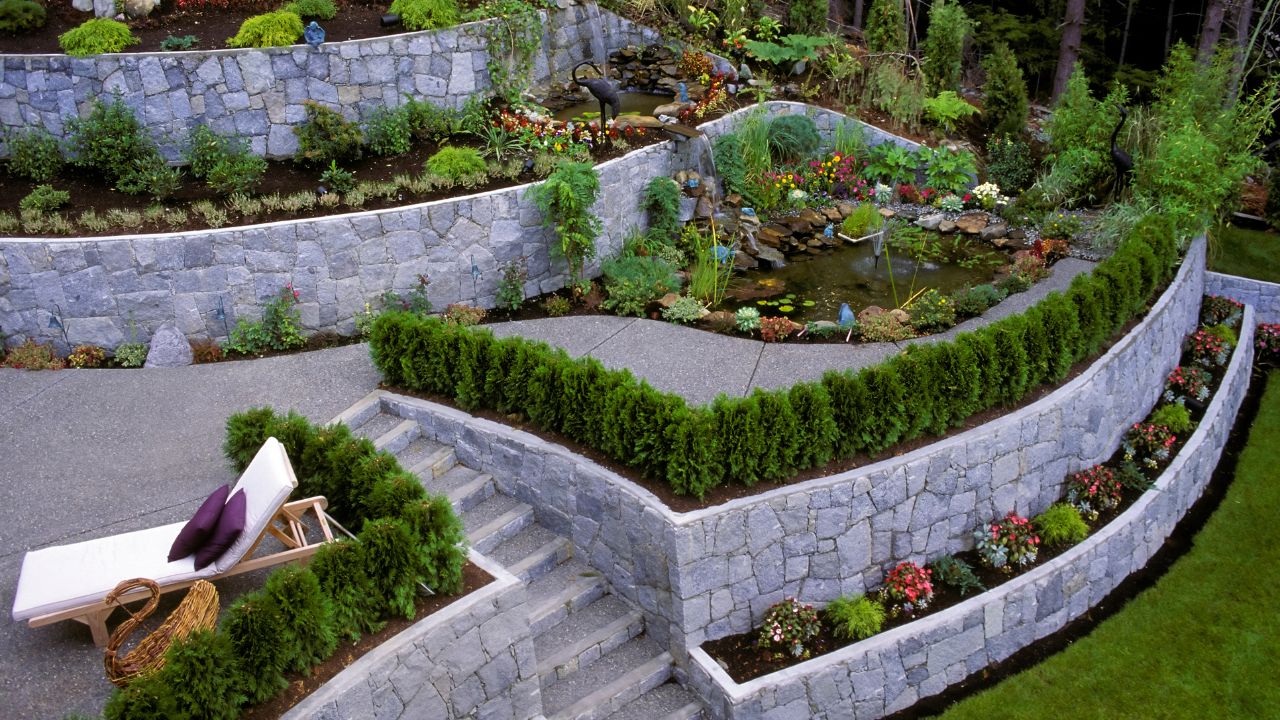
Certain landscape projects offer remarkable return on investment, with some exceeding 100% according to the 2023 NAR/NALP report. Patios, walkways, retaining walls, and driveways clearly qualify as capital improvements. These permanent structures add measurable value.
Built-in features like outdoor kitchens, fire pits, and pergolas are also classified as improvements. Their permanence and value addition support capital treatment. Document costs separately from routine landscaping. Clear categorization strengthens tax positions.
Drip irrigation systems starting at $1 per square foot deliver water directly to root zones, saving 50% water. Smart irrigation timers starting at $180 per controller automatically adjust watering to weather. High-efficiency nozzles starting at $2 per nozzle (minimum 15) improve water distribution and reduce waste. Soil moisture sensors starting at $180 per device prevent overwatering by sensing soil moisture.
These systems qualify as improvements when installed as part of initial landscaping or substantial upgrades. For businesses and rentals, full costs capitalize. Replacement of existing systems may qualify as repairs depending on scope. Energy-efficient irrigation may also trigger local rebates providing immediate returns separate from tax benefits.
Turf replacement rebates starting at $3 per square foot can achieve up to 70% reduction in outdoor water use. Rain barrels and cisterns starting at $35 per barrel and $250 per cistern capture rainwater for later use. Environmental upgrades often qualify for favorable treatment through rebates even when federal deductions don't apply.
Safety improvements like lighting, grading for drainage, or accessibility features may qualify for deductions unavailable to purely aesthetic upgrades. Document safety or accessibility purposes. Medical necessity for disabled residents creates additional deduction opportunities for homeowners in specific circumstances.
Timing determines which tax year captures benefits. Strategic scheduling maximizes advantages and avoids missing deadlines.
To claim federal tax credits for the 2025 tax year, all qualifying installations must be completed by December 31, 2025. "Placed in service" means fully installed and operational. Simply paying doesn't qualify if installation occurs in 2026.
For businesses and rentals using accrual accounting, timing may differ from cash-basis taxpayers. Most individuals use cash accounting—deduction year follows payment year. Completed, paid, and functional before year-end ensures 2025 treatment.
Cash-basis taxpayers deduct when payment occurs, not when work happens. Paying deposits in 2025 for 2026 work doesn't create 2025 deductions. Final payment timing matters most.
Progress payments are deducted in the payment year for completed portions. Structure payment schedules considering tax goals. Accelerating payments into 2025 captures current-year deductions. Delaying until 2026 might suit different tax situations. Coordinate with contractors for beneficial payment timing.
For larger projects, consider a phased approach to spread out the investment—hardscaping elements like patios and retaining walls can be installed in the first phase, followed by planting, lighting, and irrigation in a subsequent phase. Phasing also spreads tax benefits across multiple years.
Strategic phasing balances cash flow with tax optimization. High-income years benefit from larger deductions. Lower-income years might defer deductions to years with higher rates. Consider future income projections when scheduling multi-year projects.
Systematic planning prevents missed opportunities and ensures compliance. Following structured approaches protects tax positions.
Identify whether minimizing 2025 taxes or spreading deductions across years better serves goals. Assess current and projected income. Higher current income favors accelerating deductions. Expected income increases suggest deferring to future years.
Determine property type and use. Business and rental properties offer more deduction opportunities than personal residences. Clarify whether federal deductions, local rebates, or property value increases motivate projects. Different goals require different documentation and timing.
Engage tax advisors before committing to projects. They assess qualification likelihood and optimal structuring. Professional guidance prevents expensive mistakes and maximizes benefits.
Discuss property classification, improvement versus maintenance treatment, and timing strategies. Share contractor quotes and project descriptions. Tax professionals identify deduction opportunities and documentation requirements. Early consultation costs less than fixing problems later.
Local rebate programs operate on a fiscal calendar and are subject to funding availability, making it advantageous to act early. Schedule installations with adequate buffer time before December 31. Construction delays happen—plan for contingencies.
Confirm contractor availability and realistic completion dates. Rush jobs cost more and risk quality issues. Starting fall projects early ensures year-end completion. Communicate tax timing needs to contractors upfront.
Request itemized quotes, separating improvements from maintenance. Detail materials and labor for each component. Clear categorization strengthens tax positions and simplifies record-keeping.
Structure payment schedules aligning with tax goals. Consider deposits, progress payments, and final payment timing. Document payment dates and work completion dates. Written agreements prevent disputes and provide audit support.
Proper documentation proves deductions during audits. Comprehensive records prevent disallowed claims and associated penalties.
Keep signed contracts detailing work scope, materials, and costs. Retain all invoices showing dates, amounts, and payment methods. Bank statements and cancelled checks prove payment. Credit card statements work similarly.
For rebates, keep application confirmations and approval notices. Manufacturer certifications for energy-efficient equipment support credit claims. Photos, permits, and inspection certificates strengthen positions. Organize chronologically and by project.
Photograph properties before work begins and after completion. Document dates. Photos prove scope and necessity. Particularly important for erosion control, drainage, or safety improvements.
Write brief descriptions explaining the improvement purposes. Business necessity, rental marketability, or medical need strengthen positions. Contemporary documentation carries more weight than reconstructed explanations during audits.
Create separate folders for each project. Include contracts, invoices, payments, photos, and purpose statements. Digital organization works well—scan paper documents.
Categorize expenses by type—hardscaping, irrigation, planting, lighting. Separate improvements from maintenance. Label clearly. Well-organized records reduce preparation fees and improve accuracy. Tax preparers appreciate organized clients.
Understanding depreciation and expensing options optimizes multi-year tax benefits. Rules complexity demands professional guidance, but basic knowledge helps planning.
Capital improvements typically depreciate using the Modified Accelerated Cost Recovery System (MACRS). Landscape improvements generally use 15-year schedules. This spreads deductions across many years.
Immediate expensing alternatives exist under certain conditions. Small businesses may use Section 179. Bonus depreciation may apply to eligible property. These provisions change frequently. Verify current rules before assuming availability.
Bonus depreciation allows faster write-offs for qualifying property. Percentages and eligibility change with tax legislation. Recent law changes affected bonus depreciation rates and sunset dates.
Qualified improvement property definitions determine eligibility. Some landscape improvements may qualify. Others don't. Professional analysis based on current law protects against errors. Don't assume provisions available in past years continue unchanged.
Property basis starts with the purchase price plus improvements. Depreciation reduces the basis annually. Accurate tracking matters for calculating gains when selling.
Maintain detailed improvement records throughout ownership. Add costs, subtract depreciation. This adjusted basis determines taxable gain upon sale. Poor records lead to overpaying taxes on sales or audit problems defending positions.
State and local rules often diverge from federal treatment. Understanding all jurisdictions affecting property ensures comprehensive planning.
State tax codes don't always mirror federal rules. Some states conform closely. Others maintain significant differences. Deductions allowed federally might not apply at the state level and vice versa.
California, for example, decouples from certain federal provisions. Check state-specific rules for depreciation, expensing, and credit treatments. Multi-state property owners face additional complexity. Consider all jurisdictions when calculating true tax benefits.
Municipal Water District of Orange County (MWDOC) and partner agencies offer generous rebates for landscape upgrades that reduce water consumption. Turf replacement rebates starting at $3 per square foot for residential (up to $7 per square foot for commercial). Drip irrigation rebates starting at $1 per square foot. Smart irrigation timer rebates starting at $180 per controller. High-efficiency nozzle rebates starting at $2 per nozzle (minimum 15). Soil moisture sensor rebates starting at $180 per device. Rain barrel rebates starting at $35 per barrel. Cistern rebates starting at $250 per cistern.
These rebates provide immediate returns separate from tax deductions. Application processes vary. Submit applications before starting work in some cases, after completion in others. Funding limitations mean early applicants sometimes receive benefits unavailable to later applicants.
Never assume. Research specific to your location and situation. Federal, state, county, and municipal rules all potentially apply. Water district rebates, HOA restrictions, and permit requirements add complexity.
Consult professionals familiar with local rules. National chains or online advisors may miss local opportunities. Local tax professionals and landscape contractors understand area-specific incentives. Verify information rather than relying on assumptions.
Avoiding common errors protects tax positions and prevents wasted money. Learning from others' mistakes costs less than experiencing them personally.
Most residential landscaping never deducts federally. Personal-use property limitations prevent deductions for aesthetic improvements. This surprises many homeowners expecting write-offs.
Even for businesses and rentals, not all landscape costs are deductible immediately. Capital improvement rules require depreciation. Assuming automatic deductibility leads to disappointment and poor planning. Verify qualification before committing to projects motivated by tax benefits.
Auditors require substantiation. Claims without proof get disallowed. Verbal agreements, lost receipts, or vague descriptions undermine legitimate deductions. The burden of proof rests on taxpayers.
Contemporaneous documentation weighs more than reconstructed records. Organize as projects proceed. Don't scramble to recreate records during audits. Weak documentation costs more in lost deductions than the effort required for proper record-keeping.
Experts recommend starting the design and consultation process in the fall or winter to secure a spot on a professional's schedule before the spring rush. Rushed projects risk incomplete work before December 31. Contractors charge premiums for expedited schedules.
Quality suffers under time pressure. Errors become expensive. Permit delays, weather issues, or material shortages derail last-minute projects. Plan early securing year-end completion without panic or premium costs.
Specific questions elicit useful guidance. Generic inquiries produce generic answers. Prepare detailed questions based on your situation.
Specify property type—personal residence, rental, or business. Describe how the property is used. Different uses trigger different rules. Tax professionals need complete pictures providing accurate advice.
Ask explicitly whether the 2025 rules differ from previous years. Tax law changes constantly. Assumptions based on past years cause problems. Request written summaries of key points. Documentation prevents misunderstandings.
Describe projects in detail. Provide contractor quotes and scope descriptions. Ask professionals to classify each component. Some projects mix maintenance and improvement elements.
Request explanations of classification reasoning. Understanding logic helps future decision-making. If classifications seem questionable, seek second opinions. Professional disagreement signals gray areas requiring conservative approaches.
While initial investment for sustainable design may be higher, lower maintenance and water costs lead to significant savings over time, typically breaking even by the third year. Discuss depreciation schedules and future implications. Understand how today's improvements affect basis and future sale taxation.
Ask about carryforward provisions if deductions exceed current-year income. Explore state conformity with federal treatment. Consider estate planning implications for significant improvements. Comprehensive planning considers immediate and long-term effects.
Year-end landscape improvements offer multiple benefits—enhanced aesthetics, increased property value, and potential tax advantages. Strategic planning maximizes financial returns while creating beautiful, functional outdoor spaces. Understanding qualification rules, timing requirements, and documentation needs protects tax positions.
Signature Landscape works with Orange County property owners planning tax-advantaged landscape improvements. Our team coordinates with tax professionals ensuring projects meet both design and financial goals. Contact Signature Landscape today to discuss year-end landscape improvements positioned for optimal tax treatment while creating outdoor spaces you'll enjoy for years.
Schedule A Consultation